


For decades, some of the most powerful weapons against cancer have come from plants. Paclitaxel, extracted from the bark of the Pacific yew, and vinblastine, derived from the Madagascar periwinkle, remain mainstays of modern chemotherapy. Yet the same botanical chemistry that yields these blockbuster drugs has long frustrated researchers: many plant-derived natural products dissolve poorly in water, break down rapidly in the body, and spread indiscriminately through healthy tissue before reaching tumors. A new review published in Experimental Biology and Medicine argues that an unlikely ally—tiny vesicles shed by plant cells themselves—could resolve these chronic limitations and open a genuinely integrated path to plant-based cancer therapy.
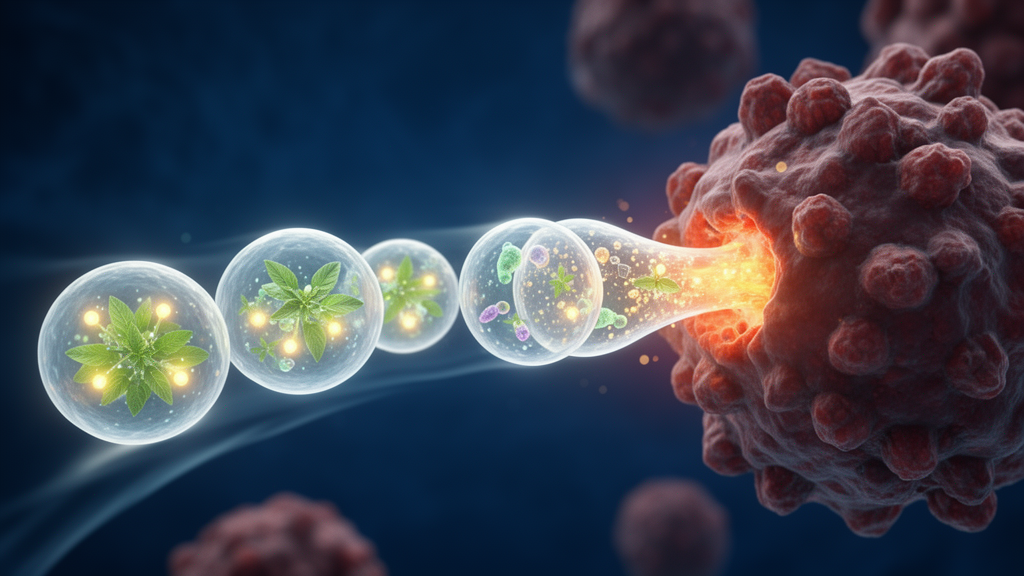
The review, led by Ruyue Wang and colleagues at Shanghai Mengchao Cancer Hospital and Shanghai University, centers on the pairing of plant-derived natural products, or PDNPs, with plant-derived extracellular vesicles, known as PDEVs. These vesicles are nanoscale particles wrapped in lipid bilayers, released by plant cells through several distinct biological routes. Far from being inert packaging, they carry a dense cargo of proteins, lipids, nucleic acids, and secondary metabolites that mirror the biochemistry of their parent plant. The authors contend that PDEVs act on two fronts simultaneously: as delivery vehicles that rescue poorly behaved plant drugs, and as intrinsic anticancer agents in their own right.
Understanding how these vesicles are made is central to exploiting them. According to their biogenesis, PDEVs fall into several subtypes, including exosomes of roughly 50 to 150 nanometers, microvesicles spanning 100 to 1,000 nanometers, migrasomes that can reach 3,000 nanometers, and apoptotic bodies larger than a micrometer. The dominant production route mirrors the endosomal pathway seen in animal cells: the cell membrane folds inward to form early endosomes, which mature into multivesicular bodies that either fuse with lysosomes for degradation or release their internal vesicles into the extracellular space. Plants add two unusual twists—a vacuole-mediated route that produces ectosomes, and a plant-specific organelle called EXPO, whose double membrane resembles an autophagosome and which releases single-membrane vesicles directly into the cell wall.
Harvesting these vesicles poses a challenge unique to plants: the cell wall. Researchers must first extract the apoplastic fluid that bathes the cell exterior, then purify vesicles from that complex mixture. Milling and juicing are fast and yield high volumes but drag in cellular debris; vacuum infiltration preserves vesicle integrity but suffers from low yield; enzymatic digestion of the wall delivers high purity at the cost of added enzyme contaminants. Downstream, ultracentrifugation remains the workhorse, but newer approaches—size exclusion chromatography, tangential flow filtration, immunoaffinity capture using the tetraspanin TET8 marker, and even charge-based methods such as electrophoresis-dialysis—are reshaping the field. No single technique yet maximizes yield, purity, and functional integrity at once, and the review stresses that combination strategies will likely define the standard going forward.
Once isolated, PDEVs tackle the pharmacokinetic failures of plant drugs head-on. Hydrophobic compounds such as curcumin, resveratrol, and quercetin typically dissolve at only microgram-per-milliliter levels in water, making therapeutically relevant blood concentrations nearly impossible to achieve. The amphipathic lipid bilayer of PDEVs solves this by embedding lipophilic molecules within the membrane while passively encapsulating water-soluble cargo in the aqueous core. Ginger-derived vesicles, for instance, have demonstrated longer circulation half-lives and lower immunogenicity than synthetic nanocarriers. Loading efficiency can be striking: sonication has achieved loading capacities of up to 94 percent for curcumin in ginger-derived vesicles, far surpassing passive co-incubation or electroporation, though the physical stress can deform vesicles and blunt their native bioactivity—a trade-off the review examines candidly.
Protection from degradation is equally critical. Orally administered plant compounds are typically destroyed by gastric acid and digestive enzymes before they reach the bloodstream, while intravenously injected molecules are rapidly cleared by the liver and reticuloendothelial system. The intact phospholipid bilayer of PDEVs acts as a physical shield: ginger-derived exosome-like nanoparticles have been shown to survive simulated gastric and intestinal fluids, delivering their payload intact to the colon. Ginseng-derived nanovesicles, meanwhile, persist in circulation for more than 48 hours after injection, a half-life that dramatically outperforms free drug. Some vesicles even display inherent targeting: mulberry-derived vesicles carry the lipid MGDG, which binds the ASGPR receptor on hepatocellular carcinoma cells, steering the payload selectively toward liver tumors.
Beyond delivery, PDEVs wage their own war on cancer. Bitter melon-derived vesicles overcame chemoresistance in oral squamous cell carcinoma by triggering reactive oxygen species accumulation and mitochondrial dysfunction. Centella asiatica-derived vesicles selectively induced ROS in HepG2 liver cancer cells while sparing normal hepatocytes. Grapefruit-derived vesicles co-inhibited the PI3K/AKT and MAPK/ERK signaling axes in melanoma cells, and garlic-derived vesicles cut Bcl-2 expression by roughly 60 to 65 percent while tripling p53 levels in lung and kidney cancer lines. Lemon-derived vesicles activate the TRAIL death-receptor pathway, a mechanism validated in chronic myeloid leukemia xenografts where pro-angiogenic factors such as VEGF-A, IL-6, and IL-8 also declined. The review notes, however, that context matters: citrus-derived vesicles that kill fibrosarcoma cells leave breast cancer MCF-7 cells untouched, and some vesicles even stimulate proliferation in healthy fibroblasts—a reminder that tumor selectivity is far from universal.
PDEVs also reshape the tumor microenvironment itself. Ginseng-derived vesicles reprogram pro-tumor M2 macrophages toward an anti-tumor M1 phenotype, restore exhausted T cell function, and suppress regulatory T cells through the arginine metabolic pathway. Artemisia annua-derived vesicles activate the cGAS-STING innate immune pathway, converting tumor-associated macrophages into a pro-inflammatory state that inhibits tumor growth. When combined with immunomodulatory plant compounds, the authors argue, these effects could be potentiated into a genuinely synergistic immunotherapy platform—something no synthetic nanoparticle can replicate, because the vesicle itself is pharmacologically active.
Early clinical signals are cautiously encouraging. Only five registered clinical trials involving PDEVs exist to date, but one phase I/II study (NCT01294072) demonstrated that plant-vesicle-mediated delivery increased curcumin accumulation in colon tumor tissue relative to normal mucosa, with an acceptable safety profile. In preclinical mouse models of colon and breast cancer, vesicle-encapsulated curcumin showed markedly improved bioavailability and tumor growth inhibition compared with free drug. Orange-derived vesicles boosted curcumin bioavailability five- to six-fold, while curcumin in turn enhanced the vesicles’ own antioxidant capacity—a bidirectional interaction that hints at deeper cooperative chemistry. Paclitaxel, whose current formulations require Cremophor EL and ethanol solvents that trigger severe allergic reactions, could likewise be reformulated in vesicles to enable oral administration and eliminate excipient toxicity.
Significant obstacles remain before this vision reaches the clinic. The review identifies three core challenges: the absence of standardized isolation and characterization protocols, an incomplete mechanistic understanding of how PDNPs and PDEVs synergize at the molecular level, and a striking scarcity of long-term safety data. More than 80 percent of systemically administered plant nanovesicles accumulate in the liver and spleen, with less than 5 percent reaching intended target tissues, raising legitimate concerns about off-target hepatotoxicity and chronic immune stimulation. Batch-to-batch variability driven by plant cultivar, harvest season, and growth conditions further complicates reproducibility. The authors advocate a toxicology-first framework modeled on synthetic nanomedicine standards, alongside a Quality by Design roadmap spanning raw material standardization under GACP guidelines, scalable manufacturing through tangential flow filtration coupled with size exclusion chromatography, and a robust Chemistry, Manufacturing, and Controls package. If those pillars can be built in parallel, the review concludes, plant vesicles and plant drugs may finally fulfill their combined promise—moving from bench curiosity to bedside reality.
Subject of Research: Synergistic use of plant-derived natural products and plant-derived extracellular vesicles in cancer therapy
Article Title: Application of natural products combined with plant-derived extracellular vesicles in cancer therapy
Article References: Wang, R., Ren, M., Xu, Y., Sun, Y., & Xu, Z. (2026). Application of natural products combined with plant-derived extracellular vesicles in cancer therapy. Experimental Biology and Medicine, 251, Article 11329. https://doi.org/10.3389/ebm.2026.11329
Image Credits: AI Generated
Keywords: plant-derived extracellular vesicles, plant-derived natural products, cancer therapy, nanomedicine, drug delivery, curcumin, paclitaxel, tumor microenvironment, exosomes, biocompatibility, immunomodulation, clinical translation
Cite Scienmag News
Nathaniel Bowman. (October 17, 2026). Plant Vesicles Turn Herbal Cancer Drugs Into Precision Weapons. Scienmag. https://scienmag.com/plant-vesicles-turn-herbal-cancer-drugs-into-precision-weapons/
Nathaniel Bowman. "Plant Vesicles Turn Herbal Cancer Drugs Into Precision Weapons." Scienmag, 17 October 2026, https://scienmag.com/plant-vesicles-turn-herbal-cancer-drugs-into-precision-weapons/. Accessed 17 October 2026.
Nathaniel Bowman. "Plant Vesicles Turn Herbal Cancer Drugs Into Precision Weapons." Scienmag. October 17, 2026. https://scienmag.com/plant-vesicles-turn-herbal-cancer-drugs-into-precision-weapons/


