


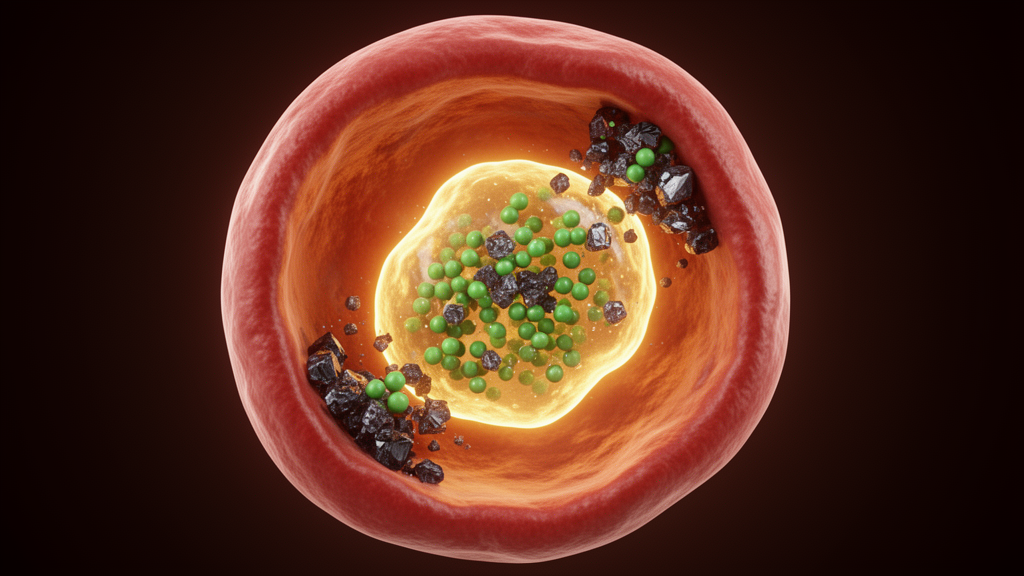
Two fluorescent plant alkaloids that have been used in traditional medicine for millennia may finally have revealed their secret weapon against malaria. In a new study published in Frontiers in Drug Discovery, researchers from the International Centre for Genetic Engineering and Biotechnology and the National Institute of Immunology in New Delhi, working with a collaborator at the University of Benin in Nigeria, show that berberine and palmatine—members of the protoberberine class of isoquinoline alkaloids—kill the malaria parasite Plasmodium falciparum by hijacking a parasite transporter to reach the digestive vacuole, the organelle where the parasite digests hemoglobin, and then blocking the detoxification of toxic heme into hemozoin pigment.
The urgency of the work is underscored by the global malaria burden. According to the World Malaria Reports cited by the authors, malaria claimed more than 610,000 lives and caused 282 million cases in 2024, an increase over the 597,000 deaths and 263 million cases recorded in 2023. Decades of gains from the Global Malaria Eradication Program of the 1950s and 1960s have been eroded by parasites resistant to every major drug class, including aminoquinolines, aryl amino alcohols, antifolates, atovaquone and, most alarmingly, the artemisinin derivatives that form the backbone of current frontline therapy. Resistance to artemisinin-based combination therapies, once confined to South Asia, has now emerged in Africa. With no vaccine effective across all age groups, new chemical scaffolds are desperately needed.
Medicinal plants have historically supplied the best antimalarials: quinine from Cinchona bark inspired chloroquine, and artemisinin came from Artemisia annua. Berberine and palmatine, found in plants such as Berberis, Coptis, Tinospora and Argemone species long used against fever and malaria, have documented in vitro antiplasmodial activity, but their development has been hampered by poor bioavailability—and, until now, by a complete lack of knowledge about how they actually kill the parasite. Earlier hypotheses pointed to DNA binding and telomerase inhibition, but the new study shows those mechanisms cannot explain the drugs’ potency: berberine’s telomerase inhibition required concentrations of 75 to 370 micromolar, far above its antiplasmodial IC50 of 2.4 micromolar.
The team, led by Nekpen Erhunse, Prachi Tomar, Dinkar Sahal and Agam Prasad Singh, exploited a striking property of the alkaloids: they are inherently fluorescent. When the researchers incubated parasites with berberine or palmatine and tracked fluorescence over time, they observed a puzzling, time-dependent loss of signal. Within hours, the glowing alkaloids went dark inside the parasite. The team hypothesized that the compounds were being ferried into a compartment containing something that quenches fluorescence—and the prime suspect was heme, the redox-active, fluorescence-quenching molecule released when the parasite digests hemoglobin in its digestive vacuole.
Co-localization experiments using confocal microscopy, with Hoechst 33342 marking DNA and MitoTracker staining mitochondria, initially suggested mitochondrial accumulation of palmatine at high concentrations, echoing berberine’s behavior in mammalian cells. But at biologically relevant doses, a different picture emerged. The key insight came from the parasite’s own drug-resistance machinery. Berberine and palmatine are known substrates of the human P-glycoprotein multidrug transporter, and P. falciparum carries a homologue, Pgh-1—the product of the pfmdr1 gene—embedded in the membrane of the digestive vacuole, where it imports xenobiotics into that compartment.
To test whether Pgh-1 was the gateway, the researchers blocked the transporter with tariquidar, an inhibitor of its ATPase activity, and with verapamil, a competitive inhibitor. When tariquidar was present, the alkaloids retained their fluorescence and remained visible in the parasite’s cytosol; when it was absent, the fluorescence vanished as the compounds entered the digestive vacuole. Verapamil, by contrast, failed to prevent fluorescence loss, consistent with earlier reports that it is a weak Pgh-1 inhibitor. The results indicated that both alkaloids are actively transported into the digestive vacuole by Pgh-1, where free heme quenches their glow.
Molecular docking studies strengthened the case. The team built a homology model of the 1,419-residue Pgh-1 transporter based on the mouse P-glycoprotein structure and validated it by docking ACT-213615, the lead molecule behind the clinical candidate ACT-451840, which is known to interact with Pgh-1. Berberine bound the transporter’s drug pocket—centered on residues Ser1034 and Asn1042 in transmembrane helix 11—with a more favorable docking score of −7.32 kilocalories per mole than palmatine’s −5.93, mirroring the experimental observation that berberine is the better substrate. Notably, the alkaloids bound in a manner comparable to ACT-451840, suggesting shared transport behavior with a clinically validated antimalarial scaffold.
The strain-specific results were particularly striking. Against the chloroquine-sensitive 3D7 strain, berberine and palmatine showed nearly identical IC50 values of 1.24 and 1.02 micromolar. But against the chloroquine-resistant INDO and multidrug-resistant Dd2 strains, the two structural cousins diverged dramatically: berberine became two- to seven-fold more potent, with resistance indices below one, while palmatine lost potency, with resistance indices above two. The authors attribute this partly to copy number—Dd2 carries four copies of pfmdr1 versus one in 3D7—meaning more transporter and more efficient delivery of berberine into the vacuole of resistant parasites. Crucially, berberine shows no cross-resistance with chloroquine, and PfCRT mutations did not diminish its activity, indicating it does not interact with the chloroquine resistance transporter.
Direct biochemical assays then confirmed the lethal mechanism. Spectrofluorimetry showed the alkaloids’ fluorescence increased upon binding hemoglobin but decreased upon binding hemin, free heme. In cultured parasites, the protease inhibitor E64, which blocks hemoglobin degradation and reduces free heme, restored alkaloid fluorescence in a dose-dependent manner. Most tellingly, both alkaloids inhibited hemozoin formation at concentrations essentially identical to those that kill the parasite—the IC50 for heme biocrystallization inhibition was 0.50 micrograms per milliliter for berberine and 0.80 for palmatine, matching their parasite-killing IC50 values of 0.40 and 0.80. When E64 was added to parasite cultures, roughly 28-fold more alkaloid was needed to achieve the same killing, demonstrating that the drugs’ activity depends on the presence of free heme. A bloated food vacuole assay showed that hemoglobin uptake itself was affected only at very high concentrations, five times the lethal dose, pointing to heme detoxification as the primary target.
The findings carry clear design implications. The authors propose that optimized protoberberine analogues should remain good substrates of the parasite’s Pgh-1 while being poor substrates of the human P-glycoprotein, minimizing host toxicity. They also envision an evolutionary trap: if cytosolic targets of the alkaloids can be identified, dual-action analogues could force the parasite into an impossible choice—mutating Pgh-1 to keep the drugs out of its digestive vacuole would starve it of hemoglobin-derived nutrients, while leaving the transporter intact would deliver a heme-toxic payload straight to its stomach. For a parasite that has outmaneuvered every drug class thrown at it, a weapon it must transport into its own killing chamber may prove uniquely difficult to resist.
Subject of Research: Mechanism of antiplasmodial action of the protoberberine alkaloids berberine and palmatine, which enter the Plasmodium falciparum digestive vacuole via PfPgh-1 and inhibit heme biocrystallization
Article Title: Protoberberine alkaloids berberine and palmatine employ PfPgh-1 transporter to enter the digestive vacuole and kill the malaria parasite by inhibiting heme biocrystallization
Article References: Erhunse, N., Tomar, P., Sahal, D., & Singh, A. P. (2026). Protoberberine alkaloids berberine and palmatine employ PfPgh-1 transporter to enter the digestive vacuole and kill the malaria parasite by inhibiting heme biocrystallization. Frontiers in Drug Discovery, 6, Article 1949463. https://doi.org/10.3389/fddsv.2026.1949463
Image Credits: AI Generated
DOI: 10.3389/fddsv.2026.1949463
Keywords: malaria, Plasmodium falciparum, berberine, palmatine, protoberberine alkaloids, PfPgh-1, pfmdr1, digestive vacuole, hemozoin, heme biocrystallization, antimalarial drug discovery, drug resistance
Cite Scienmag News
Kristina Jarvis. (October 16, 2026). Plant Alkaloids Hitch a Ride Into Malaria Parasite’s Stomach to Deliver a Lethal Blow. Scienmag. https://scienmag.com/plant-alkaloids-hitch-a-ride-into-malaria-parasites-stomach-to-deliver-a-lethal-blow/
Kristina Jarvis. "Plant Alkaloids Hitch a Ride Into Malaria Parasite’s Stomach to Deliver a Lethal Blow." Scienmag, 16 October 2026, https://scienmag.com/plant-alkaloids-hitch-a-ride-into-malaria-parasites-stomach-to-deliver-a-lethal-blow/. Accessed 16 October 2026.
Kristina Jarvis. "Plant Alkaloids Hitch a Ride Into Malaria Parasite’s Stomach to Deliver a Lethal Blow." Scienmag. October 16, 2026. https://scienmag.com/plant-alkaloids-hitch-a-ride-into-malaria-parasites-stomach-to-deliver-a-lethal-blow/


