

Monday, September 7, 2026
Science
No Result
View All Result
  • Login
  • HOME
  • SCIENCE NEWS
  • CONTACT US
  • HOME
  • SCIENCE NEWS
  • CONTACT US
No Result
View All Result
Scienmag
No Result
View All Result
Home Science News Medicine

PinX1 Silencing Boosts Radiotherapy Efficacy in Lung Cancer

September 25, 2025
in Medicine
Nathaniel Bowman
By Nathaniel Bowman Scienmag Editorial Profile - Precision Oncology
Reading Time: 3 mins read
0
PinX1 Silencing Boosts Radiotherapy Efficacy in Lung Cancer
65
SHARES
594
VIEWS
Share on FacebookShare on Twitter
ADVERTISEMENT

Recent research highlights the potential of targeting PinX1 in the treatment of non-small cell lung cancer (NSCLC), particularly in enhancing radiosensitivity and antitumor immunity. This study, conducted by Qiu et al., addresses a critical understanding of how silencing the PinX1 gene can amplify the effects of radiotherapy. The implications of these findings are vast and could pave the way for more effective treatment modalities for patients battling this aggressive form of lung cancer.

PinX1, known as a potent telomerase inhibitor, has gained attention for its role in cellular processes, particularly in tumorigenesis. In NSCLC, where resistance to therapies often leads to poor clinical outcomes, exploring avenues to augment radiation therapies is essential. The research delves into how the downregulation of PinX1 can sensitize cancer cells to radiation while simultaneously enhancing the immune system’s ability to combat tumor cells.

Radiotherapy has long been a cornerstone in the treatment of various cancers, but its efficacy can be limited by factors such as tumor resistance. By silencing PinX1, the study proposes a novel mechanism that not only enhances the damage caused by radiation to cancer cells but also potentially boosts the immune response against tumors. This dual action represents a significant advancement in cancer therapeutics.

In the study conducted by the authors, a variety of experimental approaches were utilized to confirm their hypothesis. They implemented in vitro experiments using NSCLC cell lines to observe the effects of PinX1 silencing. Results indicated that diminished PinX1 levels correlated with increased apoptosis among tumor cells post-radiation exposure. This finding provides a robust rationale for considering PinX1 as a therapeutic target in NSCLC.

Furthermore, the investigation extended to the in vivo environment, wherein animal models were used to assess the impact of silencing PinX1 on tumor growth and immune cell activation. The outcomes from these experiments were promising, showing not only enhanced radiosensitivity but also a marked increase in antitumor immune responses. This suggests that treating NSCLC through modulation of PinX1 could usher in a new era of combination therapies.

Despite the promising results, the authors emphasize that the mechanism underlying the enhanced radiosensitivity and immune activation remains to be fully elucidated. The interplay between PinX1, DNA damage responses, and immune regulation is complex and warrants further exploration. Understanding these mechanisms will be key in translating these findings into clinical applications effectively.

The implications of this research extend beyond just NSCLC. The strategy of targeting PinX1 could have applicability in various malignancies where radiotherapy is utilized. As researchers continue to investigate the effects of PinX1 and its interactions with other cellular pathways, there is potential for this work to influence a wider range of cancer treatment protocols.

As the landscape of cancer treatment continues to evolve, findings such as those presented by Qiu et al. reinforce the importance of innovative approaches in combating drug resistance and tumor evasion of immune responses. The identification of molecular targets, like PinX1, offers new hope for developing therapies that are not only more effective but also personalized for individual patient needs.

Looking ahead, the researchers call for a multidisciplinary approach to explore the clinical implications of their findings. This includes collaboration between oncologists, molecular biologists, and immunologists to ensure that the promising preclinical findings can be translated into viable treatment options for patients.

Ultimately, this study sheds light on the intricacies of cancer biology and underscores the need for continued investigation into the mechanisms of tumor response to therapy. As the scientific community grapples with the challenges of treating NSCLC, studies like this remind us of the potential to leverage our understanding of genetics and molecular interactions in the fight against cancer.

In conclusion, the work presented by Qiu, Xia, Bao, and their colleagues highlights a promising new strategy in NSCLC treatment. By silencing PinX1, it is possible to enhance the efficacy of radiotherapy while simultaneously boosting the immune system’s response to tumors. This innovative research could set the stage for future studies and pave the way for groundbreaking therapeutic options in the realm of cancer care.

Subject of Research: The role of PinX1 in enhancing radiosensitivity and antitumor immunity in non-small cell lung cancer.

Article Title: Correction: Silencing PinX1 enhances radiosensitivity and antitumor-immunity of radiotherapy in non-small cell lung cancer.

Article References: Qiu, J., Xia, Y., Bao, Y., Cheng, J., Liu, L., & Qian, D. (2025). Correction: Silencing PinX1 enhances radiosensitivity and antitumor-immunity of radiotherapy in non-small cell lung cancer. Journal of Translational Medicine, 23(1), Article 1017. https://doi.org/10.1186/s12967-025-07009-w

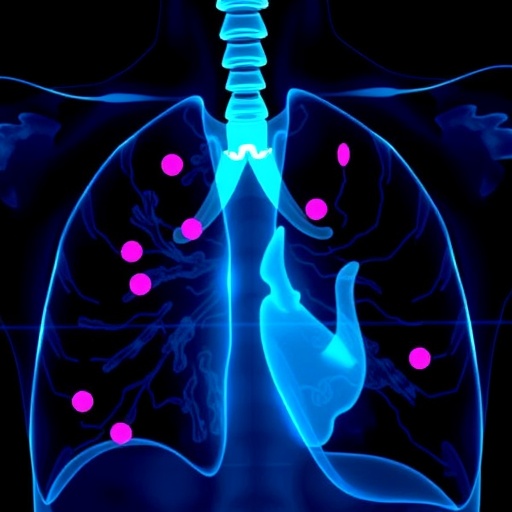
Image Credits: AI Generated

DOI: 10.1186/s12967-025-07009-w

Keywords: PinX1, radiosensitivity, antitumor immunity, non-small cell lung cancer, radiotherapy.

Cite Scienmag News

Nathaniel Bowman. (September 25, 2025). PinX1 Silencing Boosts Radiotherapy Efficacy in Lung Cancer. Scienmag. https://scienmag.com/pinx1-silencing-boosts-radiotherapy-efficacy-in-lung-cancer/

Nathaniel Bowman. "PinX1 Silencing Boosts Radiotherapy Efficacy in Lung Cancer." Scienmag, 25 September 2025, https://scienmag.com/pinx1-silencing-boosts-radiotherapy-efficacy-in-lung-cancer/. Accessed 7 September 2026.

Nathaniel Bowman. "PinX1 Silencing Boosts Radiotherapy Efficacy in Lung Cancer." Scienmag. September 25, 2025. https://scienmag.com/pinx1-silencing-boosts-radiotherapy-efficacy-in-lung-cancer/


Tags: antitumor immunity in lung cancer treatmentboosting immune response against tumorsdual action of PinX1 silencingenhancing radiosensitivity in NSCLCinnovative approaches in lung cancer therapynovel cancer treatment modalitiesovercoming tumor resistance in cancer treatmentPinX1 silencing in lung cancerQiu et al. lung cancer researchradiotherapy advancements in oncologyradiotherapy efficacy in non-small cell lung cancertargeting telomerase in cancer therapy
Share26Tweet16
Previous Post

X-Linked Transcriptome Disruption in Lupus Immune Cells

Next Post

Diosmetin Reduces Inflammation in PCOS via NRF2/AKT Pathway

Related Posts

Game-based telerehabilitation aids physical therapy in multiple sclerosis patients, review finds
Medicine

Game-based telerehabilitation aids physical therapy in multiple sclerosis patients, review finds

September 7, 2026
Wireless smart microneedle device enables connected personalized pain management
Medicine

Wireless smart microneedle device enables connected personalized pain management

September 6, 2026
Video-based leg agility scoring in Parkinson’s disease links to arm motor impairments
Medicine

Video-based leg agility scoring in Parkinson’s disease links to arm motor impairments

September 6, 2026
Dual-Task Training Boosts Shoulder Recovery After Rotator Cuff Surgery
Medicine

Dual-Task Training Boosts Shoulder Recovery After Rotator Cuff Surgery

September 6, 2026
New machine learning model predicts IVIG resistance in Kawasaki disease
Medicine

New machine learning model predicts IVIG resistance in Kawasaki disease

September 6, 2026
Out-of-School Youth Face Smartphone Addiction, Stress, and Mental Health Risks
Medicine

Out-of-School Youth Face Smartphone Addiction, Stress, and Mental Health Risks

September 6, 2026
Next Post
Diosmetin Reduces Inflammation in PCOS via NRF2/AKT Pathway

Diosmetin Reduces Inflammation in PCOS via NRF2/AKT Pathway

  • Mothers who receive childcare support from maternal grandparents show more optimized

    Mothers who receive childcare support from maternal grandparents show more parental warmth, finds NTU Singapore study

    27656 shares
    Share 11059 Tweet 6912
  • University of Seville Breaks 120-Year-Old Mystery, Revises a Key Einstein Concept

    1061 shares
    Share 424 Tweet 265
  • Bee body mass, pathogens and local climate influence heat tolerance

    682 shares
    Share 273 Tweet 171
  • Researchers record first-ever images and data of a shark experiencing a boat strike

    546 shares
    Share 218 Tweet 137
  • Groundbreaking Clinical Trial Reveals Lubiprostone Enhances Kidney Function

    531 shares
    Share 212 Tweet 133
Science

Embark on a thrilling journey of discovery with Scienmag.com—your ultimate source for cutting-edge breakthroughs. Immerse yourself in a world where curiosity knows no limits and tomorrow’s possibilities become today’s reality!

RECENT NEWS

  • Food packaging chemicals lack safety data, scientists propose a solution
  • Drexel researchers map evidence on how music relieves pain
  • Why Some Ants Slack While Others Work
  • Ocean habitats of dissimilatory iodate-reducing microorganisms revealed

Categories

  • Agriculture
  • Anthropology
  • Archaeology
  • Athmospheric
  • Biology
  • Biotechnology
  • Blog
  • Bussines
  • Cancer
  • Chemistry
  • Climate
  • Earth Science
  • Editorial Policy
  • Marine
  • Mathematics
  • Medicine
  • Pediatry
  • Policy
  • Psychology & Psychiatry
  • Science Education
  • Social Science
  • Space
  • Technology and Engineering

Subscribe to Blog via Email

Enter your email address to subscribe to this blog and receive notifications of new posts by email.

Join 5,151 other subscribers

© 2025 Scienmag - Science Magazine

Welcome Back!

Login to your account below

Forgotten Password?

Retrieve your password

Please enter your username or email address to reset your password.

Log In
No Result
View All Result
  • HOME
  • SCIENCE NEWS
  • CONTACT US

© 2025 Scienmag - Science Magazine

Discover more from Science

Subscribe now to keep reading and get access to the full archive.

Continue reading