


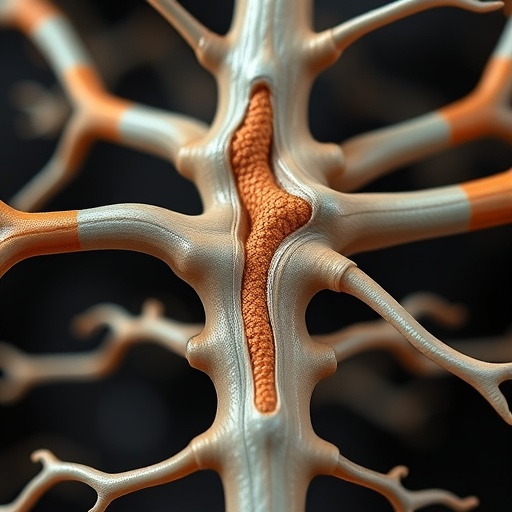
Peripheral nerve injuries pose a significant clinical challenge, frequently leading to debilitating sensory and motor deficits that severely impact patients’ quality of life. Traditional repair methods for long-gap nerve injuries primarily rely on autologous nerve grafting, a technique hindered by the scarcity of suitable donor tissue, donor-site morbidity, and frequent mismatches in tissue size and architecture. Although nerve guidance conduits have emerged as promising tissue-engineering alternatives, existing designs typically replicate the nerve’s tubular geometry in a rigid, static form, inadequately accommodating the variable diameters and irregular shapes inherent to native peripheral nerves. This lack of conformal contact diminishes their reparative performance and necessitates microsuturing to secure the conduit, a procedure that complicates surgery and introduces risks such as inflammation, fibrosis, scar formation, and misdirected axonal regeneration.
Addressing these critical limitations, a pioneering study led by Xiaolei Guo and colleagues from Sichuan University introduces an innovative nerve repair conduit inspired by the adaptive closing mechanism of pinecone scales in response to moisture. This breakthrough device autonomously curls upon exposure to aqueous environments and simultaneously achieves adhesive fixation, enabling it to wrap and stably attach to severed nerves without the need for suturing. The conduit’s core design involves a bilayer film fabricated through the combination of hydrophilic γ-polyglutamic acid (PGA) with hydrophobic polyurethane (PU), processed via rapid drying to induce an asymmetric distribution of hydrophilicity and hydrophobicity across its two faces. This compositional dichotomy facilitates differential swelling when immersed in water, triggering a spontaneous rolling into a tubular form.
Crucially, the researchers further enhanced the material by applying a polyurethane-based adhesive layer onto the film surface, ensuring robust and persistent attachment to the native nerve tissue. This adhesive property obviates the reliance on microsuturing, substantially simplifying the surgical procedure and reducing potential iatrogenic complications. Through rigorous characterization, the team evaluated key parameters including curling kinetics, the influence of film thickness and compositional ratios on bending curvature, adhesive strength, and conformability to tubular structures of varying diameters. This thorough investigation enabled precise tuning of the material properties to optimize performance for peripheral nerve repair.
Biocompatibility and biological efficacy constituted essential components of the study’s evaluation framework. In vitro assays demonstrated that the self-curling film exhibited excellent Schwann-cell compatibility, promoting cell viability and significantly enhancing migration capabilities, thereby fostering a regenerative microenvironment conducive to nerve repair. Furthermore, macrophage polarization assays revealed that the conduit’s material composition actively modulated inflammatory responses, shifting macrophage phenotypes toward the pro-repair M2 phenotype, both in vitro and in vivo. Such immunomodulatory effects are critical in minimizing scar formation and facilitating effective axonal regeneration.
The team validated the therapeutic potential of this pinecone-inspired adhesive conduit using a rat model featuring an 8-mm sciatic nerve defect. Comparative analyses against a standard non-adhesive polyurethane conduit, autografts, and untreated controls underscored the superior regenerative performance of the self-curling conduit. This novel material facilitated more robust nerve bridging, evidenced by greater axon diameters, enhanced myelin sheath thickness, increased expression of regeneration markers, and improved vascularization. Functionally, rats treated with the adhesive conduit exhibited superior motor recovery and reduced muscle atrophy relative to those receiving conventional conduit repairs.
One of the most striking features of this innovation is its capacity for rapid and spontaneous transformation in physiological saline; the PU/PGA10 formulation demonstrated the fastest curling speed alongside the highest bending curvature among tested variants, enabling swift tubular formation. Importantly, the adhesive layer maintained stable fixation across a broad range of diameters (3 to 10 mm), indicating adaptability to diverse nerve sizes and geometries. This property addresses a longstanding challenge in nerve conduit design, offering a flexible, conformal, and suture-free solution for conduits that need to adapt intraoperatively to variable anatomical conditions.
Beyond surgical convenience, this design distinctly improves the biological milieu at the repair site through material-driven modulation of the cellular and immune environment. By integrating responsive materials with bioadhesive capability, the conduit not only secures the nerve ends but actively participates in enhancing axonal regeneration and functional recovery. This dual functionality marks a conceptual advance over existing nerve guidance conduits that primarily offer passive structural support without influencing the biological healing processes.
Despite these promising results, the researchers acknowledge that further refinement is necessary to achieve precise control over curling dynamics and curvature parameters. Future work will focus on combining advanced structural design, computational simulations, and extensive in vivo verification to customize the behavior of the material for clinical translation. Such advancements aim to realize clinically viable, patient-specific solutions capable of addressing complex peripheral nerve injuries within constrained and irregular operative fields.
This study exemplifies how bioinspired engineering, informed by natural mechanisms such as pinecone hygroscopic movement, can revolutionize biomedical devices. The self-curling adhesive conduit represents a paradigm shift in peripheral nerve repair technologies, introducing a smart, stimuli-responsive platform that brings nerve repair closer to the efficacy of autografts while significantly simplifying surgical protocols. Its development opens new avenues for suture-free, adaptive tissue-repair devices beyond nerve regeneration, with potential applications across a broad spectrum of regenerative medicine.
The authors of this research include Xiaolei Guo, Jinwei Li, Hongyu Xu, Shengrong Long, Junhong Li, Ao Wang, Wenkai Liu, Fan Zhang, Zhen Li, Feng Luo, Jiehua Li, Yanchao Wang, Hong Tan, and Ting Lan. Their collaborative effort reflects interdisciplinary expertise spanning polymer engineering, biomaterials science, and regenerative medicine.
This groundbreaking study received financial support from multiple grants provided by the National Natural Science Foundation of China (Grant Nos. 52433015, 52373296, 52473138, and 52173287), funding from the State Key Laboratory of Polymer Materials Engineering (sklpme2022-2-07), and the Outstanding Youth Foundation of Sichuan Cancer Hospital & Institute (Grant no. YB2025004). These sources underscore the strategic national prioritization of innovation in biomaterials and regenerative technologies.
Published in the journal Cyborg and Bionic Systems on March 27, 2026, the paper titled “Pinecone-Inspired Water-Responsive Curling Adhesive Conduit for Peripheral Nerve Repair” presents a comprehensive and rigorous investigation of this novel conduit from material synthesis and characterization through to rigorous biological and functional testing in animal models. Its reported outcomes signify a robust preclinical foundation for future clinical development.
This advancement holds tremendous promise not only for peripheral nerve repair but also as a versatile platform for engineering smart, responsive, and adhesive devices tailored for complex tissue interfaces. By bridging the gap between biomimicry and clinical utility, this research sets a precedent for next-generation biomaterials that dynamically interact with their environment to promote tissue regeneration with minimal surgical intervention.
News Publication Date: March 27, 2026
Keywords
Peripheral nerve injury, nerve repair, self-curling conduit, polyurethane, γ-polyglutamic acid, bioadhesive, tissue engineering, regenerative medicine, Schwann cells, macrophage polarization, stimuli-responsive materials, biomimicry
Cite Scienmag News
Denise Maddox. (April 28, 2026). Pinecone-Inspired Water-Responsive Curling Adhesive Conduit Revolutionizes Peripheral Nerve Repair. Scienmag. https://scienmag.com/pinecone-inspired-water-responsive-curling-adhesive-conduit-revolutionizes-peripheral-nerve-repair/
Denise Maddox. "Pinecone-Inspired Water-Responsive Curling Adhesive Conduit Revolutionizes Peripheral Nerve Repair." Scienmag, 28 April 2026, https://scienmag.com/pinecone-inspired-water-responsive-curling-adhesive-conduit-revolutionizes-peripheral-nerve-repair/. Accessed 4 September 2026.
Denise Maddox. "Pinecone-Inspired Water-Responsive Curling Adhesive Conduit Revolutionizes Peripheral Nerve Repair." Scienmag. April 28, 2026. https://scienmag.com/pinecone-inspired-water-responsive-curling-adhesive-conduit-revolutionizes-peripheral-nerve-repair/


