


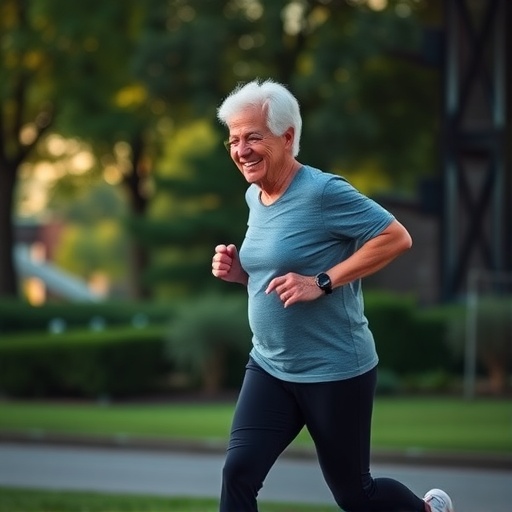
In a groundbreaking investigation poised to reshape our understanding of ageing, researchers Rafiei, Souri, and Amerzadeh have unveiled profound insights into the role of physical activity in promoting healthy ageing among older adults burdened with chronic conditions. Published recently in BMC Geriatrics, their cross-sectional study transcends the conventional narratives around ageing, highlighting the nuanced interplay between functional ability and subjective ageing perceptions. This research is a vital contribution to the expanding field of gerontology, offering a data-rich foundation for public health initiatives aiming to bolster the quality of life in an ageing global population.
Ageing is an intricate, multifaceted process influenced not only by genetics but significantly by lifestyle choices and environmental factors. The study underlines that physical activity emerges as a pivotal determinant in maintaining functional capacity and mitigating the deleterious effects often associated with chronic diseases prevalent in older adults. Through meticulous sampling and sophisticated analytical tools, the authors have delineated how regular engagement in physical activity correlates with enhanced physical and cognitive health markers, effectively challenging the fatalistic views commonly associated with ageing and chronic illness.
Central to this inquiry is the concept of functional ability, the capacity to perform normal daily activities crucial for independent living. The authors emphasize that chronic conditions often lead to a decline in this ability, precipitating a cascade of negative health outcomes and increased dependency. By quantifying the functional status of participants alongside their self-reported ageing perspectives, the research elegantly demonstrates not only the physical but also the psychological and social dimensions influenced by an active lifestyle. This multidimensional approach offers a comprehensive understanding that can inform more effective, patient-centered care models.
One of the study’s most striking revelations is the bidirectional relationship between physical activity and ageing perspectives. Individuals who engage in consistent physical exercise report more positive attitudes toward their ageing process, which in turn may foster greater motivation to maintain an active lifestyle. This synergy could signify a self-reinforcing mechanism that perpetuates health-enhancing behaviors, creating a virtuous cycle of improved wellbeing and autonomy. Such findings underscore the importance of integrating psychological support into rehabilitation and wellness programs for the elderly.
Technically, the study employed validated scales and robust statistical methods to assess functional ability and subjective ageing views in a cohort of older adults with varying chronic conditions. The researchers accounted for confounding variables such as socioeconomic status, comorbidity burden, and cognitive function, ensuring the reliability and generalizability of their results. This rigorous methodology sets a new standard for future research, encouraging the use of interdisciplinary lenses that capture the full spectrum of ageing experiences.
Chronic diseases, including diabetes, cardiovascular ailments, and musculoskeletal disorders, traditionally herald declines in mobility and independence. However, findings from this research suggest that the deleterious trajectory of such conditions is not necessarily immutable. Physical activity, even when executed at moderate intensities and frequencies, appears to modulate disease impact by preserving muscle strength, enhancing cardiovascular efficiency, and promoting neuroplasticity. These physiological adaptations collectively contribute to sustained functional performance, delaying or even preventing the onset of disability.
Moreover, the psychological benefits that emerge from physical activity cannot be overstated. The study’s participants who maintained regular exercise routines exhibited lower levels of depressive symptoms and anxiety, as well as heightened self-efficacy and life satisfaction. These aspects are critical because mental health profoundly influences physical health outcomes, adherence to therapeutic regimens, and social engagement—factors essential for fostering resilience in older adults confronting chronic challenges.
Public health strategies often grapple with the implementation of effective interventions for older populations with chronic illnesses due to heterogeneous needs and diverse health statuses. The insights provided by Rafiei and colleagues advocate for a paradigm shift that prioritizes tailored physical activity interventions as an integral component of chronic disease management. Such approaches may include adaptive exercise programs that accommodate individual limitations while progressively enhancing strength and endurance, ultimately supporting sustained independence.
Intriguingly, the study sheds light on cultural and environmental factors that mediate the relationship between activity and ageing perceptions. For instance, access to safe walking environments, community support networks, and culturally appropriate exercise modalities can significantly influence participation rates and adherence. Recognizing these determinants is imperative for designing inclusive health promotion programs that resonate with varied populations, particularly in urban settings where the elderly are increasingly vulnerable to social isolation.
From a molecular standpoint, the benefits of physical activity align with emerging evidence linking exercise to the modulation of inflammatory pathways and oxidative stress, mechanisms implicated in the pathophysiology of chronic diseases and ageing. By attenuating systemic inflammation and enhancing cellular repair processes, regular physical exertion may extend healthspan, the period of life spent in good health. These mechanistic insights advocate for combining clinical interventions with lifestyle modifications to achieve optimal ageing outcomes.
The study’s cross-sectional nature does impose certain limitations, particularly regarding causal inferences. However, the authors address this by advocating for longitudinal and interventional research that can unravel the temporal dynamics between physical activity, functional ability, and ageing perspectives. Such future work would be invaluable in establishing evidence-based guidelines and measurable targets for rehabilitation specialists, clinicians, and policymakers.
Importantly, the research highlights disparities in functional ability and ageing perspectives across demographic strata such as gender, socioeconomic status, and education level. These findings call for equity-focused interventions that prioritize vulnerable subgroups, ensuring that the benefits of physical activity are accessible and sustainable. By adopting a holistic, inclusive approach, health systems can better address the challenges posed by an ageing population disproportionately affected by chronic illnesses.
In conclusion, this pivotal study reaffirms the transformative potential of physical activity as a cornerstone of healthy ageing amidst chronic conditions. As global demographics shift towards an older average age, the imperative to cultivate functional independence and positive ageing experiences becomes increasingly urgent. Harnessing physical activity not only counters the physical decline associated with chronic diseases but also fosters psychological resilience and social connectedness, creating a comprehensive framework for wellbeing in later life.
The implications of this research extend beyond individual health, touching upon economic, social, and policy domains. Investment in community-based physical activity programs, urban planning that promotes active living, and healthcare system reforms integrating exercise prescriptions are forward-looking strategies motivated by such empirical evidence. Ultimately, this study lays the groundwork for a future where ageing is not merely a biological inevitability but a dynamic process enriched by empowerment and vitality.
As the world watches the ageing population grow, Rafiei, Souri, and Amerzadeh’s research illuminates a path to redefining the ageing journey. Their meticulous exploration offers a beacon of hope, suggesting that through intentional physical engagement, the twilight years can be marked not by decline but by continued growth, adaptation, and vibrant health.
Cite Scienmag News
Beatrice Stafford. (May 28, 2026). Physical Activity Boosts Healthy Aging in Chronic Conditions. Scienmag. https://scienmag.com/physical-activity-boosts-healthy-aging-in-chronic-conditions/
Beatrice Stafford. "Physical Activity Boosts Healthy Aging in Chronic Conditions." Scienmag, 28 May 2026, https://scienmag.com/physical-activity-boosts-healthy-aging-in-chronic-conditions/. Accessed 3 September 2026.
Beatrice Stafford. "Physical Activity Boosts Healthy Aging in Chronic Conditions." Scienmag. May 28, 2026. https://scienmag.com/physical-activity-boosts-healthy-aging-in-chronic-conditions/


