


Viral Science News
In National Harbor, Maryland, researchers presented new findings on how well popular photo-based calorie-tracking apps estimate what people eat. The study, announced for NUTRITION 2026, reports that four widely used apps systematically underestimated both calories and fat when tested against a precise reference. While these tools are designed to help users manage diet quality quickly, the results suggest users may be getting a consistently low estimate.
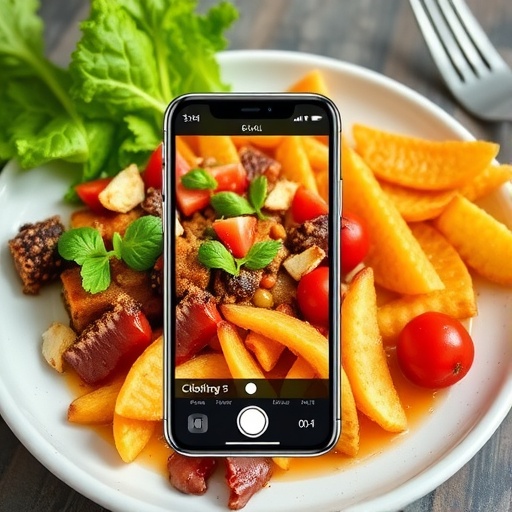
Photo-based tracking relies on AI image recognition to identify foods and infer portion sizes. After the app detects items in a meal photo, it matches those outputs to nutrition databases to estimate total energy and macronutrient content. This workflow sounds straightforward, but the study highlights a critical gap: real-world dietary complexity and model assumptions can translate into measurable error.
To evaluate accuracy, the investigators used standardized meal photos prepared for a larger NIH Clinical Center diet trial. Meals were produced in a controlled metabolic kitchen, where ingredients are weighed to within 0.1 grams. This design allowed the researchers to compare each app’s estimate with a high-quality ground truth rather than relying on self-reports or loose dietary records.
The team generated photos for 102 meals from the clinical trial and processed them through MyFitnessPal, LoseIt!, CalAI, and Appediet. Across all four apps, calories were underestimated by roughly 250 to 345 calories on average, while fat was underestimated by about 30 grams. The pattern indicates a consistent bias rather than random fluctuations.
Additional analysis suggested that MyFitnessPal and LoseIt! estimated energy more accurately for higher-calorie meals than for lower-calorie meals. In contrast, all four apps showed more consistent carbohydrate estimates than for other macronutrients, implying that the AI pipeline may recognize carbohydrate-containing foods more reliably than fat-heavy combinations.
The researchers caution that photo-based tracking without correcting portion size inputs—or without manual adjustments—should be treated with skepticism. Because fat is especially prone to underestimation, the true caloric load may be higher than the app display suggests, potentially affecting weight-management decisions.
After the initial dataset, the team examined more than 200 additional meals to identify what drives the errors. Early results point to reduced performance with meals associated with a ketogenic, low-carbohydrate diet. Higher fat content in these diets may interact with image-to-nutrition mapping, leading to more persistent underestimation.
Overall, the study argues that improving photo-based nutrition tools may require hybrid approaches. Combining image-based features with more traditional dietary measurement signals could reduce bias and make real-world estimates more trustworthy.
The work was presented by Olivia Charles and Aaron Hengist at NUTRITION 2026’s President’s Oral Session on July 25, with details available through the meeting’s program materials. The findings are considered preliminary until peer-reviewed publication is available, but they provide a timely reality check for AI-assisted nutrition tracking.
Cite Scienmag News
Daisy Hatcher. (July 26, 2026). Photo-based calorie tracking apps may underestimate calories consumed in meals. Scienmag. https://scienmag.com/photo-based-calorie-tracking-apps-may-underestimate-calories-consumed-in-meals/
Daisy Hatcher. "Photo-based calorie tracking apps may underestimate calories consumed in meals." Scienmag, 26 July 2026, https://scienmag.com/photo-based-calorie-tracking-apps-may-underestimate-calories-consumed-in-meals/. Accessed 3 September 2026.
Daisy Hatcher. "Photo-based calorie tracking apps may underestimate calories consumed in meals." Scienmag. July 26, 2026. https://scienmag.com/photo-based-calorie-tracking-apps-may-underestimate-calories-consumed-in-meals/


