

Sunday, July 26, 2026
Science
No Result
View All Result
  • Login
  • HOME
  • SCIENCE NEWS
  • CONTACT US
  • HOME
  • SCIENCE NEWS
  • CONTACT US
No Result
View All Result
Scienmag
No Result
View All Result
Home Science News Chemistry

UW Chemists Develop New Approach to Improve Electron Transfer Selectivity

July 26, 2026
in Chemistry
Reading Time: 2 mins read
0
UW Chemists Develop New Approach to Improve Electron Transfer Selectivity

UW Chemists Develop New Approach to Improve Electron Transfer Selectivity

65
SHARES
587
VIEWS
Share on FacebookShare on Twitter
ADVERTISEMENT

Chemists have long used single-electron transfer to activate tough molecules and link them into more complex structures. But a stubborn rule has limited what synthetic chemists can reliably achieve: when two reactants compete for an electron, the system tends to favor whichever partner is easiest to reduce. That “thermodynamic winner” often blocks selectivity and keeps many promising coupling reactions out of reach.

Now a team led at the University of Wisconsin–Madison, with collaborators at Colorado State University and the University of Colorado Boulder, reports a strategy that changes the usual design logic. Published in Nature (doi: 10.1038/s41586-026-10897-7), the work shows that selectivity can arise even when the initial electron transfer is indiscriminate—turning a supposed disadvantage into a feature.

At the center of the approach is a catalyst that ejects an electron directly into the solvent rather than trapping it on a specific substrate. As described by lead investigator Zachary Wickens, this produces a “strongest reductant” scenario: a free electron in solution prefers to attach to essentially any molecule it encounters, because it is energetically unfavorable for the electron to remain unbound.

That means the reaction no longer relies on choosing a single best electron acceptor upfront. Instead, the electron attaches to whichever species it meets first. According to the researchers, that shift undermines the classic selectivity expectation and opens the door to coupling outcomes that would otherwise be dominated by the most easily reduced partner.

The team’s mechanistic studies explain how the chemistry still converges toward the desired products. Computational work from Colorado State University indicates that after electron transfer occurs, the intended reactant can avoid reversal and proceed forward to form products. Meanwhile, the competing, easier-to-reduce partner does not get “consumed” in the productive pathway; it is effectively recycled back toward its starting material.

Spectroscopic investigation at the University of Colorado Boulder further supports a mechanistic narrative in which reaction selectivity emerges after the first electron event. In other words, the system is not selecting through initial reduction preference; it is steering outcomes through differential forward progression versus reversal.

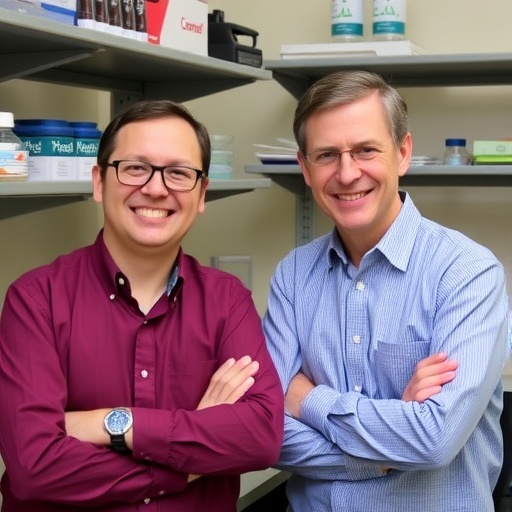
Over the past five years, the Wickens group has been developing this family of photoreduction catalysts aimed at realizing an alternative redox design framework. Wickens emphasizes that the result is not just an incremental synthetic tool, but a new way to engineer electron-driven reactivity.

The author team includes Zachary Wickens, Joseph M. Edgecomb, Matthew D. Resmini, Alissia F. Meyer (UW–Madison), Niket Manoj and Robert S. Paton (Colorado State University), and Niels H. Damrauer and Arindam Sau (University of Colorado Boulder).

Subject of Research: Not applicable
Article Title: Selectivity Emerges from Indiscriminate Photoreduction
News Publication Date: 15-Jul-2026
Web References: https://www.nature.com/articles/s41586-026-10897-7
References: doi: 10.1038/s41586-026-10897-7
Image Credits: UW–Madison Department of Chemistry

Keywords

single-electron transfer, photoreduction, catalytic selectivity, mechanistic spectroscopy, computational chemistry, redox reactions, electron ejection in solvent, electron transfer selectivity, synthetic chemistry, Nature

Tags: catalytic electron transferchemoselectivity in synthesiselectron transfer in complex moleculeselectron transfer selectivityfree electron in solutionnew strategies in synthetic chemistryovercoming thermodynamic controlselectivity in coupling reactionssingle-electron transfersolvent-based electron deliverysolvent-mediated electron transferUniversity of Wisconsin Madison chemistry
Share26Tweet16
Previous Post

Photo-based calorie tracking apps may underestimate calories consumed in meals

Next Post

Engineered Gut Bacteria Target Pancreatic Cancer in Promising Drug-Like Study

Related Posts

Researchers Enhance Hydrogen Production with Single-Element Dual-Site Substitution
Chemistry

Researchers Enhance Hydrogen Production with Single-Element Dual-Site Substitution

July 17, 2026
Satellite Observations Improve Global Mapping of Soil Moisture
Chemistry

Satellite Observations Improve Global Mapping of Soil Moisture

July 17, 2026
Noble Metal-Modified Zinc Oxide Nanoflakes Show Enhanced Gas Sensing Properties
Chemistry

Noble Metal-Modified Zinc Oxide Nanoflakes Show Enhanced Gas Sensing Properties

July 17, 2026
Y-Added FeCoNiSiB Amorphous Multi-Principal Alloys Demonstrate Enhanced Performance
Chemistry

Y-Added FeCoNiSiB Amorphous Multi-Principal Alloys Demonstrate Enhanced Performance

July 17, 2026
Surface-Enhanced Raman Enables Ultra-Sensitive Detection of Pb2+ Ions
Chemistry

Surface-Enhanced Raman Enables Ultra-Sensitive Detection of Pb2+ Ions

July 17, 2026
Researchers Develop New Approaches to Tackle the PFAS Contamination Crisis
Chemistry

Researchers Develop New Approaches to Tackle the PFAS Contamination Crisis

July 17, 2026
Next Post
Engineered Gut Bacteria Target Pancreatic Cancer in Promising Drug-Like Study

Engineered Gut Bacteria Target Pancreatic Cancer in Promising Drug-Like Study

  • Mothers who receive childcare support from maternal grandparents show more

    Mothers who receive childcare support from maternal grandparents show more parental warmth, finds NTU Singapore study

    27656 shares
    Share 11059 Tweet 6912
  • University of Seville Breaks 120-Year-Old Mystery, Revises a Key Einstein Concept

    1061 shares
    Share 424 Tweet 265
  • Bee body mass, pathogens and local climate influence heat tolerance

    682 shares
    Share 273 Tweet 171
  • Researchers record first-ever images and data of a shark experiencing a boat strike

    546 shares
    Share 218 Tweet 137
  • Groundbreaking Clinical Trial Reveals Lubiprostone Enhances Kidney Function

    531 shares
    Share 212 Tweet 133
Science

Embark on a thrilling journey of discovery with Scienmag.com—your ultimate source for cutting-edge breakthroughs. Immerse yourself in a world where curiosity knows no limits and tomorrow’s possibilities become today’s reality!

RECENT NEWS

  • Cracking-Assisted Transfer Printing Enables High-Resolution Full-Color Quantum Dot LEDs
  • Mitochondrial tRNA Biogenesis and Modifications Linked to Human Disease
  • Enantioselective Biosensors Guide the Evolution of Asymmetric Biocatalysts
  • Study Charts rAAV Dose Costs by Indication and Identifies Cost-Cutting Strategies

Categories

  • Agriculture
  • Anthropology
  • Archaeology
  • Athmospheric
  • Biology
  • Biotechnology
  • Blog
  • Bussines
  • Cancer
  • Chemistry
  • Climate
  • Earth Science
  • Editorial Policy
  • Marine
  • Mathematics
  • Medicine
  • Pediatry
  • Policy
  • Psychology & Psychiatry
  • Science Education
  • Social Science
  • Space
  • Technology and Engineering

Subscribe to Blog via Email

Enter your email address to subscribe to this blog and receive notifications of new posts by email.

Join 5,146 other subscribers

© 2025 Scienmag - Science Magazine

Welcome Back!

Login to your account below

Forgotten Password?

Retrieve your password

Please enter your username or email address to reset your password.

Log In
No Result
View All Result
  • HOME
  • SCIENCE NEWS
  • CONTACT US

© 2025 Scienmag - Science Magazine

Discover more from Science

Subscribe now to keep reading and get access to the full archive.

Continue reading
