


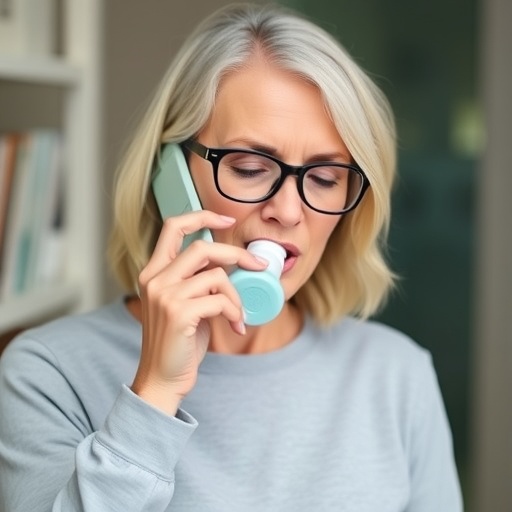
Inhaler medications remain a cornerstone in managing chronic obstructive pulmonary disease (COPD), a group of chronic respiratory conditions including emphysema and chronic bronchitis. COPD currently affects over 30 million individuals in the United States alone and stands as the fourth leading cause of death worldwide. Despite the widespread use of inhaled therapies, improper inhaler technique is a pervasive problem that compromises medication delivery and clinical outcomes. A groundbreaking study published in the March 2026 issue of Chronic Obstructive Pulmonary Diseases: Journal of the COPD Foundation reveals that a novel phone-based teach-to-goal inhaler education program can significantly improve inhaler usage among Medicare Advantage beneficiaries with COPD, marking a pivotal advancement in remote patient education and disease management.
The fundamental challenge addressed by this study is the persistent incorrect use of inhaler devices, which prior research has shown to affect nearly 40% of COPD patients. Improper inhaler technique can severely diminish the efficacy of bronchodilators and corticosteroids, leading to frequent disease exacerbations, increased hospitalizations, and diminished quality of life. The study specifically targeted individuals diagnosed with COPD within the last two years who have filled at least one maintenance inhaler prescription in the preceding year. This population represents a critical window for intervention where proper education can alter the trajectory of disease management and control.
Central to the research is the implementation of the “teach-to-goal” educational strategy delivered via telephone. This method employs a rigorous teach-back mechanism, a pedagogical technique wherein participants are instructed to articulate or demonstrate their inhaler technique in their own words or actions. The interactive nature of this approach ensures that instructions are not just passively received but actively internalized and correctly executed. If errors persist, additional rounds of instruction and demonstration are administered until technique mastery is achieved, thus “teaching to the goal” of proper inhaler use.
The telephone-based delivery model stands out for its potential to overcome significant barriers associated with traditional, in-person inhaler education. Time constraints, geographic limitations, and physical mobility issues often impede patients from accessing face-to-face training with healthcare professionals. By leveraging telecommunication technology, this program offers a scalable and accessible alternative, crucial for Medicare Advantage beneficiaries, who often include older adults and individuals with limited access to healthcare facilities. The study underscores that this remote educational intervention not only enhances learning outcomes but also aligns with broader trends in digital health and telemedicine.
Quantitative outcomes from the study were striking. At baseline assessment, about 40% of participants exhibited incorrect inhaler technique. Following the initial teach-to-goal session over the phone, this proportion plummeted to approximately 7%, reflecting a remarkable improvement. Furthermore, every participant completed at least two teach-to-goal sessions, underscoring the program’s structured reinforcement approach. These results highlight the extent to which focused, iterative instruction can catalyze behavioral change and skill acquisition in medication administration.
The implications of these findings are multifaceted. On one level, improving inhaler technique directly translates to enhanced drug delivery efficacy, better symptom control, fewer exacerbations, and a potential reduction in healthcare costs associated with COPD management. On another level, this study sets a precedent for integrating patient-centered educational interventions within routine care pathways, harnessing telephonic coaching as a cost-effective and patient-friendly modality. It also emphasizes the critical role of personalized medicine approaches that tailor education to individual patient needs and learning styles.
Dr. Valerie G. Press, M.D., MPH, the study’s lead author and a professor at the University of Chicago, remarks that this phone-based program can dismantle common barriers preventing patients from receiving adequate inhaler education. She acknowledges the challenge posed by time constraints and location but highlights how telephonic instruction dynamically adapts to patients’ contexts, thereby broadening the reach of essential healthcare training. Dr. Press advocates for further research aimed at refining this educational model to enhance personal tailoring, thereby maximizing its impact across diverse patient populations.
Importantly, the study’s educational intervention aligns well with ongoing efforts to digitize and democratize healthcare delivery. In an era increasingly shaped by telehealth, remote education programs like this exemplify how technology can be leveraged to maintain high-quality care standards outside conventional clinical environments. The implications extend beyond COPD, potentially informing patient education strategies for other chronic diseases where treatment adherence and technique are critical.
This transformational program also invites healthcare payers and providers to reconsider the landscape of COPD management. The integration of teach-to-goal phone sessions within Medicare Advantage plans may serve as a cost-effective adjunct to standard care, potentially reducing emergency room visits and hospital admissions attributable to COPD flare-ups. Such health economic benefits underscore the importance of embedding innovative educational interventions into health systems at scale.
In parallel, the study’s approach raises intriguing questions about patient engagement and health literacy. The teach-back methodology not only reinforces technical skills but also encourages active patient participation and self-efficacy, critical determinants of long-term adherence and disease control. This empowerment underscores the potential of educational programs to transform patients from passive recipients of care to proactive managers of their health.
While this study primarily focuses on technique mastery, subsequent research could explore the longitudinal impact of improved inhaler use on clinical endpoints such as lung function, exacerbation rates, and quality of life indices. Moreover, integrating digital inhaler sensors or app-based feedback may complement telephonic education, offering real-time adherence monitoring and individualized feedback loops.
In summary, the novel phone-based teach-to-goal inhaler education program delineated in this study represents a significant leap forward in COPD management. It successfully addresses a prevalent challenge—incorrect inhaler use—by employing an evidence-based pedagogical framework delivered through accessible technology. This innovative approach promises to improve patient outcomes, reduce healthcare burdens, and advance the paradigm of remote chronic disease management, heralding a new era of patient-centered, technology-enabled respiratory healthcare.
Cite Scienmag News
Courtney Benton. (April 29, 2026). Phone-Based Education Enhances Inhaler Technique in COPD Patients. Scienmag. https://scienmag.com/phone-based-education-enhances-inhaler-technique-in-copd-patients/
Courtney Benton. "Phone-Based Education Enhances Inhaler Technique in COPD Patients." Scienmag, 29 April 2026, https://scienmag.com/phone-based-education-enhances-inhaler-technique-in-copd-patients/. Accessed 4 September 2026.
Courtney Benton. "Phone-Based Education Enhances Inhaler Technique in COPD Patients." Scienmag. April 29, 2026. https://scienmag.com/phone-based-education-enhances-inhaler-technique-in-copd-patients/


