


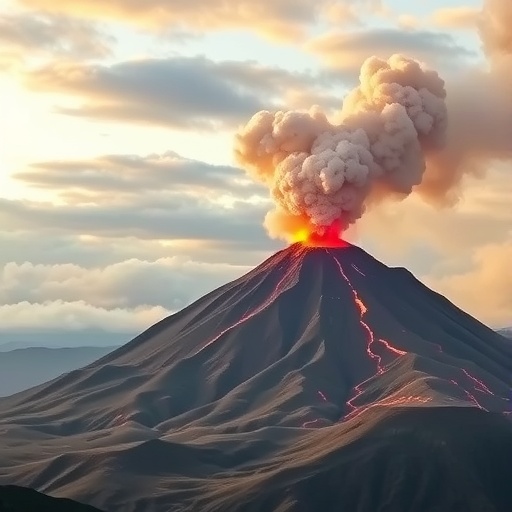
Volcanoes represent some of the most formidable and unpredictable natural forces on our planet. Their eruptions can shape landscapes, influence climate, and pose significant hazards to nearby populations. Despite centuries of observation and study, predicting volcanic eruptions with precision remains a monumental challenge within the geoscience community. In recent years, the advent of machine learning (ML) and artificial intelligence (AI) has stirred excitement for their potential to transform volcanology. However, these technologies also bring complex questions about interpretability, reliability, and societal impact.
A groundbreaking article recently published in Artificial Intelligence in Geosciences presents a comprehensive evaluation of the promises and pitfalls that machine learning models present when applied to volcano science. This research, conducted by two expert scientists from the University of Perugia, delves deeply into how AI methods are currently employed to analyze vast datasets such as seismic activity, geochemical signatures, and satellite observations. Their work emphasizes the necessity of critical reflection in adopting these tools, underscoring that advanced algorithms are far from a magical solution.
The core strength of ML lies in its ability to ingest and process enormous volumes of heterogeneous data far more rapidly than conventional methodologies. Seismic sensors deployed around volcanoes generate continuous streams of data revealing subterranean tremors and shifts, while satellite platforms provide real-time monitoring of surface temperature, gas emissions, and deformation. Machine learning models can uncover subtle patterns and precursor signals embedded in this data that might otherwise be dismissed or unnoticed. This capability opens the door for potential breakthroughs in early hazard detection and timely risk communication.
Yet, as the University of Perugia team explains, the seductive speed and performance of machine learning do not guarantee understanding or accuracy in high-stakes contexts. Corresponding author Maurizio Petrelli argues that interpretability and reproducibility are crucial aspects often overlooked. In volcanic hazard assessment and crisis management, decisions based on model outputs affect lives and livelihoods, making transparency paramount. The black-box nature of many AI algorithms can mask biases or misinterpretations, leading to unwarranted confidence or misplaced fear if not carefully scrutinized.
Co-author Mónica Ágreda-López elaborates on this tension, highlighting that AI should be harnessed as a complement to, rather than a replacement for, traditional volcanological expertise. Machine learning provides novel perspectives on volcanic systems, revealing complexity beyond human cognition, but must be anchored in sound scientific principles. The researchers advocate a balanced approach that integrates domain knowledge with data-driven insights, fostering methodological rigor without inhibiting innovation.
The article challenges volcanologists and AI practitioners alike to engage in an epistemological evaluation—critically considering not only what AI can do but how its operations align with existing scientific epistemologies and societal needs. For instance, how do model assumptions reflect underlying physical processes, and in what ways might incomplete or biased training data skew results? The authors stress that cultivating trust among AI developers, geoscientists, emergency responders, and communities facing volcanic threats is vital to responsible application.
In emphasizing ethical considerations, the paper recognizes the evolving policy landscapes in regions equipped with significant volcano monitoring infrastructures, such as the European Union, China, and the United States. Data governance, privacy, and equitable access to AI technologies form integral components of an ethical framework guiding machine learning deployment in geohazard science. This dimension expands the discourse beyond technical challenges toward broader societal implications.
Interdisciplinary collaboration emerges as a cornerstone recommendation from the study. Expertise from computer science, geology, emergency management, and social sciences must coalesce to ensure that AI tools address real-world problems effectively. Open data sharing and transparent model development practices are highlighted as essential steps to increase reproducibility and broaden collective understanding. These practices will also accelerate scientific advancements by enabling rigorous peer evaluation and iterative refinement.
The article also calls attention to the limitations of current datasets and the importance of experimental volcanology to complement observational data. Laboratory simulations replicating magma dynamics and eruption sequences can enrich machine learning training and validation, grounding AI models in controlled physical evidence. Similarly, incorporating ground deformation data from GPS and InSAR technologies augments the spatiotemporal resolution of volcanic processes feeding into model inputs.
Ultimately, the researchers argue that the future of volcano science lies in symbiotic human-AI partnerships. Rather than viewing AI as a standalone oracle, volcanologists should embrace these technologies as enhanced analytical instruments, capable of augmenting human expertise while respecting its inherent uncertainties and contextual complexity. The path forward necessitates ongoing dialogue, education, and transparency to safeguard public trust and optimize hazard mitigation efforts.
In conclusion, machine learning holds tremendous promise to revolutionize how scientists understand and respond to volcanic hazards. However, the promise comes with the mandate for epistemological vigilance, ethical stewardship, and collaborative innovation. The University of Perugia team’s literature review stands as a clarion call to the volcanology and AI communities alike, urging measured adoption with mindfulness to the scientific and societal ramifications. In the face of Earth’s fiery turmoil, this fusion of tradition and technology charts a hopeful path to safer, more informed responses.
Cite Scienmag News
Blake Davidson. (September 25, 2025). Perugia University Researchers Reveal How AI Unlocks the Mysteries of Volcanic Eruptions. Scienmag. https://scienmag.com/perugia-university-researchers-reveal-how-ai-unlocks-the-mysteries-of-volcanic-eruptions/
Blake Davidson. "Perugia University Researchers Reveal How AI Unlocks the Mysteries of Volcanic Eruptions." Scienmag, 25 September 2025, https://scienmag.com/perugia-university-researchers-reveal-how-ai-unlocks-the-mysteries-of-volcanic-eruptions/. Accessed 4 September 2026.
Blake Davidson. "Perugia University Researchers Reveal How AI Unlocks the Mysteries of Volcanic Eruptions." Scienmag. September 25, 2025. https://scienmag.com/perugia-university-researchers-reveal-how-ai-unlocks-the-mysteries-of-volcanic-eruptions/


