

Thursday, July 16, 2026
Science
No Result
View All Result
  • Login
  • HOME
  • SCIENCE NEWS
  • CONTACT US
  • HOME
  • SCIENCE NEWS
  • CONTACT US
No Result
View All Result
Scienmag
No Result
View All Result
Home Science News Medicine

Perioperative D-dimer to albumin ratio predicts serious complications, mortality after hip fracture

July 16, 2026
in Medicine
Reading Time: 2 mins read
0
Perioperative D-dimer to albumin ratio predicts serious complications, mortality after hip fracture

Perioperative D-dimer to albumin ratio predicts serious complications, mortality after hip fracture

65
SHARES
587
VIEWS
Share on FacebookShare on Twitter
ADVERTISEMENT

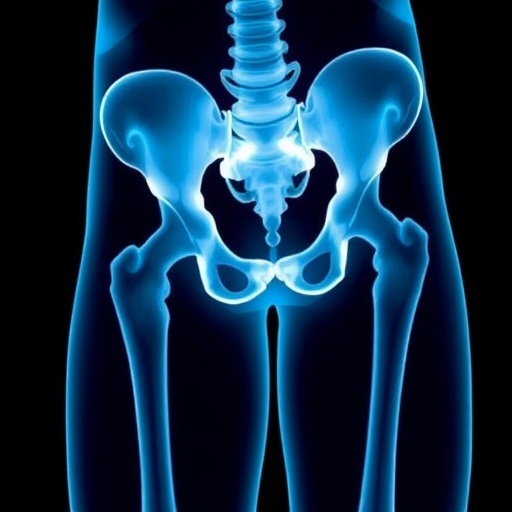
A new retrospective study out of the hip-fracture literature suggests that a simple perioperative blood marker ratio could sharpen predictions for elderly patients at high risk after surgery. Researchers focused on the perioperative D-dimer-to-albumin ratio, a composite indicator that links two clinically familiar signals: D-dimer reflects fibrin turnover and systemic coagulation activation, while albumin serves as a surrogate for nutritional and inflammatory status.

The team analyzed outcomes in older adults undergoing hip-fracture management, evaluating whether measurements taken around the time of surgery could forecast serious postoperative medical complications. They also tested the ratio’s ability to predict mortality at one year, aiming to translate laboratory data into clinically actionable risk stratification.

Technically, the study leverages the rationale that elevated D-dimer may correspond to thrombo-inflammatory processes triggered by trauma and operative stress, whereas reduced albumin may indicate impaired physiologic reserve. By computing their ratio, investigators hypothesized a stronger signal than either component alone, capturing both coagulation-driven risk and diminished recovery capacity.

The analysis framework compared patients across differing ratio levels and assessed how closely these groupings tracked adverse events. Statistical modeling was used to quantify associations between the perioperative ratio and subsequent serious complications, and to evaluate survival differences over a one-year follow-up.

Results indicate that the perioperative D-dimer-to-albumin ratio holds predictive value for postoperative serious medical complications in elderly hip-fracture patients. It also appears linked with longer-term survival, suggesting the ratio may function as an early warning tool when clinical deterioration is still preventable.

From a practical standpoint, the test is attractive because D-dimer and albumin are routinely measured in hospital laboratories. The ratio can therefore be calculated without additional assays, potentially supporting earlier identification of patients who may benefit from intensified monitoring or targeted interventions.

While retrospective designs cannot prove causality and may be influenced by unmeasured confounders, the findings align with the broader trend toward biomarker-based prognostication. If validated prospectively, the D-dimer-to-albumin ratio could become a viral “lab-to-bedside” metric for post-surgical risk alerts in geriatric orthopedics.

Subject of Research: Elderly patients with hip fracture undergoing surgery (perioperative risk prediction)

Article Title: Predictive value of perioperative D-dimer to albumin ratio for postoperative serious medical complications and one-year mortality in elderly patients with hip fracture: a retrospective study.

Article References: Liu, Y., Wang, C., Xiang, R. et al. Predictive value of perioperative D-dimer to albumin ratio for postoperative serious medical complications and one-year mortality in elderly patients with hip fracture: a retrospective study. BMC Geriatr (2026). https://doi.org/10.1186/s12877-026-07989-4

Image Credits: AI Generated

DOI: 10.1186/s12877-026-07989-4

Tags: coagulation activationelderly patient risk assessmenthip fracture surgerylaboratory markers for surgical outcomesmortality prediction in hip fracturenutritional status and inflammationPerioperative D-dimer to albumin ratiopostoperative complication predictionretrospective clinical studyrisk stratification toolssystemic coagulation and recovery capacitythrombo-inflammatory biomarkers
Share26Tweet16
Previous Post

Lehigh University Joins Global Consortium to Advance Commercial Space Research

Next Post

Permafrost Carbon Release Grows Linearly With Overshoot Warming via AMOC Tipping

Related Posts

Scientists engineer next-generation cancer treatments by disabling tumor DNA repair
Medicine

Scientists engineer next-generation cancer treatments by disabling tumor DNA repair

July 16, 2026
LIG1 Loss Reveals Targetable Weakness Against Chemotherapy-Resistant Triple-Negative Breast Cancer
Medicine

LIG1 Loss Reveals Targetable Weakness Against Chemotherapy-Resistant Triple-Negative Breast Cancer

July 16, 2026
Immune Cell Interaction Breakdown Drives Aging, New Study Finds
Medicine

Immune Cell Interaction Breakdown Drives Aging, New Study Finds

July 16, 2026
Crown Bioscience Joins C-Path Coalition for New Approach Methodologies
Medicine

Crown Bioscience Joins C-Path Coalition for New Approach Methodologies

July 16, 2026
Fractional High-Chern Insulator Realized in Twisted Rhombohedral Graphene
Medicine

Fractional High-Chern Insulator Realized in Twisted Rhombohedral Graphene

July 16, 2026
Plasma Ceramide Ratios Link Metabolic and Inflammation Markers to Parkinson’s Cognitive Decline
Medicine

Plasma Ceramide Ratios Link Metabolic and Inflammation Markers to Parkinson’s Cognitive Decline

July 16, 2026
Next Post
Permafrost Carbon Release Grows Linearly With Overshoot Warming via AMOC Tipping

Permafrost Carbon Release Grows Linearly With Overshoot Warming via AMOC Tipping

  • Mothers who receive childcare support from maternal grandparents show more

    Mothers who receive childcare support from maternal grandparents show more parental warmth, finds NTU Singapore study

    27656 shares
    Share 11059 Tweet 6912
  • University of Seville Breaks 120-Year-Old Mystery, Revises a Key Einstein Concept

    1061 shares
    Share 424 Tweet 265
  • Bee body mass, pathogens and local climate influence heat tolerance

    682 shares
    Share 273 Tweet 171
  • Researchers record first-ever images and data of a shark experiencing a boat strike

    546 shares
    Share 218 Tweet 137
  • Groundbreaking Clinical Trial Reveals Lubiprostone Enhances Kidney Function

    531 shares
    Share 212 Tweet 133
Science

Embark on a thrilling journey of discovery with Scienmag.com—your ultimate source for cutting-edge breakthroughs. Immerse yourself in a world where curiosity knows no limits and tomorrow’s possibilities become today’s reality!

RECENT NEWS

  • Safe vaccine triggers durable immune responses to prevent pancreatic cancer in high-risk people
  • Data-Driven Framework Cuts Distillation Optimization Time Significantly
  • Scientists engineer next-generation cancer treatments by disabling tumor DNA repair
  • #MeToo, Marketplace Effects: Can Social Reform Shift Consumer Spending?

Categories

  • Agriculture
  • Anthropology
  • Archaeology
  • Athmospheric
  • Biology
  • Biotechnology
  • Blog
  • Bussines
  • Cancer
  • Chemistry
  • Climate
  • Earth Science
  • Editorial Policy
  • Marine
  • Mathematics
  • Medicine
  • Pediatry
  • Policy
  • Psychology & Psychiatry
  • Science Education
  • Social Science
  • Space
  • Technology and Engineering

Subscribe to Blog via Email

Enter your email address to subscribe to this blog and receive notifications of new posts by email.

Join 5,146 other subscribers

© 2025 Scienmag - Science Magazine

Welcome Back!

Login to your account below

Forgotten Password?

Retrieve your password

Please enter your username or email address to reset your password.

Log In
No Result
View All Result
  • HOME
  • SCIENCE NEWS
  • CONTACT US

© 2025 Scienmag - Science Magazine

Discover more from Science

Subscribe now to keep reading and get access to the full archive.

Continue reading
