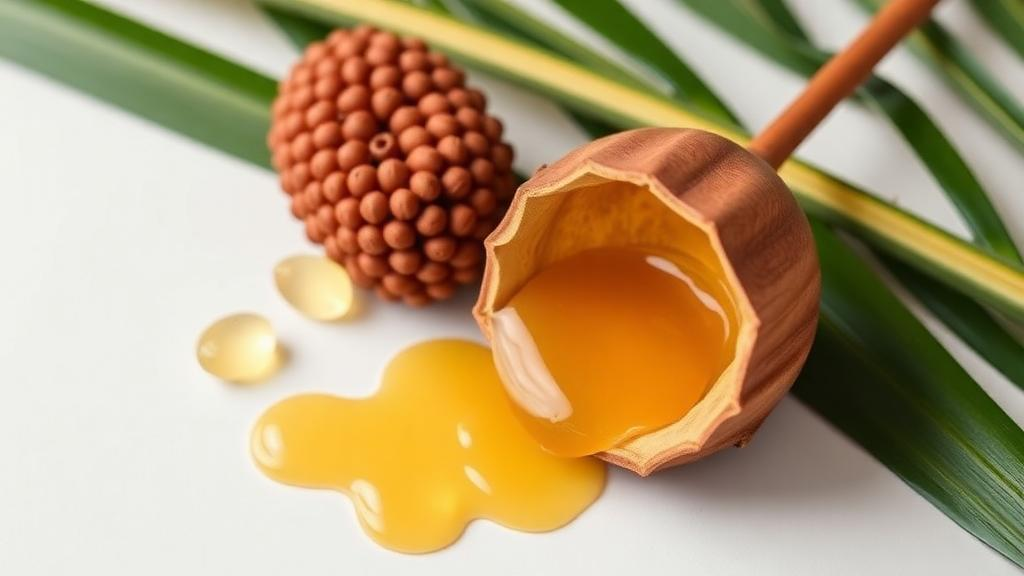
Palm kernel oil, the modest byproduct of one of the world’s most scrutinized crops, is quietly stepping into the spotlight of dermatological medicine. A comprehensive review published in the Journal of Pharmacy and Pharmaceutical Sciences by researchers at Universiti Sains Malaysia, Monash University Malaysia, Baghdad University and Indonesia’s Institut Teknologi Sepuluh Nopember has pulled together decades of evidence showing that this saturated, lauric-acid-rich oil may be one of the most versatile and affordable natural ingredients available for modern skin care. With skin, hair and nail complaints accounting for roughly 30 percent of all visits to dermatologists, and with antibiotic resistance pushing clinicians toward antibiotic-free alternatives, the timing of the analysis could hardly be better.
The authors trace PKO’s remarkable journey from a locally traded African resource in the mid-nineteenth century to a global industrial commodity. Between 1850 and 1970, the oil transformed into a major agricultural product, and by 1970 Malaysia and Indonesia together were producing about 85 percent of the world’s palm oil and palm kernel oil. Early scientific interest intensified in 1984, when Tang and Teoh demonstrated that PKO is a highly saturated oil with a low free fatty acid content, ideal as a raw material for soap manufacturing. Subsequent comparisons by Chen and Berger revealed that PKO caused fewer skin problems such as irritation than tallow, thanks to its lower content of octanoic and decanoic fatty acids. In 1985, the Palm Oil Research Institute of Malaysia, later the Malaysian Palm Oil Board, launched an industrial master plan that repositioned PKO from a mere cocoa-butter substitute into a recognized pharmaceutical fatty acid emulsifier.
Chemically, PKO is a very different animal from its better-known cousin, palm oil. Both consist of triglycerides, but PKO is dominated by medium-chain fatty acids, with lauric acid at roughly 45.6 percent and myristic acid at about 16.3 percent, while palm oil leans on long-chain unsaturated fatty acids such as palmitic and oleic acids. This saturated profile gives PKO unusually high oxidative stability, because fewer double bonds are available to react with oxygen, translating into a longer shelf life and lower rancidity. The measured figures are striking: an iodine value of about 15.86 mg KOH/g, a peroxide value of just 1.70 meq/kg, and an acid value of 2.7 mg KOH/g, all indicating robust resistance to degradation. The oil also carries meaningful levels of beta-sitosterol, at 65 to 73 percent, higher than crude palm oil, along with beta-tocopherol and phenolic compounds that contribute antioxidant activity.
The therapeutic case for PKO rests on four pharmacological pillars. First comes its antibacterial action, driven largely by lauric acid, which Kabara’s classic work identified as the most inhibitory saturated fatty acid against gram-positive organisms. Studies by Ubgogu and colleagues showed that PKO samples with higher lauric acid concentrations suppressed Staphylococcus aureus most effectively, while Loung and co-workers found hydrolyzed PKO inhibited gram-positive bacteria more strongly than gram-negative species such as Salmonella typhi and Escherichia coli. Within the human body, lauric acid is converted to monolaurin, the compound credited with protecting skin from bacterial infection. Perhaps most compelling for acne sufferers, lauric acid has been shown in both in vitro and in vivo experiments to kill Propionibacterium acnes, the bacterium behind inflammatory acne, reducing colonized bacteria on mouse ears and relieving induced swelling and granulomatous inflammation.
Wound healing represents the second pillar, with results that rival commercial products at a fraction of the cost. Zulkifli’s team produced polyurethane films from PKO esters suitable as dressings for highly draining wounds, suppressing Staphylococcus aureus and E. coli for 24 and 48 hours. Even more striking, Ibrahim and colleagues compared PKO directly against 1 percent silver sulfadiazine and 5 percent povidone-iodine creams in burn wound care. After six days of treatment, PKO and povidone-iodine showed statistically comparable, superior wound reduction, and by the eighth day wounds in both treatment groups had recovered completely. For low-income nations where the cost of burn wound care is prohibitive, a cheap, locally available oil matching expensive clinical products is a finding with real public health consequences.
Antifungal activity forms the third pillar. Kamga and co-workers tested virgin coconut oil and PKO against six Candida species and found PKO’s susceptibility profile stronger, with Candida lipolytica the most affected. Remarkably, PKO also enhanced the activity of standard antifungal drugs such as fluconazole and nystatin against Candida parapsilosis, suggesting a potential role as a synergistic co-agent. Field studies from the Ivory Coast added geographic nuance: PKO from the Blole and Dompleu regions achieved inhibition rates of up to 72 percent against Aspergillus species within 24 hours, while other regional samples showed different physicochemical and antifungal profiles. The authors attribute these effects, once again, primarily to lauric acid.
The fourth pillar is emollient and anti-ageing function, and here the clinical relevance extends to the most vulnerable patients. Chiabi and colleagues demonstrated that PKO effectively softened sensitive newborn skin, reducing peeling and dermatitis by forming a lipid film barrier among the corneocytes that holds water in the upper epidermal layer, preventing evaporation and enhancing elasticity. Other researchers confirmed its lubricating value for dry skin, a condition tied to impaired barrier function in atopic dermatitis, psoriasis, ichthyosis and contact dermatitis. On the anti-ageing front, compounds detected in PKO including myristic acid, palmitic acid, stearic acid, oleic acid and 9-octadecenol have been reported to retard ageing, stimulate repair of injured lipid cells and protect the skin from ultraviolet radiation.
Where the story turns genuinely futuristic is in drug delivery. PKO can be chemically converted into esters, glycosides and mannosides, and these derivatives have become workhorses of nanoemulsion science. Salim and colleagues loaded ibuprofen into PKO ester nanoemulsions and found that adding hydrocolloid gums such as gellan and xanthan increased skin permeability more than fourfold compared with conventional formulas. Da Costa’s team built a stable hydrocortisone nanoemulsion on PKO esters, noting their wetting and moisturizing behavior without greasy residue, while Rezaee optimized a diclofenac sodium transdermal formulation that bypassed gastrointestinal side effects and first-pass metabolism entirely. Mahadi’s group formulated a Phyllanthus urinaria extract nanoemulsion that penetrated skin layers and formed a UV-protective barrier by inhibiting free radicals, and Aripin showed that PKO glycosides outperformed palm oil glycosides at encapsulating vitamin E for dermal delivery while extending product shelf life.
The review is candid about the caveats. Comedogenicity remains a genuine concern given PKO’s lauric acid content; Fulton’s rabbit-ear model found medium-chain fatty acids potent inducers of follicular keratosis, and Choi’s 2025 case-control study linked comedogenic facial cleanser ingredients to acne. The authors stress, however, that such findings from isolated ingredients cannot be directly extrapolated to native PKO, in which the fatty acids are esterified within triglycerides, and that antimicrobial activity against P. acnes does not preclude comedogenic potential. Sensitization risks also apply mainly to chemically modified derivatives rather than the native oil, and safety assessments indicate low sensitization at tested concentrations. Sustainability looms equally large: palm production is associated with deforestation, biodiversity loss and greenhouse gas emissions, and the evidence for certification schemes such as RSPO remains mixed. Still, mandatory national frameworks like Indonesia’s ISPO and Malaysia’s MSPO, the latter recognized in 2025 by the European Union as compliant with the EU Deforestation Regulation, and corporate NDPE policies offer pathways toward responsibly sourced pharmaceutical-grade oil.
The overall verdict is that palm kernel oil and its derivatives constitute a safe, inexpensive and pharmacologically versatile platform for the next generation of dermatological therapies, from wound dressings and anti-acne formulations to transdermal nanoemulsions and neonatal emollients. The researchers call for expanded studies of its moisturizing and emollient effects, particularly for newborn skin care, and for human trials of standardized PKO preparations to define comedogenic and sensitization profiles in finished products. Consumers and formulators are encouraged to choose transparently sourced, sustainability-certified oils. If those pieces fall into place, the humble kernel of the oil palm, long overshadowed by controversy, may become one of dermatology’s most unexpected heroes.
Subject of Research: Pharmaceutical and dermatological applications of palm kernel oil and its derivatives
Article Title: The pharmaceutical applications of palm kernel oil: innovations in dermatological therapies
Article References: The pharmaceutical applications of palm kernel oil: innovations in dermatological therapies. (n.d.). https://doi.org/10.3389/jpps.2026.16205
Image Credits: AI Generated
Keywords: palm kernel oil, dermatology, lauric acid, wound healing, nanoemulsions, antibacterial, antifungal, moisturizer, drug delivery, sustainability, skin care, pharmaceutical excipients
Cite Scienmag News
Ophelia Keating. (October 15, 2026). Palm kernel oil emerges as a skin-healing star in pharmaceutical science. Scienmag. https://scienmag.com/palm-kernel-oil-emerges-as-a-skin-healing-star-in-pharmaceutical-science/
Ophelia Keating. "Palm kernel oil emerges as a skin-healing star in pharmaceutical science." Scienmag, 15 October 2026, https://scienmag.com/palm-kernel-oil-emerges-as-a-skin-healing-star-in-pharmaceutical-science/. Accessed 15 October 2026.
Ophelia Keating. "Palm kernel oil emerges as a skin-healing star in pharmaceutical science." Scienmag. October 15, 2026. https://scienmag.com/palm-kernel-oil-emerges-as-a-skin-healing-star-in-pharmaceutical-science/