


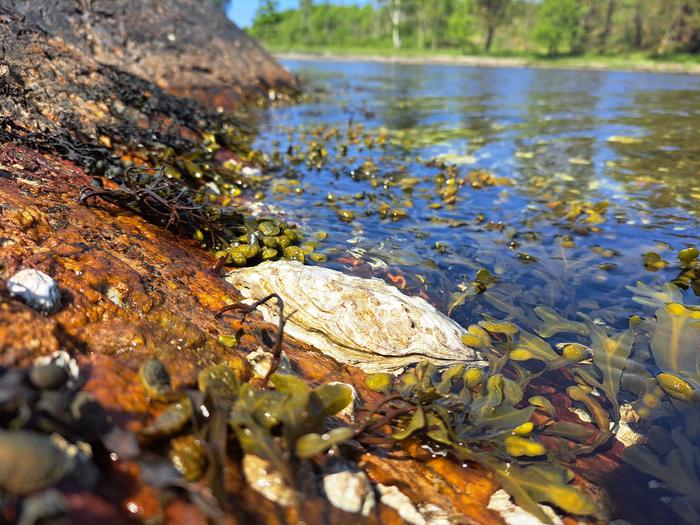
The Pacific oyster, a species known for its invasive nature, is making significant advances along the coasts of Sweden, specifically in Bohuslän and as far down as the Sound. This development raises critical questions regarding their potential impact on local ecosystems, particularly whether these oysters will continue to expand their range into the Baltic Sea. Scientists from the University of Gothenburg have recently conducted research indicating that these oysters are increasingly adapting to varied salinity levels, suggesting their future colonization of the brackish waters of the Baltic could be a distinct possibility.
Traditionally, the spread of Pacific oysters was thought to be limited by low salinity levels, which act as a natural barrier to their expansion. Historically, oysters introduced into Europe during the 1970s were initially intended to replenish dwindling native oyster populations. However, Pacific oysters quickly outpaced expectations, with their populations discovered in northern Bohuslän by 2006 and southward dispersal continuing along the Swedish coast. This phenomenon leaves scientists amazed and challenged by the oysters’ ability to thrive and reproduce in conditions once deemed inhospitable.
Research suggests that Pacific oysters are not only surviving but thriving, as they have been able to breed successfully in the less salty waters of Skåne, despite having been in the region for fewer than ten years. This adaptation highlights the resilience of the species and its potential to disrupt local marine ecosystems should they succeed in establishing themselves in the Baltic Sea. Pierre De Wit, a researcher in marine biology at the University of Gothenburg, has emphasized this key finding, noting that while adult oysters in the Sound can reproduce, it remains unclear if their larvae will be able to thrive in the brackish environment of the Baltic.
One critical factor aiding the reproductive success of Pacific oysters is temperature. Historically, cultivation efforts in Sweden during the 1970s were hindered by cooler water temperatures, which inhibited reproduction. Nevertheless, evolving climate conditions have led to an increase in sea temperatures, enabling the species to reach reproductive maturity. Summer temperatures now regularly exceed 20 degrees Celsius, thereby supporting a cycle of reproduction that previously fell short. A single female Pacific oyster can produce an astonishing number of eggs—reportedly hundreds of millions—allowing for rapid population growth as larvae disperse with currents for weeks before settling.
Additionally, researchers have discovered that not only environmental factors influence the oysters’ reproductive capabilities, but also genetic variations play a significant role. By crossbreeding Pacific oysters from varying salinity environments—from the brackish conditions of the Baltic to full marine salinity—the team observed differing capabilities in reproduction based on environmental adaptations. Oysters from Hallands Väderö, located in Skåne, demonstrated remarkable breeding success even in salinities as low as 13 parts per thousand, a significant contrast to the Bohuslän oysters, which struggled under similar conditions.
The study underscores the importance of genetic diversity as a determinant for reproductive success in low salinity environments. This genetic adaptability implies that some Pacific oysters may possess inherent traits allowing them to endure salinity variations not previously anticipated. As the researchers continue to probe the potential for these oysters to thrive in even lower salinities, they remain cautious about the overall ecological consequences of this invasive species.
Another fascinating aspect revealed in the research is the impact of external fertilization on successful breeding. Pacific oysters spawn by releasing eggs and sperm into the water, necessitating that sperm rapidly reach the eggs to achieve fertilization. Sperm viability is sensitive to environmental conditions, notably temperature and salinity, thus influencing overall reproductive success. The genetic diversity among sperm affecting their functionality adds another layer of complexity, making predictions about the future colonization of the Baltic Sea even more challenging.
As the study unfolds, it raises crucial discussions regarding the potential ecological ramifications. While the oysters have thrived thus far, the unanswered questions persist about the fate of their offspring as they drift towards the Baltic. Will the larvae find suitable habitats, or will currents push them back to coastal areas? These uncertainties add urgency to ongoing research into the Pacific oyster’s spread.
Without a doubt, the findings presented by researchers illuminate a significant aspect of marine biology concerning invasive species. The Pacific oyster’s journey from farmed delicacy to ecological disruptor provides a vivid reminder of how quickly conditions can shift and how species can adapt over time. The implications of this adaptability stretch beyond just the oysters themselves; they touch upon the intricate balances present within marine ecosystems and serve as a warning of the rapid changes we may observe in our oceans.
In conclusion, the Pacific oyster’s adaptation to Swedish waters illustrates a remarkable intersection of marine biology and environmental change. Given their trajectory, scientists will need to remain vigilant as they investigate both the oysters’ ongoing adaptations and their potential influence on local marine ecosystems. The ever-evolving narrative of the Pacific oyster serves as compelling evidence of nature’s resilience and adaptability, prompting further examination of how human activity can shape ecological landscapes.
By closely monitoring this invasive species and pursuing additional research, scientists and environmentalists aim to better understand potential outcomes for marine environments and work towards balancing human interests with ecological preservation. Decisions made today could impact these coastal ecosystems for generations to come.
Cite Scienmag News
Gavin Prescott. (March 19, 2025). Pacific Oyster May Inhabit the Baltic Sea: A Potential New Colonization. Scienmag. https://scienmag.com/pacific-oyster-may-inhabit-the-baltic-sea-a-potential-new-colonization/
Gavin Prescott. "Pacific Oyster May Inhabit the Baltic Sea: A Potential New Colonization." Scienmag, 19 March 2025, https://scienmag.com/pacific-oyster-may-inhabit-the-baltic-sea-a-potential-new-colonization/. Accessed 4 September 2026.
Gavin Prescott. "Pacific Oyster May Inhabit the Baltic Sea: A Potential New Colonization." Scienmag. March 19, 2025. https://scienmag.com/pacific-oyster-may-inhabit-the-baltic-sea-a-potential-new-colonization/


