


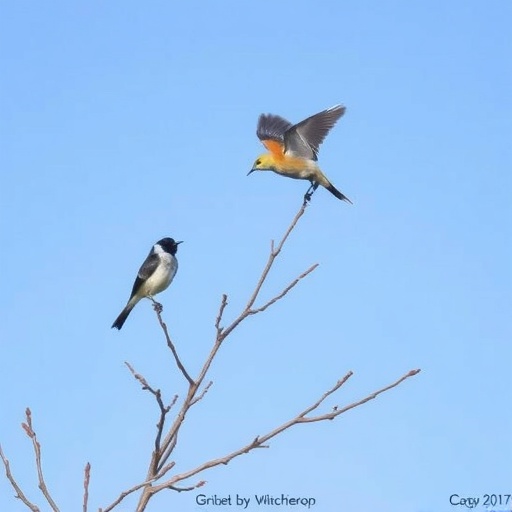
A nearly 30-year bird survey in Washington’s Puget Sound lowlands has delivered a message that could reshape how residential development is planned: New housing does not affect every bird species in the same way, and the ecological consequences depend heavily on how neighborhoods are designed. Researchers from the University of Washington found that developments preserving native vegetation and maintaining tree cover between homes supported a broader range of bird species than more intensive projects. The contrast was especially striking among forest birds that generally avoid people, including Wilson’s warblers, Swainson’s thrushes, chickadees, woodpeckers and Pacific wrens.
The findings, published in Scientific Reports, emerge from one of the longest observational studies of bird communities associated with residential construction in the region. Nearly three decades ago, researchers began visiting multiple lowland sites that were undergoing development. They returned three or four times each year during the spring and summer breeding season, recording birds by sight and sound. Combining visual observations with acoustic detections allowed the team to identify species that might remain hidden in dense vegetation or be missed during a brief visual survey. Over time, the repeated observations captured not only which birds were present, but also how entire communities changed as forest was cleared, homes were built and human activity increased.
To interpret these changes, the researchers grouped birds according to their tolerance of human environments. “Avoiders” were species closely associated with native forest and generally reluctant to occupy developed landscapes. “Adapters,” including sparrows and robins, were more flexible and could persist in a range of modified habitats. “Exploiters,” such as crows, pigeons and some hummingbirds, were considered capable of benefiting from development because they can use bird feeders, ornamental vegetation, discarded food and other resources created by people. This classification allowed the researchers to examine whether construction affected all birds equally or selectively favored species with particular ecological strategies.
The first phase of development produced an unexpected result. Before construction began, and during the early period when habitat was changing, bird diversity increased at all of the study sites. The researchers believe this temporary rise reflected habitat heterogeneity, a condition in which several different habitat types exist close together. Puget Northwest forests can be relatively uniform compared with more structurally complex ecosystems. When trees are selectively removed, openings appear in the canopy, sunlight reaches the ground and shrubs or grasses colonize newly exposed areas. These changes can attract species that do not typically occupy mature forest, even as the original forest community begins to weaken.
That ecological expansion did not last. As construction continued and disturbance became prolonged, native species began to decline, with the strongest effects occurring where housing density was highest. Avoiders showed the most consistent negative response, suggesting that their sensitivity to human presence, noise, traffic, artificial structures and habitat fragmentation makes them particularly vulnerable. Adapters produced a more uneven pattern: Some declined, while others persisted. This difference indicates that broad labels such as “urban-tolerant” may conceal important variation in behavior, diet, nesting requirements and movement patterns. Two species classified within the same tolerance group may respond very differently to the same neighborhood design.
The study also challenged the expectation that exploiter species would thrive specifically in denser developments. Crows, pigeons and hummingbirds were found in both development types rather than showing a clear preference for the most densely built landscapes. Their presence may depend on resources distributed throughout a neighborhood, including gardens, feeders, food waste, mature ornamental trees and open spaces. The result reinforces a central conclusion of the research: Bird communities cannot be predicted solely by counting houses or measuring the amount of built surface. The arrangement and quality of remaining vegetation may be just as important as the total intensity of development.
The researchers observed the greatest overall species diversity during the middle years of construction, when the landscape contained a mixture of forest remnants, clearings and developing residential areas. Such transitional conditions can create a temporary overlap between forest specialists and open-habitat species. However, the apparent diversity peak should not be mistaken for a long-term conservation success. As construction became more complete, the composition of the bird community shifted. Sensitive native species declined while birds better equipped to live around people became more prominent or remained stable. A landscape can therefore show a high species count while still losing ecological specialists that perform important roles in the original ecosystem.
The timing of the findings is significant for the Seattle region, where population growth and expanding housing demand are placing increasing pressure on remaining forestland. A report issued by Birds Connect Seattle earlier this year found that average bird counts in the city had fallen 21% since the 1990s, while species richness had declined 18%. At the same time, developers are acquiring former timberland for residential construction. In one recent case, an auction involved 4,833 acres of forest in the Snoqualmie Valley, land that could eventually permit construction of as many as 30 new homes. Such projects illustrate the scale of the choices confronting planners, landowners and communities as the region attempts to accommodate new residents while retaining habitat.
The researchers emphasize that their results do not suggest development is harmless or that every project can preserve the original bird community. Converting forest inevitably changes habitat quality, species interactions and the physical structure of the landscape. Instead, the study demonstrates that development can be configured in ways that reduce some of the damage. Retaining native trees and understory vegetation, preserving connected patches of habitat and limiting the fragmentation of forest cover could give avoider species a better chance of surviving. Lower housing density may also reduce the intensity of disturbance, although the study indicates that density alone does not explain every response. Effective planning must account for which species are present, how they use the landscape and whether habitat corridors remain functional.
The findings also caution against relying on a single bird survey or assuming that all species respond uniformly to construction. Because the researchers tracked sites repeatedly across many years, they were able to distinguish temporary increases in diversity from longer-term community change. Their work shows that development can initially bring species together that would not normally share the same habitat, creating a dramatic but unstable mixture of forest birds, open-country species and human-associated generalists. For conservation planners, that distinction is crucial. Protecting biodiversity means more than maintaining a high number of species at one moment; it also means preserving sensitive species, ecological functions and the habitat structures that support them over time. As Washington’s forests face continued conversion, the study offers developers a clear choice: Neighborhoods can be designed solely around construction efficiency, or they can incorporate the vegetation and spatial patterns that allow more of the region’s original wildlife to remain.
News Publication Date: 11-Aug-2026
Web References: https://www.nature.com/articles/s41598-026-54885-3; https://dx.doi.org/10.1038/s41598-026-54885-3
References: Scientific Reports, DOI: 10.1038/s41598-026-54885-3
Cite Scienmag News
Drew Townsend. (August 13, 2026). Over a decade of Seattle suburban observations reveals where sensitive birds avoid. Scienmag. https://scienmag.com/over-a-decade-of-seattle-suburban-observations-reveals-where-sensitive-birds-avoid/
Drew Townsend. "Over a decade of Seattle suburban observations reveals where sensitive birds avoid." Scienmag, 13 August 2026, https://scienmag.com/over-a-decade-of-seattle-suburban-observations-reveals-where-sensitive-birds-avoid/. Accessed 4 September 2026.
Drew Townsend. "Over a decade of Seattle suburban observations reveals where sensitive birds avoid." Scienmag. August 13, 2026. https://scienmag.com/over-a-decade-of-seattle-suburban-observations-reveals-where-sensitive-birds-avoid/


