


CORVALLIS, Ore. – An international collaboration that includes two Oregon State University scientists says the world’s largest marine protected areas aren’t collectively delivering the biodiversity benefits they could be because of slow implementation of management strategies and a failure to restrict the most impactful human activities.

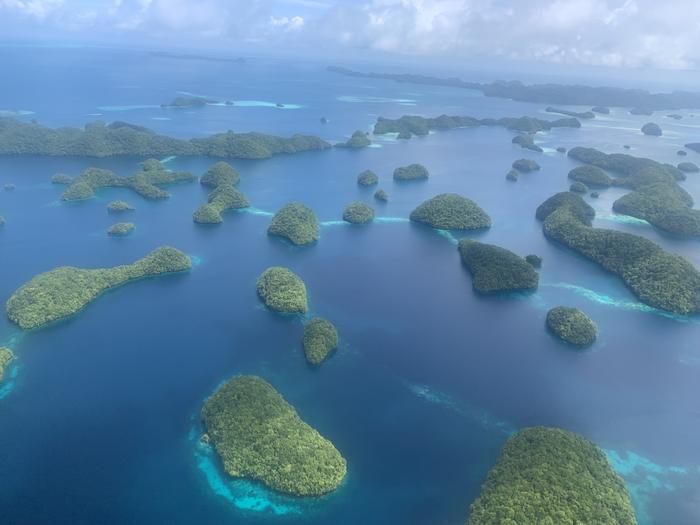
Credit: Jenna Sullivan-Stack, Oregon State University
CORVALLIS, Ore. – An international collaboration that includes two Oregon State University scientists says the world’s largest marine protected areas aren’t collectively delivering the biodiversity benefits they could be because of slow implementation of management strategies and a failure to restrict the most impactful human activities.
Their analysis of the 100 biggest marine protected areas or MPAs, which account for nearly 90% of the Earth’s protected ocean areas, was published today in Conservation Letters.
Ocean biodiversity supports human life by regulating climate, producing oxygen and food, and providing many other benefits. Having many different species in an area helps ward off negative impacts on the ocean ecosystem, impacts that can include damage to human food supplies as well as a loss of genes and molecules with potential importance in medicine and industry.
The research evaluated key indicators for biodiversity success based on criteria established by “The MPA Guide: A framework to achieve global goals for the ocean,” published in Science in 2021. Kirsten Grorud-Colvert, a marine ecologist in the OSU College of Science, was the lead author of the guide and one of 11 co-authors on the just-published analysis.
“Now more than ever we need healthy and biodiverse areas in the ocean to benefit people and help buffer threats to ocean ecosystems. Marine protected areas can only achieve this if they are set up to be effective, just and durable,” Grorud-Colvert said. “Our assessment shows how some of the largest protected areas in the world can be strengthened for lasting benefits.”
Marine protected areas are parts of the ocean managed to achieve the long-term conservation of nature. They are established to protect and recover marine biodiversity, promote healthy and resilient ecosystems, and provide lasting benefits to both people and the planet.
As the world aims to protect at least 30% of the ocean by 2030 – a target set by a United Nations international agreement – the assessment provides a reminder that achieving that goal requires both increased quantity and improved quality of marine protected areas, Grorud-Colvert said.
The report’s findings also raise questions about the effectiveness of current conservation efforts in achieving the declared goals of marine protection, she added.
Beth Pike of the nonprofit Marine Conservation Institute led the assessment and said the intended outcomes of marine protected areas are closely linked to the MPAs’ design and management.
“MPAs can deliver significant benefits to people, nature and the planet, but unfortunately, we see vast gaps between the amount of ocean covered by MPAs and the strength of those protections in many cases,” she said. “Quality, not just quantity, should indicate progress toward reaching the goal of protecting at least 30% of the ocean by 2030.”
The World Database on Protected Areas from the UN’s Environment Programme World Conservation Monitoring Centre lists more than 18,000 marine protected areas covering 30 million square kilometers – roughly 8% of the global ocean. The 100 largest MPAs together cover about 26.3 million square kilometers.
The MPA Guide connects conservation outcomes to scientific evidence, providing a framework to categorize MPAs and whether they are set up to successfully contribute to those outcomes. MPAs have proven they can be effective tools for ocean conservation when set up and run properly, but today’s report highlights wide variations in design, goals, regulations and management.
For example, Grorud-Colvert said, some MPAs allow oil and gas exploration, industrial fishing and aquaculture, while others are highly protected. One-quarter of the areas lack management plan implementation.
Without regulations or management, these areas are no different from surrounding unprotected waters and cannot deliver conservation benefits, said another Oregon State marine ecologist, Jenna Sullivan-Stack, also a co-author of the assessment.
“When people hear that an area of ocean is a marine protected area, we expect a healthy ocean area with abundant marine life that sustains local communities in the long term. That’s not always the case,” Sullivan-Stack said. “Here we’ve used a standardized assessment method to provide an evidence-based understanding of where we actually stand on ocean protection in MPAs, and we show that a large portion of the global marine protected area is not actually set up or functioning to achieve these goals.”
Sullivan-Stack, Grorud-Colvert and their collaborators also note that large MPAs are disproportionately found in remote areas, leaving important habitats and species in less remote areas unprotected.
Journal
Conservation Letters
Method of Research
Survey
Subject of Research
Not applicable
Article Title
Ocean protection quality is lagging behind quantity: Applying a scientific framework to assess real marine protected area progress against the 30 by 30 target
Article Publication Date
9-May-2024
COI Statement
The authors declare no conflict of interest.
Cite Scienmag News
Violet Maxwell. (May 9, 2024). Oregon State scientists, collaborators say ocean biodiversity work needs improvement. Scienmag. https://scienmag.com/oregon-state-scientists-collaborators-say-ocean-biodiversity-work-needs-improvement/
Violet Maxwell. "Oregon State scientists, collaborators say ocean biodiversity work needs improvement." Scienmag, 9 May 2024, https://scienmag.com/oregon-state-scientists-collaborators-say-ocean-biodiversity-work-needs-improvement/. Accessed 4 September 2026.
Violet Maxwell. "Oregon State scientists, collaborators say ocean biodiversity work needs improvement." Scienmag. May 9, 2024. https://scienmag.com/oregon-state-scientists-collaborators-say-ocean-biodiversity-work-needs-improvement/

