


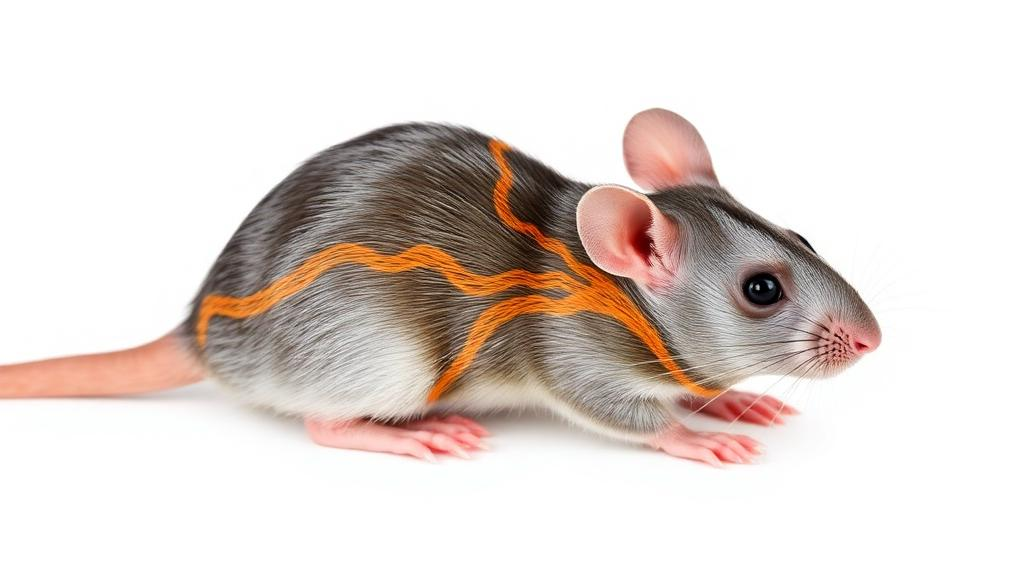
Peripheral nerve injuries are among the most stubborn problems in modern medicine. When a nerve is cut, the body launches a slow, energy-intensive repair program that can take months to complete, and in many cases function never fully returns. Now, a team of researchers at the University of Messina in Italy reports that an experimental oral drug called SUN11602 accelerated the earliest stages of nerve regeneration in a rat model of median nerve injury, offering a glimpse of a pharmacological strategy that could one day complement microsurgery. The study, published in the Journal of Cellular and Molecular Medicine, focused on the first seven days after injury, a window when the cellular choreography of repair is just beginning.
The biology underlying peripheral nerve repair is intricate. After a nerve is transected, the segment downstream of the cut undergoes Wallerian degeneration, a process in which the axoplasm and axolemma break down and myelin debris accumulates in the injured stump. This debris must be cleared before new axons can grow. Schwann cells, the glial cells of the peripheral nervous system, respond by rapidly de-differentiating into repair-mode cells that secrete pro-regenerative factors, digest myelin through autophagy, recruit macrophages, and form regeneration tracks, known as bands of Büngner, that guide growing axons from the proximal stump back toward their original targets. Macrophages, meanwhile, perform the dual tasks of removing debris and supporting axon elongation. Coordinating all of these players takes time; axons may need up to ten months to reach their target tissues, which is why clinicians have long sought drugs that can safely speed the process.
Neurotrophic factors, the signaling proteins that nurture neuronal survival and growth, have been an obvious place to look. Molecules such as nerve growth factor, brain-derived neurotrophic factor, glial cell line-derived neurotrophic factor, VEGF and IGF-1 have all shown promise in experimental settings. Yet their clinical translation has been hampered by poor pharmacokinetics, high costs and significant side effects. Basic fibroblast growth factor, or bFGF, is one of the most powerful of these agents, secreted by Schwann cells and neuronal populations, and it stimulates the proliferation of neurons, Schwann cells and fibroblasts while playing a pivotal role in nerve and spinal cord repair. But native bFGF has a troubled clinical record. A trial in acute stroke patients failed to demonstrate efficacy and revealed fever, lowered blood pressure, elevated leukocyte counts and potential carcinogenic effects, largely because the growth factor also drives cell proliferation.
SUN11602 was designed to sidestep that problem. It is a small aniline-derivative molecule that mimics the neuroprotective effects of bFGF by engaging the same receptor, FGFR1, a transmembrane tyrosine kinase receptor to which bFGF binds with high affinity. Crucially, SUN11602 activates FGFR1 to induce expression of calbindin-D28k, a calcium-binding protein that helps maintain intracellular calcium homeostasis, without triggering the proliferative activity that makes native bFGF risky. The compound also boasts pharmacokinetics that make it a plausible drug candidate: oral bioavailability above 65 percent in rodents and dogs. Previous studies have suggested neuroprotective effects in models of Alzheimer’s disease, depression, Parkinson’s disease and traumatic spinal cord injury, but its role in peripheral nerve regeneration had not been tested.
To fill that gap, the Messina team used sixteen female Wistar rats and a surgically precise injury model. Under an operative microscope, the median nerve of the left upper limb was exposed at the middle third of the brachium and transected, then repaired with an end-to-end suture using two to three epineurial stitches of 9-0 monofilament nylon, replicating the standard clinical repair technique. Beginning 24 hours after surgery, one group of injured rats received SUN11602 at 2.5 milligrams per kilogram by oral gavage once daily for seven consecutive days, while injured controls received only saline. A sham group underwent incision without nerve section. The dose and route were grounded in earlier in vivo work by the same laboratory, and the study was conducted under Italian and European animal research regulations with approval from the Ministry of Health.
Seven days after suture, the differences between groups were visible under the microscope. Haematoxylin and eosin staining revealed that the injured, untreated nerves had the expected hallmarks of acute Wallerian degeneration: structural disorganization, oedema, vacuolization and early myelin and axonal degeneration. Nerves from the SUN11602-treated animals, by contrast, showed comparatively preserved architecture, with reduced vacuolization and less tissue disarray. In other words, the drug appeared to blunt the secondary damage that typically accompanies the degenerative phase, without abolishing degeneration itself, which the authors emphasize is a physiologically required step for successful regeneration.
The anti-inflammatory effects were equally striking. Toluidine blue staining, which highlights mast cells, showed that injured control nerves accumulated large numbers of these cells in the connective tissue and along axon fibres with irregular morphology and degenerating myelin sheaths. Mast cells congregate near peripheral nerves and are considered key orchestrators of neurogenic inflammation and neuropathic pain. In the SUN11602-treated group, mast cell accumulation was suppressed and axon fibre density was higher. Immunostaining for IBA-1, a marker of activated resident macrophages, and CD68, a marker of pro-inflammatory M1 macrophages that infiltrate the injury site and release cytokines, both showed intense upregulation after nerve transection. SUN11602 treatment significantly attenuated both, suggesting the drug restrains the inflammatory response that can otherwise impede repair in the critical first days after injury.
The compound also appeared to support the rebuilding side of the ledger. Immunofluorescence labeling for S100, a Schwann cell marker, showed more consistent and interconnected stained areas in treated nerves, indicating enhanced Schwann cell proliferation and myelinization. Quantification of myelin basic protein by ELISA confirmed the histological picture: concentrations of MBP were significantly higher in the SUN11602 group than in injured controls, evidence of increased myelin production at the molecular level. MCOLL staining, a histochemical method that distinguishes myelin in blue from collagen fibers in red, allowed the researchers to visualize the nodes of Ranvier and the organization of connective tissue around nerve fibers. Injured control nerves showed marked demyelination and disorganized collagen deposition consistent with fibrosis, whereas treated nerves displayed axonal remyelination and reorganized collagen architecture.
The authors are careful about what these findings do and do not mean. All evaluations were performed at a single early time point, seven days after suture, when axonal regeneration and remyelination are only beginning. The observed attenuation of myelin degradation, they write, should not be read as a global inhibition of Wallerian degeneration; rather, they hypothesize that SUN11602 may selectively reduce secondary or excessive demyelination in spared fibers, a distinction that will require ultrastructural analysis and time-course studies of myelin clearance to confirm. The histological improvements also remain unlinked to functional recovery, since no electrophysiological or behavioral testing was included. Future work, the team notes, should incorporate extended follow-up periods, functional and electrophysiological assessments, and combination strategies such as nerve conduits and biomaterials to better mimic complex clinical conditions.
Even with those caveats, the study adds SUN11602 to a short list of candidates that could reshape how peripheral nerve injuries are treated. Because it is orally bioavailable and lacks the proliferative liabilities of native bFGF, the compound addresses the two biggest obstacles that have kept neurotrophic therapies out of the clinic: delivery and safety. If the early histological benefits observed here translate into sustained axonal regrowth, remyelination and functional recovery in longer studies, an oral pill taken in the days and weeks after nerve repair surgery could become a genuine adjunct to the operating microscope. For now, the message from Messina is a proof of principle: the molecular machinery of nerve regeneration can be pharmacologically tuned, and the earliest, most inflammatory phase of repair may be the best place to intervene.
Subject of Research: Pharmacological enhancement of early peripheral nerve regeneration using the oral FGFR1 agonist SUN11602 in a rat median nerve transection model
Article Title: SUN11602 Accelerates Early Peripheral Nerve Regeneration in an Experimental Median Nerve Transection Model
Article References: Casili, G., Papalia, I., Ardizzone, A., Basilotta, R., Costa, A. L., Titolo, P., Esposito, E., Colonna, M. R., & Galeano, M. (2026). SUN 11602 Accelerates Early Peripheral Nerve Regeneration in an Experimental Median Nerve Transection Model. Journal of Cellular and Molecular Medicine, 30(19), Article e71375. https://doi.org/10.1111/jcmm.71375
Image Credits: AI Generated
DOI: 10.1111/jcmm.71375
Keywords: peripheral nerve injury, SUN11602, FGFR1, bFGF, Schwann cells, Wallerian degeneration, mast cells, macrophages, myelination, median nerve transection, neuroprotection, rat model
Cite Scienmag News
Drew Townsend. (September 30, 2026). Oral Drug SUN11602 Speeds Early Nerve Regeneration in Rat Study. Scienmag. https://scienmag.com/oral-drug-sun11602-speeds-early-nerve-regeneration-in-rat-study/
Drew Townsend. "Oral Drug SUN11602 Speeds Early Nerve Regeneration in Rat Study." Scienmag, 30 September 2026, https://scienmag.com/oral-drug-sun11602-speeds-early-nerve-regeneration-in-rat-study/. Accessed 4 October 2026.
Drew Townsend. "Oral Drug SUN11602 Speeds Early Nerve Regeneration in Rat Study." Scienmag. September 30, 2026. https://scienmag.com/oral-drug-sun11602-speeds-early-nerve-regeneration-in-rat-study/


