


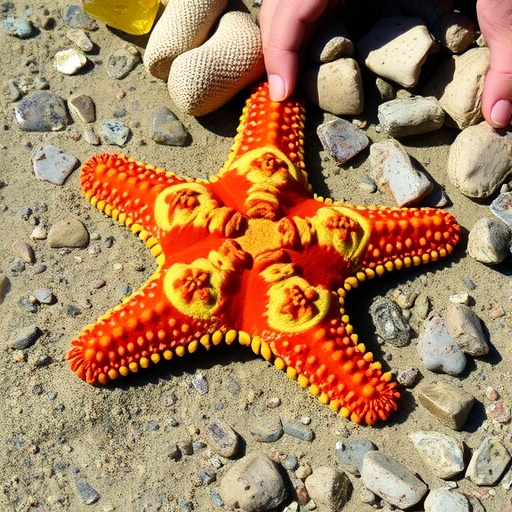
On Oregon’s rugged coastline, the ochre sea star—a keystone predator critical to the intertidal ecosystem—has exhibited an astonishing resurgence following a catastrophic population crash nearly a decade ago. This rebound, documented through meticulous multi-site longitudinal observations by researchers at Oregon State University and Cal Poly San Luis Obispo, signals a possible ecological turning point. The findings, recently published in the journal Ecosphere, cast new light on the dynamics governing marine species recovery amidst disease-driven mass mortality.
The ochre sea star populations along the Oregon Coast once faced precipitous declines of up to 84% due to a virulent wasting disease outbreak that swept through in 2014. Characterized by symptoms such as lesions, arm twisting, and tissue degradation—symptoms so severe that affected individuals seemed to be literally melting away—this disease threatened to extirpate the species from the region. The etiological agent behind this epidemic, Vibrio pectenicida, a bacterial pathogen, was only recently confirmed by an international research consortium, underscoring the complexity of marine pathogen identification.
In the years following the crisis, researchers observed a remarkable “baby boom” of juvenile ochre sea stars populating the intertidal zones. This influx was so dramatic that young individuals increased by a staggering 8,000%, suggesting a demographic rebound that defied initial expectations of long-term population collapse. By carefully monitoring eight distinct locations over a 23-year period, the research team was able to chronicle the transition of many of these juveniles into adulthood, providing robust evidence for a natural recovery trajectory.
While the study does not conclusively determine whether this juvenile surge was triggered directly by the wasting disease epidemic or represents a fortuitous ecological coincidence, the correlation remains significant. Scientists theorize that mass mortality events may paradoxically create resource pulses allowing surviving populations to rebound quickly, though alternative hypotheses posit that environmental variables unrelated to disease could have facilitated this recovery.
The implications of this resurgence extend far beyond mere population numbers. Ochre sea stars function as a keystone predator by preying on California mussels, organisms that tend to overgrow and dominate intertidal habitats if left unchecked. The predatory pressure from sea stars prevents mussel beds from monopolizing space, thereby fostering biodiversity by allowing other invertebrates and seaweeds to flourish. The study reveals that, at approximately 75% of the surveyed locations, predation rates on mussels have recuperated to levels consistent with conditions prior to the wasting epidemic, signaling ecological restoration in the affected intertidal ecosystems.
However, the recovery is nuanced. Although density and predation metrics have rebounded, the average size of the adult sea stars remains diminished, approximately 25% to 65% smaller than pre-epidemic norms at most sites. This size reduction potentially impacts reproductive capacity and predator-prey dynamics, and may reflect ongoing population instability. Additionally, interannual fluctuations in population abundance remain more pronounced than before the outbreak, indicating that populations have not yet regained the steady-state balance they once maintained.
This lingering instability is likely influenced by continued episodic recruitment events of juvenile sea stars coupled with intermittent re-emergence of the wasting disease. These findings underscore the complexity of disease dynamics in marine metapopulations, where localized mortality events interplay with dispersal and recruitment to create a mosaic of population responses. This spatial and temporal heterogeneity challenges simplistic models of recovery and necessitates long-term, multi-site monitoring to understand resilience mechanisms.
The research team’s work emphasizes metapopulation-scale resilience—that is, the capacity of geographically separated populations connected by dispersal to collectively persist despite localized disturbances. Such resilience mechanisms are vital for species facing emerging infectious diseases in marine environments, where disease outbreaks can be sudden, severe, and spatially patchy.
While causality between the disease epidemic and the baby boom remains elusive, the study offers hope that ochre sea stars possess intrinsic biological or ecological traits enabling them to bounce back after mass mortality events. This resilience could hinge on high fecundity, larval dispersal capacity, or niche flexibility, factors that warrant future investigative efforts to inform conservation strategies.
Beyond ecological interest, these findings carry broader implications for managing marine diseases and preserving ecosystem functions. Keystone predators like the ochre sea star play pivotal roles structuring intertidal communities; their loss or recovery can cascade through trophic webs, influencing species composition and habitat complexity.
The confirmation that Vibrio pectenicida drives wasting disease adds a critical piece to the puzzle, opening avenues for targeted marine disease management. This knowledge stems from collaborative research involving institutions including the University of British Columbia, the University of Washington, the U.S. Geological Survey, and the Hakai Institute, highlighting the necessity of interdisciplinary and international cooperation in tackling ocean health challenges.
Ultimately, this decade-long study affirms the dynamic nature of marine ecosystems challenged by disease outbreaks. It underscores the importance of sustained monitoring and innovative research methodologies to reveal complex patterns of decline and resurgence. As the ochre sea stars gradually reclaim their ecological niche, their story offers a testament to nature’s resilience and a reminder of the precarious balance that sustains ocean biodiversity.
Cite Scienmag News
Gavin Prescott. (October 28, 2025). Ochre Sea Star ‘Baby Boomers’ Mature, Indicating Species Recovery. Scienmag. https://scienmag.com/ochre-sea-star-baby-boomers-mature-indicating-species-recovery/
Gavin Prescott. "Ochre Sea Star ‘Baby Boomers’ Mature, Indicating Species Recovery." Scienmag, 28 October 2025, https://scienmag.com/ochre-sea-star-baby-boomers-mature-indicating-species-recovery/. Accessed 3 September 2026.
Gavin Prescott. "Ochre Sea Star ‘Baby Boomers’ Mature, Indicating Species Recovery." Scienmag. October 28, 2025. https://scienmag.com/ochre-sea-star-baby-boomers-mature-indicating-species-recovery/


