

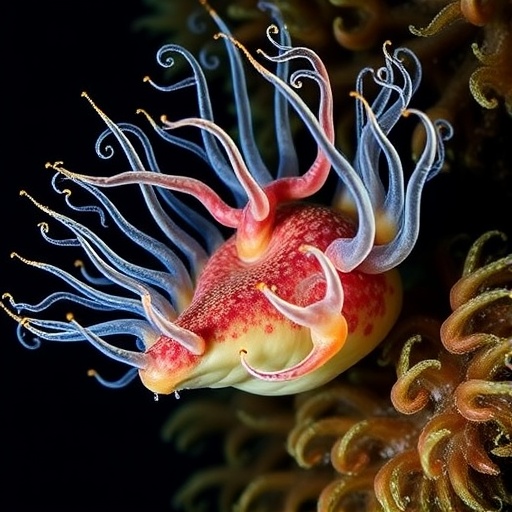

image: Collage of the 24 new Amphipod species identified in Clarion-Clipperton Zone
Credit: National Oceanography Centre, Southampton
Researchers have announced the discovery of 24 new deep-sea amphipod species – including one new superfamily – from the Clarion-Clipperton Zone (CCZ), in the central Pacific Ocean.
The discoveries, which have been published today (Tuesday 24 March) as part of a new open-access ZooKeys special issue, mark a significant advance in identifying the biodiversity of the CCZ – an area which spans six million square kilometres between Hawai’i and Mexico.
Led by Dr Anna Jażdżewska, University of Lodz (UL), and Tammy Horton, National Oceanography Centre (NOC), 16 experts and early-career scientists came together for a week-long taxonomy workshop dedicated to describing new amphipod species from the CCZ, which was organised at the Department of Invertebrate Zoology and Hydrobiology, Faculty of Biology and Environmental Protection, UL in 2024.
Their findings form part of the International Seabed Authority’s Sustainable Seabed Knowledge Initiative (SSKI) and its ‘One Thousand Reasons’ project, which aims to describe 1,000 new species by the end of the decade.
The research revealed a number of firsts for science, with 24 newly described species spanning 10 amphipod families, including predators and scavengers.
Notable discoveries include:
- A new family (Mirabestiidae) and superfamily (Mirabestioidea), revealing completely new evolutionary branches.
- Two new genera (Mirabestia and Pseudolepechinella).
- Deepest-known records for multiple genera.
- First molecular barcodes for rare species.
Dr Tammy Horton said: “To find a new superfamily is incredibly exciting, and very rarely happens so this is a discovery we will all remember.
“With more than 90% of species in the CCZ still unnamed, each species described is a vital step towards improving our understanding of this fascinating ecosystem.
“Describing the species encountered during these studies is a critical step in documenting the rich biodiversity of the CCZ, enabling us to communicate effectively about the fauna.”
A Global Collaboration
Taxonomy is vital to understanding the fauna of the CCZ, providing fundamental knowledge of species, their distributions, and how each species contributes to the fragile ecosystem.
Eight of the species were identified and described by researchers from NOC, who joined colleagues from around the globe including institutions, such as University of Lodz, Natural History Museum, London, Canadian Museum of Nature, Earth Sciences New Zealand (NIWA), University of Hamburg, Senckenberg – Leibniz Institution for Biodiversity and Earth System Research (SGN) and University Museum of Bergen.
The collaborative project also demonstrated the effectiveness of running coordinated and focused taxonomic workshops, providing a model way of working for the future.
Anna Jażdżewska, University of Lodz, said: “This was a truly collaborative process that allowed us to achieve the ambitious goal of describing more than 20 species new to science within a year – something that would not have been possible if each of us worked independently.
“The team’s findings provide information that is crucial for future conservation and policy decisions, and it highlights how important it is for this work to continue.”
Through initiatives such as these describing around 25 species per year, the amphipods in the eastern CCZ could be almost completely known within 10 years.
What’s in a name?
New species must each be named, and that honour falls to the research team who often draw inspiration from those around them.
Many of the 24 new species have been given meaningful names by those who have spent time learning about them and describing them.
Co-leads Dr Tammy Horton and Anna Jażdżewska both saw species named for them, Byblis hortonae, Thrombasia ania and Byblisoides jazdzewskae (respectively).
Dr Horton named one of the species in the new superfamily (Mirabestia maisie) after her daughter, who has waited several years to join her siblings in having that unusual honour.
There was an opportunity to pay tribute to the World Register of Marine Species (WoRMS), with Eperopeus vermiculatus being given the name in recognition of WoRMS which researchers described as providing a ‘wonderful resource for all marine taxonomists’.
Involving early‑career scientists (including students) also allowed them to leave their mark in the species names, by commemorating their relatives and by creating intriguing links between the deep sea and the virtual world. According to the author, one species, Lepidepecreum myla, resembles Myla (a character from a video game), as both ‘are just little arthropods trying to survive in total darkness.’
The team also drew inspiration from linguistics for one species, with Pseudolepechinella apricity representing the spirit of warmth of friendship that came from the week-long workshop.
Dr Horton revealed: “Apricity means the feeling of the warmth of the winter sun, and it is one of my favourite words. It was very apt to use during the workshop as we discussed our findings in the warmth of the February sun amid the snow of the Polish winter in Lodz. It was certainly fitting to also use it for one of our amphipod discoveries.
“We came together as research colleagues, but the spirit of collaboration and shared experience shone through, so it was important to recognise that in our work.”
ENDS
About the National Oceanography Centre (NOC)
The UK’s National Oceanography Centre (NOC) is one of the world’s top ocean research institutions. NOC’s scientists work around the globe, uncovering links between the ocean, climate change and biodiversity loss, to help every living thing on our planet flourish.
NOC solves challenging multidisciplinary, large scale, long-term marine science problems to underpin international and UK public policy, business and societal outcomes.
NOC is a company limited by guarantee set up under the law of England and Wales (11444362) and registered as a charity (1185265).
NOC operates the Royal Research Ships James Cook and Discovery and develops technology for coastal and deep ocean research.
Working with its partners NOC provides long-term marine science capability including: sustained ocean observations, mapping and surveying; data management; modelling and scientific research and advice.
Among the resources that the NOC provides on behalf of the UK are the British Oceanographic Data Centre (BODC), the Marine Autonomous and Robotic Systems (MARS) facility, the National Marine Equipment Pool (NMEP), the National Tide and Sea Level Facility (NTSLF), the Permanent Service for Mean Sea Level (PSMSL) and British Ocean Sediment Core Research Facility (BOSCORF).
About the University of Lodz (UL), Faculty of Biology and Environmental Protection and Department of Invertebrate Zoology and Hydrobiology
The University of Lodz is a vibrant academic community whose history began on 24 May 1945. Although we are one of the youngest universities in Poland, today we rank among the country’s largest public institutions of higher education.
More than 20,000 students learn across our 12 faculties, supported by an engaged academic community of teachers, researchers, and professional staff. Together, we create an environment shaped not only by knowledge, but by everyday collaboration and shared responsibility.
Scientific research at the Faculty of Biology and Environmental Protection (FB&EP) has been conducted since the establishment of the University of Lodz. The Faculty is one of the largest biological faculties in Poland that carries out research within the area of all disciplines of biological sciences at the European level. Research projects carried out at the FB&EP encompass basic, applied, as well as methodological studies.
The Department of Invertebrate Zoology and Hydrobiology is one of the oldest units established at the founding of the University of Lodz. As a dynamic and international group of researchers at various career stages, the Department conducts studies on biodiversity, taxonomy, and the ecology of diverse invertebrate groups (including marine fauna), using a wide range of methods—from traditional microscopy to advanced molecular analyses.
About Pensoft Publishers
Pensoft is an independent, open-access scholarly publisher and technology provider, best known for its 30+ biodiversity journals, including ZooKeys, Biodiversity Data Journal, PhytoKeys, MycoKeys, One Ecosystem, and Metabarcoding and Metagenomics. Ever since becoming the first to introduce semantic enrichments and hyperlinks within a scientific article in the field of biodiversity in 2010, Pensoft has been working on various tools and workflows designed to facilitate data findability, accessibility, discoverability and interoperability.
Journal
ZooKeys
Article Publication Date
24-Mar-2026
Media Contact
Iva Boyadzhieva
Pensoft Publishers
dissemination@pensoft.net
Office: 359-287-04281
Journal
ZooKeys
Article Publication Date
24-Mar-2026

