


Mesoscale eddies are intriguing and dynamic features of our oceans, representing swirling currents that typically span horizontal dimensions of 10 to 100 kilometers. These eddies are not mere geographical occurrences; rather, they are fundamental players in marine ecosystems, providing essential functions and services that sustain life beneath the waves. As they form predominantly in regions known for their biological productivity, particularly coastal upwelling zones, they become significant vehicles for the movement and redistribution of critical nutrients and carbon.
Recent advancements in oceanographic research have underscored the role of these eddies in the transport of organic materials such as carbon and nutrients from productive nearshore environments to the nutrient-depleted open ocean. Understanding the mechanisms behind these processes is vital, considering that climate change may drastically alter eddy activity, which could in turn impact global marine productivity and the various species that depend on these intricate oceanic currents for sustenance.
Despite the known importance of eddies in nutrient transport, the precise composition and nutritional quality of the material carried by these currents has remained a relatively untapped field of study. In an exciting recent development, a dedicated team of scientists from GEOMAR and MARUM embarked on a groundbreaking endeavor utilizing high-resolution mass spectrometry. They meticulously analyzed the lipidome, capturing the comprehensive spectrum of lipid molecules, which serve as essential components of biological systems, within and surrounding a mesoscale eddy.
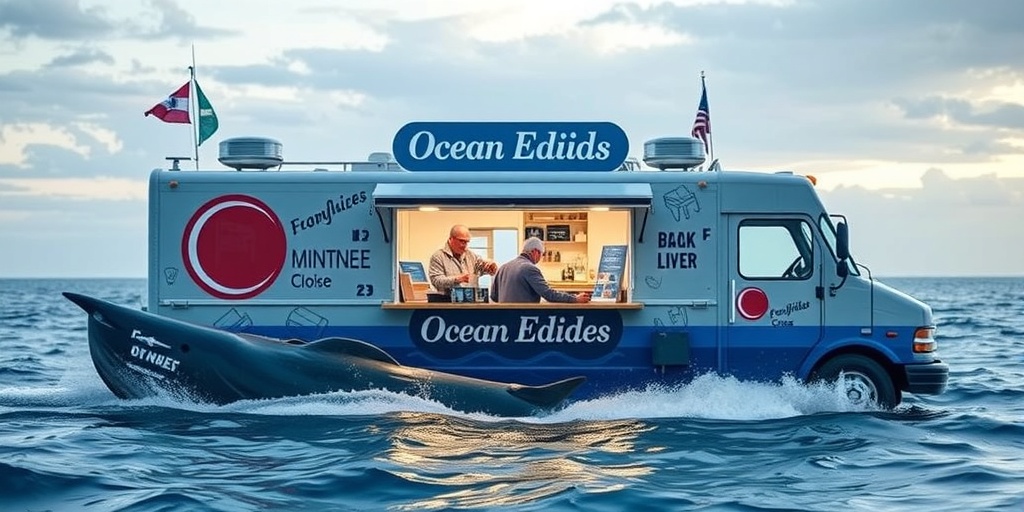
According to Dr. Kevin Becker, a geochemist at GEOMAR and the principal author of this pivotal study, the discovery of these oceanic eddies acting as “food trucks” illustrates their significant role in nutrient transport. The research aligns with findings from the GEOMAR-coordinated REEBUS project, which scrutinizes the Role of Eddies in the Carbon Pump of Eastern Boundary Upwelling Systems. During the METEOR M156 Expedition off the West African coast of Mauritania, the research team identified nearly 1,000 different lipid types, revealing their multifaceted roles within marine ecosystems.
Lipids are not only integral to energy storage but are also crucial in cellular membrane composition and biological signalling. By serving as essential building blocks for cellular structures, lipids contribute significantly to the vitality of marine life. The information extracted from lipid profiles can further elucidate the composition of microbial communities. This chemical signature enables researchers to distinguish between lipids derived from various organisms such as phytoplankton, bacteria, and archaea, thereby painting a more comprehensive picture of the ecosystem dynamics at play.
What surfaced from this investigation was a notable disparity in the lipid signatures between the eddy and its surrounding waters, indicating the presence of a distinct microbial community thriving within the eddy. In particular, energy-rich storage lipids and essential fatty acids, which are vital for higher marine organisms—organisms that lack the ability to synthesize these crucial nutrients independently—were found in greater concentration within the eddy. This notable enhancement of energy-rich lipids underscores the inherent value of these eddies as nutritional hotbeds, highlighting their critical role in supporting diverse marine life, particularly zooplankton and fish species.
Photochemical analyses done on the coastal eddies in the Mauritanian upwelling region revealed staggering transport metrics. The eddies are estimated to funnel an impressive 9.7 ± 2.0 gigagrams (about 10,000 tonnes) of labile organic carbon into the open ocean on an annual basis. Such findings accentuate the vital contribution of mesoscale eddies to the local carbon cycle, while simultaneously laying the groundwork for future studies aimed at understanding their significance on a broader, global perspective.
As researchers continue to delve deeper into the complex interactions between physical oceanography and marine biology, these new insights will be pivotal. The study effectively amplifies our comprehension of the biological and chemical factors influencing marine productivity. It serves as a clarion call for the scientific community to pay heed to the changing dynamics of ocean eddies in the context of climate change and its potential impacts on marine ecosystems.
Further investigations stemming from this work promise to unravel the cascading effects of eddy-driven nutrient transport on global marine fertility. The potential implications of these findings extend beyond mere academic curiosity; they resonate with broader ecological concerns regarding the sustainability of marine resources and the health of oceanic environments globally.
As we continue our efforts to better understand these fascinating structures, it becomes increasingly evident that mesoscale eddies are more than just swirling waters. They represent a critical, intricate nexus of biological and geological processes, pivotal to maintaining the balance and biodiversity of our oceans. Embracing this knowledge will be essential for future science endeavors focused on the conservation and understanding of marine life in an ever-changing world.
Cite Scienmag News
Violet Maxwell. (March 25, 2025). Ocean Eddies: The Marine Equivalent of Food Trucks. Scienmag. https://scienmag.com/ocean-eddies-the-marine-equivalent-of-food-trucks/
Violet Maxwell. "Ocean Eddies: The Marine Equivalent of Food Trucks." Scienmag, 25 March 2025, https://scienmag.com/ocean-eddies-the-marine-equivalent-of-food-trucks/. Accessed 5 September 2026.
Violet Maxwell. "Ocean Eddies: The Marine Equivalent of Food Trucks." Scienmag. March 25, 2025. https://scienmag.com/ocean-eddies-the-marine-equivalent-of-food-trucks/


