


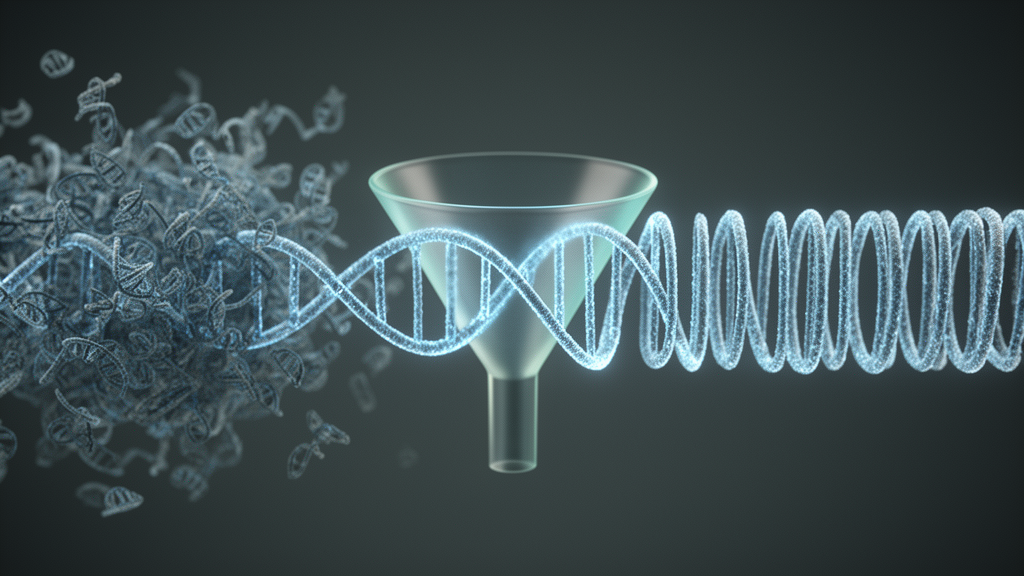
Every next-generation sequencing experiment begins with an act of quiet bookkeeping that most readers never see: before a single tumor genome can be compared to a healthy one, researchers must assemble a reference library of genome sequences, gene annotations, population variant databases and specialized search indices. A new pipeline called OBLX, described in Frontiers in Bioinformatics, aims to make that hidden foundation standardized, documented and reproducible. Developed by researchers at TRON Translational Oncology at the University Medical Center of the Johannes Gutenberg University Mainz, the tool promises to fix a problem that has quietly undermined comparisons across cancer genomics studies for years.
The reference resources that underpin sequencing analyses are surprisingly inconsistent. The Cancer Genome Atlas and the Genotype-Tissue Expression project, two of the most influential datasets in modern genomics, were built on different flavors of the reference genome and different annotation releases. The GTEx pipeline uses a reference that includes ERCC spike-in sequences but excludes haplotypes, alternate contigs and decoy contigs, while the TCGA pipeline includes those alternative sequences and adds viral sequences as well. GTEx relies on GENCODE version 39, whereas TCGA uses GENCODE v36 and even v22. When two landmark projects disagree at this foundational level, results from their respective pipelines cannot be compared cleanly, and the problem repeats itself in laboratory after laboratory, where reference libraries are typically assembled on a per-study basis with little record of how they were made.
Existing tools have only partially filled the gap. The Broad Institute’s GATK best practices provide curated resource bundles, but some files are outdated and documentation of how the data were retrieved and processed is missing. The Trinity Cancer Transcriptome Analysis Toolkit offers its own Genome Lib Builder, but it is tightly coupled to a specific ecosystem, written largely in custom Perl, and does not support DNA-based workflows. Refgenie manages and distributes pre-built genome assets, though primarily for read-mapping applications. The nf-core community maintains a references pipeline and the widely used AWS iGenomes bucket, but the latter’s files and indices were generated in 2016 with tools of that era, including STAR v2.5.1b and Bismark v0.14.5, and have not been comprehensively updated since. None of these solutions, the OBLX team notes, provides version-matched resources such as current gnomAD-derived germline filtering files, problematic region BED files, cancer-associated viral genomes, or snpEff databases built from matching GENCODE annotations.
OBLX, short for Omics builder for Bioinformatics resource Libraries and indeXes, is a Snakemake-based workflow that organizes reference building into two sequential, independently executable steps: Download Resources and Build Indices. Both steps are controlled through a YAML configuration system in which users specify the organism, the GENCODE release, the genome build, the gnomAD release, allele frequency cutoffs and aligner-specific parameters, with sensible defaults available for immediate use. The defaults currently point to GENCODE release 49, the GRCh38 human genome build and gnomAD v4.1. If a download fails, the workflow resumes at the failed process, and software environments can be managed with Conda or, as recommended, Apptainer containers to ensure computational isolation.
In the download step, OBLX retrieves the GENCODE annotation, the primary-assembly reference FASTA, transcript sequences and metadata mappings, then hard-masks the human reference in defined exclusion regions, including false duplications, non-human contamination and pseudoautosomal regions. It pulls germline variant resources from the GATK bundle, dbSNP release 151 and gnomAD, generating up-to-date allele-frequency-only files required by the Mutect2 variant caller, together with a common biallelic chromosome 1 resource for GATK’s GetPileupSummaries. Problematic genomic regions come from the ENCODE blacklist and UCSC, converted to a standardized BED6 format for artifact filtering. The pipeline also fetches cancer-associated viral genomes, including human papillomavirus and Epstein-Barr virus strains as defined by TCGA, RepeatMasker annotations of repetitive sequence, and UniProt protein annotations matched by version to the Ensembl release underlying the chosen GENCODE build, with fields ranging from functional domains to Gene Ontology terms and cross-references to KEGG pathways.
The second step turns these raw materials into the indices that individual analysis tools demand. OBLX builds STAR indices for splice-aware RNA-seq alignment, bwa-mem and bwa-mem2 indices for DNA alignment, a Bowtie2 index, a HISAT2 hierarchical graph FM index that incorporates common germline SNPs, a Salmon transcriptome index with decoy genome sequences to improve quantification accuracy, a kallisto index, a custom snpEff database generated directly from the selected genome build and annotation, and pre-built TxDb and GenomicFeatures objects serialized for R and Bioconductor users. Crucially, every one of these products derives from the same version-matched source release, ensuring consistent chromosome naming and gene identifiers across an entire analysis stack rather than a patchwork of mismatched legacy databases.
To demonstrate the pipeline in practice, the team built human and mouse libraries three times each on a high-performance computing cluster. The human library took 19.51 plus or minus 3.69 hours to generate and the mouse library 16.24 plus or minus 0.21 hours, producing 51 resource files and nine tool indices in human mode, or 21 files and eight indices in mouse mode, occupying roughly 120 gigabytes for human and 82 gigabytes for mouse. Peak memory consumption reached nearly 198 gigabytes during human HISAT2 index generation and 62 gigabytes during mouse bwa-mem2 index construction, a figure that matters for laboratories without high-memory infrastructure. The authors report that the mouse HISAT2 graph index could not be completed at all because the comprehensive but heterogeneous Ensembl mouse variant resource exceeded available memory, even after testing filtering strategies that reduced the variant set to about 60 percent.
Validation came from plugging OBLX libraries into widely used analysis pipelines. Using a generated configuration file with nf-core/sarek v3.8.1, the researchers called and annotated somatic mutations on nf-core test data, identifying one PASS-filtered mutation with Mutect2 and eleven with Strelka2, and quantified 47 expressed transcripts with Salmon on RNA-seq test data. What would otherwise have required manually retrieving nine required and eight optional resource files across multiple repositories was reduced to a single OBLX command followed by an automatically generated pipeline configuration, streamlining reference preparation to a two-step process with full provenance documentation available online.
The limitations are candidly acknowledged. OBLX is designed primarily for short-read whole-exome, whole-genome and RNA-seq workflows in cancer research, and does not yet support long-read sequencing or epigenetic assays. It covers the GRCh38 human assembly rather than the emerging T2T-CHM13 assembly, whose annotation ecosystem is not yet mature enough, and organism support is restricted to human and mouse, though the modular design invites extension to further model organisms. Highly specific use cases such as custom index parameters, hybrid reference genomes or bespoke decoy sequences are deliberately excluded from the standardized bundle because they are not suitable for common analyses.
Still, the implications for the field are substantial. By linking all downstream resources to a single reference release and documenting every retrieval and transformation step, OBLX addresses the pervasive problem of silently divergent reference libraries that makes cross-study comparisons in cancer genomics so treacherous. Pre-built libraries for human GRCh38 v49 and mouse GRCm39 vM36 are already available for download, and the software is published on GitHub and in the Snakemake workflow catalogue. As the annotation ecosystem matures and community contributions expand its portability to cloud computing and additional tools, OBLX could become the invisible standard that finally lets one tumor genome be compared to another with confidence, restoring comparability to a field that has been quietly assembling its foundations on sand.
Subject of Research: A reproducible pipeline for building standardized NGS reference genome resources for cancer bioinformatics
Article Title: OBLX: building standardized reference resources for reproducible bioinformatics data analysis
Article References: Kress, L., Hausmann, J., Freimuth, J., Schrörs, B., Lang, F., & Ibn-Salem, J. (2026). OBLX: building standardized reference resources for reproducible bioinformatics data analysis. Frontiers in Bioinformatics, 6, Article 1910035. https://doi.org/10.3389/fbinf.2026.1910035
Image Credits: AI Generated
DOI: 10.3389/fbinf.2026.1910035
Keywords: bioinformatics, cancer genomics, next-generation sequencing, reproducibility, reference genomes, GENCODE, Snakemake, variant calling, transcriptomics, nf-core, gnomAD, genomic pipelines
Cite Scienmag News
Juliet Wilcox. (October 17, 2026). OBLX pipeline brings order to the chaos of genome reference libraries. Scienmag. https://scienmag.com/oblx-pipeline-brings-order-to-the-chaos-of-genome-reference-libraries/
Juliet Wilcox. "OBLX pipeline brings order to the chaos of genome reference libraries." Scienmag, 17 October 2026, https://scienmag.com/oblx-pipeline-brings-order-to-the-chaos-of-genome-reference-libraries/. Accessed 17 October 2026.
Juliet Wilcox. "OBLX pipeline brings order to the chaos of genome reference libraries." Scienmag. October 17, 2026. https://scienmag.com/oblx-pipeline-brings-order-to-the-chaos-of-genome-reference-libraries/


