


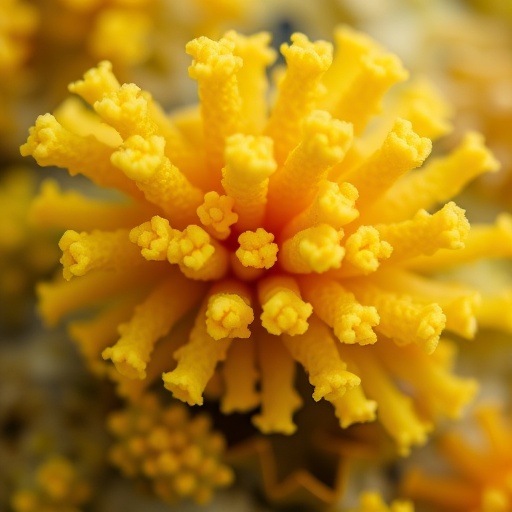
In a groundbreaking study that promises to reshape our understanding of microbial biosynthesis, researchers led by Jiang et al. have unveiled the untapped potential of a novel mangrove-derived strain of Streptomyces sp. B1866. This research utilizes an innovative combination of genome mining and molecular networking, offering deep insights into the genetic and biochemical capabilities of this remarkable organism. As scientists continuously search for new natural products with pharmaceutical applications, the discoveries provided by this study could have far-reaching implications for drug development and biotechnology.
Mangrove ecosystems, often overlooked in the search for new microbiological sources, host a myriad of unique organisms that have adapted to extreme environmental conditions. Within these complex ecosystems, the strain Streptomyces sp. B1866 was identified and subsequently isolated. This bacterium’s resilience and adaptability deeply intrigue researchers, as such traits often correlate with the ability to produce novel secondary metabolites. These metabolites frequently serve as essential compounds in the development of antibiotics and other therapeutic agents crucial for fighting a range of diseases.
The method of integrated genome mining deployed in this study involves searching the entire genome of the Streptomyces sp. B1866 for biosynthetic gene clusters (BGCs)—segments of DNA that contain the instructions for producing secondary metabolites. The identification of BGCs opens up a world of possibilities, highlighting the potential of this organism to synthesize a variety of bioactive compounds. This innovative approach not only reveals what is present in the genome but also paves the way for the prediction of undiscovered metabolites that these gene clusters might encode.
Molecular networking complements genome mining by visualizing the relationships between the genetic information and the biochemical products. By employing advanced software tools, researchers can create a map that represents the connections between various chemical compounds produced by different strains within the Streptomyces genus. The elucidation of such relationships allows scientists to predict how these compounds might behave in biological systems, enhancing our understanding of their efficacy and potential applications in medicine.
The findings of Jiang et al. confirm not only the presence of numerous biosynthetic gene clusters but also suggest that Streptomyces sp. B1866 possesses an impressive array of genetic tools at its disposal to produce unique compounds that could be harnessed for future therapeutic interventions. Specifically, the study identified several pathways that could lead to the production of novel antibiotics, a promising development given the growing threat posed by antibiotic resistance.
Furthermore, the researchers took a multifaceted approach to validate their findings. They utilized various culturing techniques to stimulate the production of secondary metabolites and employed mass spectrometry to analyze the metabolic profile of the strain. This rigorous methodology was instrumental in confirming the predicted capabilities derived from the genome mining.
The implications of this research extend beyond the realm of microbial ecology. With the global increase in drug-resistant pathogens, the urgent need for new antibiotics has never been more pressing. The innovative use of genome mining and molecular networking heralds a new era in the search for bioactive compounds. As more strains are analyzed, it is anticipated that they will unveil further genetic treasures waiting to be converted into usable pharmaceuticals.
By continuously adapting our strategies in biosynthetic research, scientists have the opportunity to not only discover new compounds but also develop targeted therapies that could revolutionize current treatment paradigms. This study serves as a shining example of how collaboration between genomic analysis and advanced bioinformatics can lead to transformative breakthroughs in drug discovery.
As the scientific community looks to the future, the research by Jiang and colleagues presents a compelling case for the exploration of unexplored environments, such as mangrove ecosystems, in the quest for novel antimicrobial agents. The continued investigation of Streptomyces species could yield a treasure trove of new compounds that could one day alleviate the burden of many diseases that currently plague human health.
The innovation demonstrated in this study may also drive forward initiatives in synthetic biology, where scientists can engineer microbes to enhance their production of these valuable compounds. Future research could focus on optimizing the conditions for metabolite production, potentially increasing the yield of bioactive compounds derived from Streptomyces sp. B1866 and similar strains.
As we stand on the precipice of this new frontier in microbiology and drug discovery, the integration of advanced genomics with traditional microbiological techniques opens an expansive avenue for future research. The novel insights provided by this study not only enrich our understanding of microbial ecology but also fuel the burgeoning field of biopharmaceuticals.
Researchers are encouraged to delve deeper into the biosynthetic capabilities revealed by this study. By fostering cross-disciplinary collaboration, the scientific community can drive forward innovative solutions that tackle some of the most pressing health challenges of our time.
In conclusion, Jiang et al.’s work serves as a clarion call to explore the phenomenal biosynthetic potential held within the world’s ecosystems. As we harness the findings presented in this research, we inch closer to a future where nature’s own solutions can provide the next generation of lifesaving therapies.
Jiang, L., Hu, W., Qin, J. et al. Integrated genome mining and molecular networking uncover the biosynthetic potential of a novel mangrove-derived strain Streptomyces sp. B1866.
BMC Genomics 26, 762 (2025). https://doi.org/10.1186/s12864-025-11966-3
Cite Scienmag News
Juliet Wilcox. (September 5, 2025). Novel Mangrove-Derived Streptomyces Reveals Biosynthetic Potential. Scienmag. https://scienmag.com/novel-mangrove-derived-streptomyces-reveals-biosynthetic-potential/
Juliet Wilcox. "Novel Mangrove-Derived Streptomyces Reveals Biosynthetic Potential." Scienmag, 5 September 2025, https://scienmag.com/novel-mangrove-derived-streptomyces-reveals-biosynthetic-potential/. Accessed 5 September 2026.
Juliet Wilcox. "Novel Mangrove-Derived Streptomyces Reveals Biosynthetic Potential." Scienmag. September 5, 2025. https://scienmag.com/novel-mangrove-derived-streptomyces-reveals-biosynthetic-potential/


