


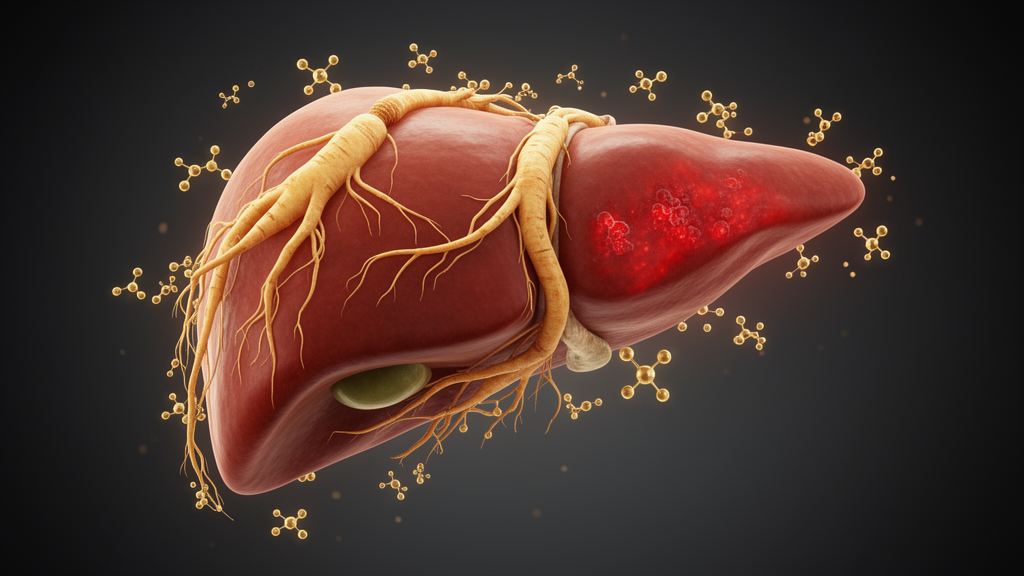
Acetaminophen is one of the most familiar drugs on the planet, sitting quietly in medicine cabinets as a remedy for headaches and fevers. Yet the same molecule is also a leading cause of drug-induced liver injury, and in the United States it contributes to roughly half of all acute liver failure cases. When taken in excess, acetaminophen is converted by cytochrome P450 enzymes into a reactive metabolite called N-acetyl-p-benzoquinone imine, which depletes the liver’s antioxidant defenses and devastates hepatocytes. The only approved antidote, N-acetylcysteine, works within a narrow window after overdose, leaving clinicians with few options once that window closes. Now, a team of researchers in China reports the design of a synthetic ginseng-inspired compound that protected mice from acetaminophen liver damage by intercepting an unexpected molecular culprit: a hypoxia-sensing transcription factor that hijacks the liver’s sugar metabolism.
The compound, named OCLA, was born from a strategy of molecular marriage. The researchers, led by Liu Han, Qiuyue Zhang, and senior authors Sheng Chang and Xin Sun of Jilin Medical University, had previously observed that two natural products, the ginseng saponin (20S,24R)-ocotillol and the antioxidant lipoic acid, acted synergistically to protect liver cells from acetaminophen toxicity. Rather than simply co-administering the pair, they chemically fused them. Using a coupling reaction in dichloromethane catalyzed by EDCI, DMAP, and DCC, the team linked lipoic acid to the ocotillol scaffold and purified seven sulfur-containing derivatives by column chromatography. The final molecule, with the chemical formula C38H64O6S2, was confirmed by high-resolution mass spectrometry and nuclear magnetic resonance spectroscopy, and the synthesis has been granted a Chinese invention patent.
In laboratory dishes, OCLA outperformed its parent compound. When HepG2 liver cells were exposed to a toxic 10 millimolar dose of acetaminophen, an amount calibrated to kill roughly half the cells, pretreatment with OCLA kept significantly more cells alive than pretreatment with ocotillol alone. Encouraged, the team moved to mice. Forty male ICR mice were divided into groups receiving either saline, low-dose OCLA at 16 milligrams per kilogram, high-dose OCLA at 32 milligrams per kilogram, or the known hepatoprotective agent silibinin. After seven days of daily treatment, the animals received a punishing 350 milligrams per kilogram injection of acetaminophen to induce acute liver injury.
The results were striking. Acetaminophen sent serum levels of alanine aminotransferase and aspartate aminotransferase, the classic enzymatic fingerprints of hepatocyte destruction, soaring in untreated animals. Mice pretreated with OCLA, particularly at the higher dose, showed markedly blunted elevations of both enzymes. Under the microscope, livers from acetaminophen-challenged mice displayed severe histopathological damage, while sections from high-dose OCLA-treated animals looked remarkably close to healthy controls. The compound also restored the liver’s glutathione economy: acetaminophen depleted reduced glutathione, the cell’s master antioxidant, and flooded tissue with its oxidized form, but OCLA pretreatment dose-dependently rebuilt the healthy GSH/GSSG ratio, a sign that the cells’ redox defenses had been reinstated.
One of the study’s most commercially and pharmacologically interesting findings came from tracking where OCLA actually goes in the body. Using a sensitive UPLC-MS/MS method, the researchers measured the intact compound in plasma and liver tissue at time points from fifteen minutes to twelve hours after injection. OCLA reached peak concentration within half an hour in both compartments, but its exposure in the liver dwarfed that in the blood: the liver-to-plasma ratio of the area under the concentration-time curve was approximately 6.3, and the compound lingered in hepatic tissue with a mean residence time of 3.22 hours versus only 1.70 hours in plasma. In other words, the molecule behaves as a liver-seeking drug, accumulating exactly where it is needed most.
To understand how OCLA works at the molecular level, the team deployed an integrative multi-omics strategy, sequencing the transcriptomes of control, acetaminophen-exposed, and OCLA-treated livers while simultaneously profiling hepatic metabolites by mass spectrometry. The transcriptomic analysis identified nearly four thousand genes whose expression shifted after acetaminophen exposure, and a comparable number reversed by OCLA. Enrichment analysis flagged pathways tied to inflammation, apoptosis, and anaerobic metabolism, including the IL-17, TNF, MAPK, NF-κB, and HIF-1 signaling cascades. Metabolomics, meanwhile, revealed disturbances in amino acid, retinol, and riboflavin metabolism after acetaminophen, with OCLA restoring profiles linked to linoleic acid and arachidonic acid pathways.
The decisive insight came from intersecting the two datasets. Of nine candidate pathways, only one, the HIF1α signaling pathway, was significantly enriched in both the transcriptomic and metabolomic analyses after OCLA intervention. HIF1α, or hypoxia-inducible factor-1α, is best known as the master switch that cells flip when oxygen runs low, but it has a darker side in injury: it reprograms metabolism toward glycolysis and fans inflammatory fires. In the acetaminophen-injured livers, HIF1α and its downstream glycolytic machinery, including the glucose transporter GLUT1 and the enzymes HK1, HK2, PFKL, PFKFB3, and ENO1, were all markedly upregulated. OCLA pretreatment pulled the entire program back down to baseline, and with it suppressed the inflammatory cytokines IL-6 and TNF-α and apoptosis-related proteins such as BAX, p21, and the inflammatory mediator p65.
The team then asked whether OCLA touches HIF1α directly. Molecular docking against the HIF1α structure yielded a favorable binding score, and a cellular thermal shift assay provided experimental confirmation: when HepG2 cells were heated across a gradient from 40 to 58 degrees Celsius, HIF1α protein in OCLA-treated cells remained stable at temperatures where the untreated protein denatured, a hallmark of direct drug-target engagement. As an independent check, the researchers treated injured liver cells with cyclo, a known HIF1α inhibitor, and saw the same dampening of inflammatory and apoptotic markers, reinforcing the conclusion that HIF1α sits at the center of the protective mechanism.
The study is not without caveats, and the authors are candid about them. Every in vivo experiment used intraperitoneal injection and a preventive regimen in which OCLA was given for seven days before the acetaminophen challenge, so the compound’s oral bioavailability, its full absorption, distribution, metabolism, and excretion profile, and, crucially, its ability to rescue livers after an overdose has already occurred all remain open questions. Endogenous esterases could partially hydrolyze the molecule in liver tissue, meaning some of the observed effect might involve breakdown products. Future head-to-head studies against N-acetylcysteine in a therapeutic setting will be needed to establish clinical relevance for established intoxication.
Even with those limitations, the work offers a compelling proof of concept on two fronts. It validates HIF1α-mediated glycolytic reprogramming as a druggable node in acetaminophen liver injury, a mechanism that extends a growing body of research linking this transcription factor to inflammation and metabolic dysfunction in diseases from kidney fibrosis to cancer. And it demonstrates a rational design pipeline in which two synergistic natural products are fused into a single, liver-accumulating, patent-protected molecule whose target is revealed not by guesswork but by converging transcriptomic, metabolomic, docking, and biophysical evidence. If follow-up studies confirm that OCLA or its successors can protect the liver after overdose rather than only before, a ginseng-inspired synthesis could someday give emergency physicians a much-needed second weapon against the world’s most common cause of drug-induced liver failure.
Subject of Research: A novel ginsenoside derivative, OCLA, protects against acetaminophen-induced liver injury by targeting HIF1α-mediated glycolytic metabolism
Article Title: Design, synthesis of a novel ginsenoside derivative and its protection against acetaminophen induced liver injury via suppressing HIF1α-mediated glycolytic metabolism
Article References: Han, L., Zhang, Q., Shang, W., Wang, X., Han, Y., Wang, Q., Ren, H., Ma, X., Gao, L., Chang, S., & Sun, X. (2026). Design, synthesis of a novel ginsenoside derivative and its protection against acetaminophen induced liver injury via suppressing HIF1α-mediated glycolytic metabolism. Frontiers in Pharmacology, 17, Article 1942215. https://doi.org/10.3389/fphar.2026.1942215
Image Credits: AI Generated
DOI: 10.3389/fphar.2026.1942215
Keywords: acetaminophen, drug-induced liver injury, OCLA, ginsenoside, ocotillol, lipoic acid, HIF1α, glycolysis, hepatoprotection, multi-omics, molecular docking, pharmacokinetics
Cite Scienmag News
Ophelia Keating. (October 19, 2026). Novel Ginseng-Derived Compound Shields the Liver From Acetaminophen Overdose by Damping HIF1α-Driven Glycolysis. Scienmag. https://scienmag.com/novel-ginseng-derived-compound-shields-the-liver-from-acetaminophen-overdose-by-damping-hif1%ce%b1-driven-glycolysis/
Ophelia Keating. "Novel Ginseng-Derived Compound Shields the Liver From Acetaminophen Overdose by Damping HIF1α-Driven Glycolysis." Scienmag, 19 October 2026, https://scienmag.com/novel-ginseng-derived-compound-shields-the-liver-from-acetaminophen-overdose-by-damping-hif1%ce%b1-driven-glycolysis/. Accessed 19 October 2026.
Ophelia Keating. "Novel Ginseng-Derived Compound Shields the Liver From Acetaminophen Overdose by Damping HIF1α-Driven Glycolysis." Scienmag. October 19, 2026. https://scienmag.com/novel-ginseng-derived-compound-shields-the-liver-from-acetaminophen-overdose-by-damping-hif1%ce%b1-driven-glycolysis/


