


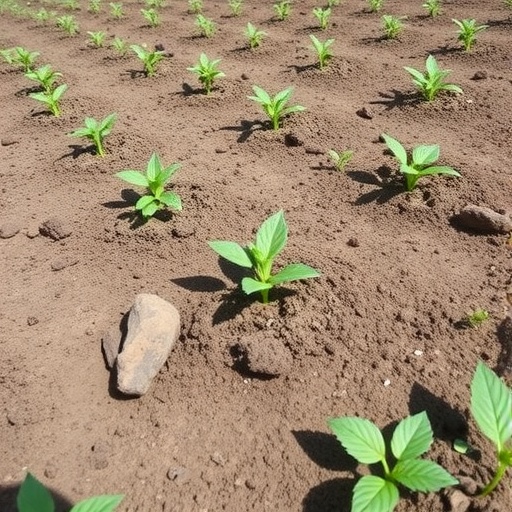
Albic soils, known for their pale, compacted layers and low fertility, may have found an unexpected ally in a combination of ancient farming restraint and modern microbial technology. A field study in northeastern China suggests that no-tillage farming, crop-straw retention, and microbial organic fertilizer can work together to substantially increase soil organic carbon, including in deeper layers often overlooked by carbon-management strategies. The findings point to a practical way of improving difficult agricultural soils while potentially strengthening their role as long-term carbon reservoirs.
Albic soils are widespread in parts of northeastern China and are notoriously challenging to cultivate. Their dense structure can restrict root growth and water movement, while their acidity and limited organic matter reduce biological activity and nutrient availability. These conditions also make it difficult for the soil to stabilize carbon. According to the researchers, the most successful treatment was no-tillage combined with the highest fertilizer application rate, which produced measurable improvements through the upper 40 centimeters of soil.
The experiment was conducted over one growing year, from 2023 to 2024, in Shulan City, Jilin Province. Researchers compared three tillage systems: no-tillage, plough tillage, and rotary tillage. Each system received microbial organic fertilizer at one of three rates—600, 1,200, or 2,400 kilograms per hectare. The fertilizer was made from composted livestock and poultry manure and enriched with beneficial microorganisms, including Bacillus subtilis, Bacillus amyloliquefaciens, and Trichoderma harzianum. Crop straw was also retained as part of the soil-management approach.
The strongest result came from the no-tillage treatment receiving 2,400 kilograms of microbial organic fertilizer per hectare. Compared with a no-tillage control without straw return, this combination increased soil organic carbon by 22 percent in the top 20 centimeters and by an extraordinary 93.2 percent in the 20-to-40-centimeter layer. Soil organic carbon reached 14.57 grams per kilogram in the topsoil and 8.75 grams per kilogram in the subsoil, indicating that the effects were not confined to the surface where fertilizers and residues are first deposited.
The apparent success of no-tillage lies in the way it protects soil structure. Repeated mechanical disturbance can break apart soil aggregates—clusters of mineral particles, organic matter, roots, and microbial products that create the physical architecture of soil. No-tillage leaves these structures more intact, allowing carbon to become enclosed within larger aggregates. Once physically protected, organic compounds are less accessible to decomposing microorganisms and may remain in the soil longer instead of rapidly returning to the atmosphere as carbon dioxide.
Microbial fertilizer added a biological dimension to this physical protection. Organic amendments supply carbon-rich material, nutrients, and microbial communities that can stimulate decomposition, nutrient cycling, and the formation of microbial residues. Some of these residues become associated with mineral particles or incorporated into stable aggregates, creating forms of soil organic carbon that are more resistant to rapid breakdown. The results suggest that adding organic material alone may not be enough; the soil must also provide a structure capable of retaining and protecting the carbon.
The study revealed that different forms of tillage create competing benefits. Plough tillage improved some physical conditions at depth by loosening compacted soil and enhancing aeration, root penetration, and nutrient movement. It also produced relatively high subsoil carbon concentrations. However, the mechanical disruption reduced the stability of macroaggregates, the larger structural units most closely associated with physical carbon protection. Rotary tillage stimulated several enzymes involved in carbon cycling, but stronger enzyme activity did not automatically translate into greater carbon storage.
This distinction is crucial because soil carbon is governed not only by how much organic material enters the soil, but also by how quickly it is transformed and whether the resulting compounds are stabilized. Enzymes that break down sugars, cellulose, and hemicellulose can make nutrients available to plants and microorganisms, yet they can also accelerate carbon turnover. The researchers found that relationships among enzyme activity, carbon concentration, and aggregate stability varied with soil depth and tillage method. In other words, an active soil is not necessarily a soil that stores more carbon.
The findings arrive as farmers and climate researchers search for ways to increase carbon storage without sacrificing agricultural productivity. No-tillage and residue retention are already promoted in many regions because they can reduce erosion and preserve soil moisture, while compost-based fertilizers may help rebuild depleted organic matter. However, the researchers caution that this experiment lasted only one year. Longer monitoring will be needed to determine whether the carbon gains persist, how yields respond, and whether the practices alter greenhouse-gas emissions such as nitrous oxide and methane. Even so, the results suggest that combining reduced disturbance with substantial biological inputs could turn fragile albic soils into more productive and more effective carbon-storing systems.
News Publication Date: 28-May-2026
Web References: https://doi.org/10.48130/aee-0026-0013
References: Zhao Z, Cheng S, Li X, Zhang C, Liu X, et al. 2026. “Tillage methods and microbial fertilizers synergistically enhance soil organic carbon concentration in albic soil.” Agricultural Ecology and Environment 2: e016. DOI: 10.48130/aee-0026-0013
Keywords
Albic soil, soil organic carbon, no-tillage farming, microbial fertilizer, crop straw retention, soil aggregates, carbon sequestration, soil health, sustainable agriculture, carbon cycling
Cite Scienmag News
Morgan Morrow. (August 6, 2026). No-till and microbial fertilizers jointly boost carbon storage in nutrient-poor albic soils. Scienmag. https://scienmag.com/no-till-and-microbial-fertilizers-jointly-boost-carbon-storage-in-nutrient-poor-albic-soils/
Morgan Morrow. "No-till and microbial fertilizers jointly boost carbon storage in nutrient-poor albic soils." Scienmag, 6 August 2026, https://scienmag.com/no-till-and-microbial-fertilizers-jointly-boost-carbon-storage-in-nutrient-poor-albic-soils/. Accessed 4 September 2026.
Morgan Morrow. "No-till and microbial fertilizers jointly boost carbon storage in nutrient-poor albic soils." Scienmag. August 6, 2026. https://scienmag.com/no-till-and-microbial-fertilizers-jointly-boost-carbon-storage-in-nutrient-poor-albic-soils/


