


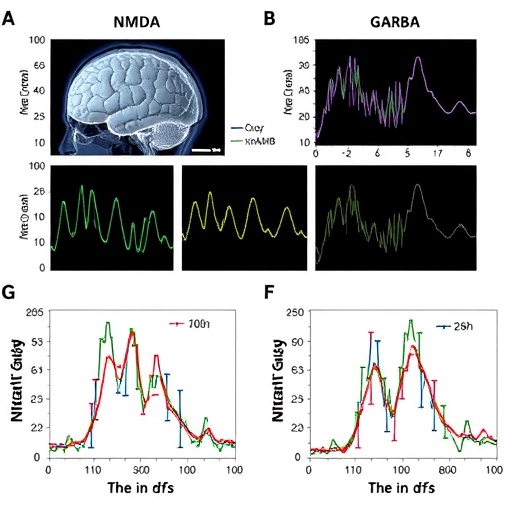
In a groundbreaking study that promises to reshape our understanding of brain plasticity, researchers have unveiled how 10-Hz repetitive transcranial magnetic stimulation (rTMS) modulates synaptic activity through the intricate interplay of NMDA and GABA receptors. This innovative exploration dives deep into the biochemical and electrophysiological underpinnings of neural adaptation, revealing mechanisms that may unlock new avenues for treating a range of neuropsychiatric conditions.
Repetitive transcranial magnetic stimulation has long been hailed as a powerful, non-invasive technique harnessed to influence cortical excitability and neuronal communication. Traditionally applied in clinical settings to alleviate symptoms of depression and other disorders, the precise molecular cascades elicited by rTMS have remained somewhat elusive. The latest research, published in Translational Psychiatry, provides compelling evidence that synaptic plasticity induced by 10-Hz stimulation hinges critically on both glutamatergic and GABAergic transmission pathways, specifically mediated via NMDA and GABA receptors.
At the heart of this study is an elaborate dissection of the receptor-specific contributions to long-term potentiation (LTP) and long-term depression (LTD), hallmarks of synaptic plasticity. By applying 10-Hz rTMS protocols to neural circuits, the investigators were able to observe direct modifications in synaptic efficacy. Crucially, the pharmacological blockade of NMDA receptors abolished the potentiation effects typically seen after stimulation, indicating their indispensable role in calcium-dependent signaling that drives synaptic strengthening.
Concurrently, GABA receptors, predominantly responsible for inhibitory neurotransmission, were observed to modulate plastic responses in a finely tuned manner. The balance between excitation and inhibition, maintained by the coordinated activity of NMDA and GABA receptors, orchestrates the overall outcome of rTMS on neuronal networks. Inhibiting GABAergic signaling altered the threshold for plasticity induction, suggesting a pivotal gatekeeping function in the normalization of neural circuit activity following repetitive stimulation.
Implementing this 10-Hz frequency is particularly significant, as it mirrors the physiological rhythms associated with attention and sensorimotor integration. This frequency appears optimal for engaging cortico-thalamic loops, thereby enhancing synaptic efficacy in a pattern that could potentiate learning and memory processes. The study’s electrophysiological recordings illustrated that repetitive stimulation at this frequency triggered a cascade of intracellular events, notably involving calcium influx through NMDA receptors, which subsequently activated intracellular kinases critical for gene expression linked to synaptic remodeling.
Moreover, the nuanced role of GABAergic circuits was elegantly demonstrated through selective receptor manipulations. The findings propose that GABA_A receptor-mediated inhibition does not merely suppress excitability but dynamically shapes the temporal and spatial patterning of plastic changes. It regulates the excitatory inputs to prevent hyperexcitability, thereby ensuring homeostatic balance during the enhanced synaptic potentiation induced by rTMS.
One of the study’s remarkable implications lies in its potential therapeutic reach. Neuropsychiatric disorders, such as major depressive disorder, schizophrenia, and anxiety, often exhibit disrupted glutamatergic and GABAergic signaling. This investigation delineates a mechanistic pathway through which rTMS could restore synaptic equilibrium, offering a mechanistically informed framework to optimize stimulation parameters for individualized treatment responses.
Furthermore, the research advances the conceptual framework of metaplasticity—the brain’s ability to regulate the plastic potential of synapses based on prior activity history. By showing that NMDA and GABA receptor-mediated processes are integral to shaping the metaplastic landscape during 10-Hz rTMS, the study opens doors for tailored interventions that might harness or recalibrate metaplasticity in neurological disorders.
The experimental design combined state-of-the-art electrophysiological techniques with pharmacological interventions to meticulously parse out receptor-specific functions. This multifaceted approach adds significant rigor in validating the causal contributions of receptor dynamics to the observed plastic phenomena. The use of rodent models complemented by in vitro brain slice preparations allowed for precise temporal resolution of synaptic events during and following stimulation.
Crucially, the findings signal a paradigm shift away from viewing rTMS solely as a modulator of gross excitability toward recognizing its capacity to induce receptor-specific synaptic modifications. This recognition is pivotal for interpreting clinical outcomes, as it underscores the subtle neuromodulatory effects that govern long-term network reorganization rather than immediate changes in firing rates alone.
The delineated interplay between NMDA receptor-dependent excitatory potentiation and GABA receptor-mediated inhibitory gating outlines an intricate synaptic choreography that underpins the neuromodulatory impact of rTMS. This balance ensures that induced plasticity is not only robust but also finely controlled, minimizing adverse effects such as excitotoxicity or maladaptive network hyperexcitability.
Looking to the future, the mechanistic insights offered by this study set the stage for precision neuromodulation strategies. By targeting distinct receptor subtypes or modulating their downstream signaling cascades, clinicians and researchers may enhance the efficacy of rTMS protocols. This could lead to breakthroughs in treating treatment-resistant depression, cognitive decline, and even neurodevelopmental disorders where synaptic dysfunction is a core pathology.
In addition, the research contributes to the broader neuroscientific quest to decode how external electromagnetic stimulation interfaces with endogenous neural signaling. Understanding receptor-mediated plasticity pathways provides a biological foundation upon which novel brain-computer interfaces and neuroprosthetic devices might be developed to restore or augment cognitive function.
Overall, this comprehensive exploration of NMDA and GABA receptor-mediated plasticity induced by 10-Hz repetitive transcranial magnetic stimulation offers a transformative lens through which the neural impact of brain stimulation technologies can be understood. It invites a reimagining of therapeutic neuromodulation as a precise, receptor-targeted intervention capable of orchestrating the symphony of synaptic plasticity that defines learning, memory, and mental health.
Cite Scienmag News
Glenn Wilkins. (June 17, 2026). NMDA and GABA Roles in 10-Hz rTMS Plasticity. Scienmag. https://scienmag.com/nmda-and-gaba-roles-in-10-hz-rtms-plasticity/
Glenn Wilkins. "NMDA and GABA Roles in 10-Hz rTMS Plasticity." Scienmag, 17 June 2026, https://scienmag.com/nmda-and-gaba-roles-in-10-hz-rtms-plasticity/. Accessed 3 September 2026.
Glenn Wilkins. "NMDA and GABA Roles in 10-Hz rTMS Plasticity." Scienmag. June 17, 2026. https://scienmag.com/nmda-and-gaba-roles-in-10-hz-rtms-plasticity/


