


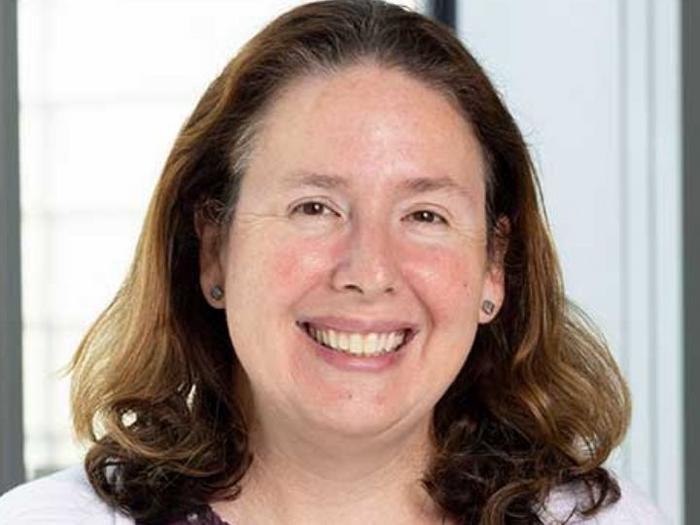
A $3.3 million study at the University of Houston College of Optometry will track the health of patients with prediabetes and diabetes to find out who might develop eye problems and be at risk for future vision loss. The study is being led by Wendy Harrison, associate professor, and is underwritten by the National Eye Institute.

Credit: University of Houston
A $3.3 million study at the University of Houston College of Optometry will track the health of patients with prediabetes and diabetes to find out who might develop eye problems and be at risk for future vision loss. The study is being led by Wendy Harrison, associate professor, and is underwritten by the National Eye Institute.
Vision loss in type 2 diabetes results from diabetic retinopathy, caused by damage to blood vessels in the retina, the light-sensitive layer of tissue in the back of your eye. The disease can appear without warning.
“The ability to predict which patients are most at risk could constitute a significant advance in diagnosis and management of diabetes, which has reached epidemic proportions,” said Harrison. “Early diagnosis and detection, especially if location-specific, could aid in delaying diabetic retinopathy and over the long term, saving sight.”
Diabetes is the number one cause of vision loss in working-age Americans. Also alarming, about 44% of American adults have prediabetes and it is not currently known when and how prediabetes affects the eye. Many patients with prediabetes are unaware of their condition.
Although patients with prediabetes are known to have impaired fasting glucose, impaired glucose tolerance, and elevated hemoglobin A1c, there is still a significant gap in understanding how and when prediabetes impacts eye health.
“It is important that we close this gap as there are no treatments in the eye outside of glycemic control for early type 2 diabetes or prediabetes, and to learn which type of glucose processing changes are most related to eye disease,” said Harrison.
Harrison’s team is undertaking unique research, never done before, in that they will study both the front and the back of the eye and different types of glucose dysfunction. The team includes the laboratories of Rachel Redfern, Maria Walker and Kaitlyn Sapoznik in Optometry and Marc Hamilton in Health and Human Performance. Ted Zderic, Julia Benoit, Deborah Hamilton and Bismark Owusu-Afriyie also have key roles in the project.
To explore how glucose dysregulation affects the vascular and neural retina, cornea, and tear film, the team will investigate whether tests like fat distribution, activity levels, and oral glucose tolerance in type 2 diabetes patients are linked to or can predict ocular health.
“Our central hypothesis is that local retinal oxygenation is altered by changes in glucose tolerance. This drives the relationship between vessel changes and retinal function, in local retinal areas,” said Harrison.
After comparing the subjects, the team will follow up with them after one-and two- years to assess ocular and metabolic changes over time.
“We expect that differences in impaired glucose tolerance and phenotypes will alter ocular testing over time, especially in prediabetes,” said Harrison.
Cite Scienmag News
Courtney Benton. (August 19, 2024). New UH study targets early signs of vision loss in diabetic patients. Scienmag. https://scienmag.com/new-uh-study-targets-early-signs-of-vision-loss-in-diabetic-patients/
Courtney Benton. "New UH study targets early signs of vision loss in diabetic patients." Scienmag, 19 August 2024, https://scienmag.com/new-uh-study-targets-early-signs-of-vision-loss-in-diabetic-patients/. Accessed 5 September 2026.
Courtney Benton. "New UH study targets early signs of vision loss in diabetic patients." Scienmag. August 19, 2024. https://scienmag.com/new-uh-study-targets-early-signs-of-vision-loss-in-diabetic-patients/

