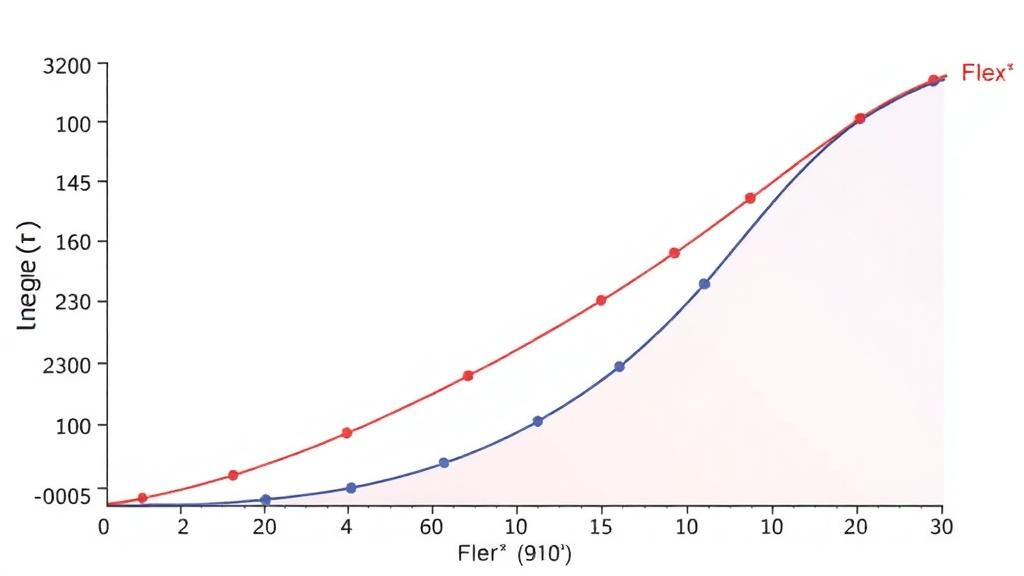
Regression analysis sits at the heart of modern data science, yet it remains haunted by an old adversary: multicollinearity, the phenomenon in which predictor variables are so tightly correlated with one another that standard estimation procedures become unstable and unreliable. A new study published in the International Journal of Machine Learning and Cybernetics by Hamid Karamikabir, Mohammad Bozorgmehr, and Reza Amirzadeh Fard of Persian Gulf University in Bushehr, Iran, proposes a fresh answer to this long-standing problem. Their method, called matrix balance regression, or MB, introduces weighted coefficients and prior estimators into the regression framework, and when paired with support vector regression it forms a hybrid model that the authors show can substantially outperform established techniques such as LASSO, Ridge, and Elastic Net.
The core insight behind matrix balance regression is that classical ordinary least squares estimation breaks down when the design matrix of predictors is ill-conditioned. In such cases, small changes in the input data can produce wildly fluctuating coefficient estimates, making the fitted model useless for prediction or interpretation. Penalized regression methods like Ridge, LASSO, and Elastic Net address this by shrinking coefficients toward zero, trading a small amount of bias for a large reduction in variance. The MB approach takes a different route: rather than relying solely on a penalty term, it incorporates weighted coefficients and prior estimators directly into the estimation procedure, effectively balancing the structure of the problem at the matrix level. This balancing act stabilizes the estimates in the presence of correlated predictors while retaining the interpretability that comes with a parametric model.
What makes the new work particularly interesting is that the authors do not stop at the parametric stage. Real-world datasets rarely obey clean linear relationships, and a purely parametric model will leave systematic structure in its residuals whenever nonlinear effects are present. To capture that structure, Karamikabir and colleagues embed matrix balance regression within a two-stage semi-parametric framework. In the first stage, the parametric MB model is fitted to the data, accounting for the structured, approximately linear relationships among the variables. In the second stage, a non-parametric support vector regression model is applied to the residuals of the first stage, learning whatever nonlinear signal remains. The final prediction is the sum of the two components, combining the interpretability of a linear-style model with the flexibility of a kernel-based learner.
Support vector regression is a natural choice for the second stage. Rooted in the statistical learning theory of Vladimir Vapnik and his collaborators, SVR maps the input variables into a high-dimensional feature space via a kernel function and fits a function that is as flat as possible while staying within a tolerance margin, known as the epsilon-insensitive tube, around the observed targets. Because the kernel trick allows the method to implicitly represent highly complex nonlinear functions without ever explicitly constructing the high-dimensional space, SVR is well suited to mopping up residual nonlinear patterns that a linear model cannot express. The idea of combining parametric and non-parametric components has a long pedigree in statistics, most famously in Generalized Additive Models, and the authors benchmark their hybrid directly against GAM to test whether the new pairing offers genuine advantages.
The comparison is decisive. Across all datasets examined in the study, the MB-SVR hybrid consistently outperformed Generalized Additive Models, suggesting that the combination of a stabilized parametric base with an SVR residual learner is a more effective semi-parametric architecture than the classical additive approach. The authors also report extensive simulation studies in which the MB and MB-SVR models were evaluated against LASSO, Ridge, and Elastic Net under a variety of conditions. The advantage of the proposed methods was most pronounced when the data contained both nonlinear patterns and multicollinearity, precisely the combination that defeats conventional penalized regression, which is fundamentally linear in the predictors regardless of how cleverly the penalty is constructed.
The real-world evidence comes from three publicly available benchmark datasets drawn from the UCI Machine Learning Repository: the Concrete Compressive Strength dataset, the Computer Hardware dataset, and the Liver Disorders dataset. These are classic testing grounds for regression methods, each presenting its own challenges. The concrete dataset involves predicting the compressive strength of concrete mixtures from their ingredient proportions and age, a relationship known to be strongly nonlinear. The computer hardware dataset asks for performance predictions from machine characteristics, and the liver disorders dataset involves predicting medical measurements from blood test results. Across these three applications, the MB-SVR model achieved an average reduction in mean squared error of approximately 20.4 percent compared with standard Ridge regression, a striking margin for methods that have been refined over decades.
The single largest improvement was observed on the Concrete Compressive Strength dataset, where MB-SVR reduced mean squared error by 41.6 percent relative to Ridge. That magnitude of improvement is notable because it demonstrates how much predictive signal a purely linear model leaves on the table when the underlying relationship is nonlinear and the predictors, such as the quantities of cement, water, and various aggregates in a concrete mix, are correlated with one another. The two-stage design appears to capture both effects simultaneously: the matrix balance stage handles the collinearity that would otherwise destabilize the estimates, while the support vector stage absorbs the nonlinear chemistry of cement hydration and aggregate interaction that no linear combination of ingredients can express.
Beyond the headline numbers, the study speaks to a broader tension in statistical learning between interpretability and flexibility. Purely non-parametric methods, including deep neural networks and kernel machines applied directly to raw inputs, can achieve excellent accuracy but offer little insight into which variables matter and how. Purely parametric methods provide coefficients that practitioners can read and act upon, but they risk severe bias when the assumed functional form is wrong. The two-stage semi-parametric strategy offers a compromise: the parametric component retains a transparent, coefficient-based account of the dominant structured relationships, while the non-parametric component quantifies and corrects whatever the parametric model misses. For applied fields such as engineering, medicine, and environmental science, where both accurate prediction and defensible explanation are required, this kind of hybrid architecture has obvious appeal.
The work also fits into a lively contemporary research thread connecting semi-parametric modeling with machine learning. Prior studies have explored semi-parametric support vector machines in settings ranging from accelerated failure time models in survival analysis to mixture cure models and multikernel linear programming formulations of support vector regression. The present contribution extends this lineage by supplying a new parametric backbone, one specifically engineered to resist multicollinearity through weighted coefficients and prior estimators, and by demonstrating empirically that this backbone improves the performance of the overall hybrid relative to both classical penalized regression and classical semi-parametric alternatives.
For practitioners, the practical takeaway is that the choice of regression method should be driven by the structure of the data rather than by habit. When predictors are highly correlated and the response depends nonlinearly on the inputs, the study suggests that a stabilized parametric model followed by a residual-fitting support vector machine can deliver materially better predictions than any single method alone. The datasets used in the research are publicly available from the UCI Machine Learning Repository, which means the results can be independently verified and the framework can be tested on other problems. As machine learning and classical statistics continue to converge, hybrid frameworks of this kind, which respect the mathematics of ill-conditioned data while exploiting the flexibility of kernel methods, are likely to become an increasingly common tool in the applied data scientist’s repertoire.
Subject of Research: A hybrid parametric and semi-parametric regression framework combining matrix balance regression with support vector regression to address multicollinearity and nonlinear prediction
Article Title: Matrix balance regression: a two-stage parametric and semi-parametric framework with support vector regression
Article References: Matrix balance regression: a two-stage parametric and semi-parametric framework with support vector regression. (n.d.). https://doi.org/10.1007/s13042-026-03332-w
Image Credits: AI Generated
DOI: 10.1007/s13042-026-03332-w
Keywords: matrix balance regression, support vector regression, multicollinearity, semi-parametric regression, Ridge regression, LASSO, Elastic Net, Generalized Additive Models, machine learning, statistical learning, UCI datasets, predictive modeling
Cite Scienmag News
Blake Davidson. (October 14, 2026). New Two-Stage Regression Framework Tames Multicollinearity and Boosts Prediction Accuracy. Scienmag. https://scienmag.com/new-two-stage-regression-framework-tames-multicollinearity-and-boosts-prediction-accuracy/
Blake Davidson. "New Two-Stage Regression Framework Tames Multicollinearity and Boosts Prediction Accuracy." Scienmag, 14 October 2026, https://scienmag.com/new-two-stage-regression-framework-tames-multicollinearity-and-boosts-prediction-accuracy/. Accessed 14 October 2026.
Blake Davidson. "New Two-Stage Regression Framework Tames Multicollinearity and Boosts Prediction Accuracy." Scienmag. October 14, 2026. https://scienmag.com/new-two-stage-regression-framework-tames-multicollinearity-and-boosts-prediction-accuracy/