


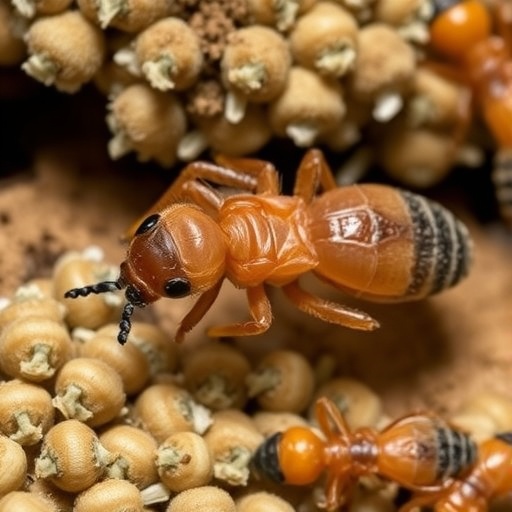
In a remarkable breakthrough for microbiology and natural product discovery, scientists have reported the identification and characterization of a novel actinobacterial species originating from the gut of the fungus-farming termite Odontotermes formosanus. This newly isolated microorganism, provisionally named Streptomyces odontotermitis sp. nov., promises to redefine our understanding of insect-microbe symbioses and potentially unlock new avenues in antibiotic development. The strain, designated Odt1-20B^T, exhibits a complex biology and distinctive genomic features that emphasize its taxonomic novelty and ecological significance.
Streptomyces, a genus historically renowned for its prolific production of antibiotics, continues to captivate researchers with this latest addition to its diverse family. Isolated from the gut environment of the termite Odontotermes formosanus, Streptomyces odontotermitis represents a unique microbial lineage with clear genetic, phenotypic, and biochemical divergence from its closest phylogenetic relatives. The identification of such a species highlights the importance of exploring insect-associated microbial communities, which harbor untapped reservoirs of genetic diversity and biosynthetic potential.
Microscopic examination of strain Odt1-20B^T revealed it to be an aerobic, Gram-positive filamentous bacterium capable of producing well-developed substrate and aerial mycelia. Notably, the aerial mycelia bore straight chains of spores, classical hallmarks of Streptomyces morphology. The strain demonstrates adaptability across a broad temperature range (20 to 40 °C), optimal growth at 30 °C, moderate salt tolerance of up to 0.4% NaCl (w/v), and the ability to grow within a pH window spanning 5 to 10, optimally favorable at neutral to slightly alkaline conditions. Such physiological plasticity likely reflects the ecological niche and host-associated adaptation of this microorganism.
Delving deeper into its biochemical fingerprint, the cellular architecture of Odt1-20B^T comprises notable chemical markers. The presence of l,l-diaminopimelic acid within the whole-cell hydrolysate confirms its affiliation with the actinobacterial lineage. Polar lipids, integral to the cell membrane’s stability and function, include predominant species like diphosphatidylglycerol, phosphatidylglycerol, and phosphatidylethanolamine. Additionally, its quinone profile—characterized by menaquinones MK-9(H4), MK-9(H6), and MK-9(H8)—contributes critical chemotaxonomic evidence distinguishing it within the intricate Streptomyces clade.
Fatty acid composition provides another layer of biochemical differentiation. The main fatty acids in strain Odt1-20B^T comprise summed features of C18:1 ω6c/ω7c, saturated palmitic acid (C16:0), anteiso-branched C15:0, and iso-branched C16:0. These components are consistent with energy production and membrane fluidity roles typical of actinobacteria but also suggest unique metabolic adaptations reflecting its obligate symbiosis or environmental pressures.
Genomics further unravels the essence of Streptomyces odontotermitis. The draft genome sequencing revealed a sizeable genome assembly totaling over 10 million nucleotides with a GC content of 71.5%, consistent with other members of the genus but exhibiting subtle variations indicative of evolutionary divergence. Phylogenetic analysis of the 16S rRNA gene situates the strain firmly within Streptomyces, with its closest relative identified as Streptomyces davaonensis JCM 4913^T, sharing 98.55% sequence similarity. However, this high similarity belies the true distinction.
Genomic metrics such as Average Nucleotide Identity (ANI), both BLAST-based (ANIb) and MUMmer-based (ANIm), between Odt1-20B^T and related species yield values below 87%, falling below thresholds commonly accepted for species delineation. Complementary digital DNA-DNA hybridization (dDDH) values ranging from 21.2% to 29.9% underscore the novelty of this species. Such genetic evidence, alongside phenotypic and chemotaxonomic distinctions, firmly validates Streptomyces odontotermitis as a discrete taxonomic entity.
The isolation of such a novel bacterium from a fungus-growing termite highlights the enigmatic and underexplored microbial ecosystems associated with social insects. Odontotermes formosanus, like other fungus-farming termites, maintains intricate symbiotic relationships with microbes that facilitate digestion, nutrient acquisition, and defensive chemical production. Streptomyces species associated with these insects are believed to contribute to protection against pathogens through antibiotic synthesis. Therefore, discovering Streptomyces odontotermitis not only enriches biodiversity catalogs but also provokes new questions surrounding the ecological roles and metabolic capacities underpinning such symbioses.
Considering the profound antibiotic-producing potential historically attributed to Streptomyces, strain Odt1-20B^T may harbor yet uncharacterized bioactive compounds. Its unique genomic architecture, presumably laden with biosynthetic gene clusters, positions it as a promising candidate for natural product screening. This is particularly consequential at a time when multidrug-resistant infections pose dire global health challenges, and antibiotic pipelines remain insufficient. Unlocking the biochemical repertoire of this termite-derived species could spearhead novel therapeutic leads.
Furthermore, the environmental adaptability and metabolic versatility observed in Streptomyces odontotermitis shed light on evolutionary pressures shaping insect-microbe cohabitation. The ability to survive broad pH and temperature ranges suggests resilience to fluctuating gut microenvironments and symbiotic cooperation with host organisms. Such insights inform broader ecological and evolutionary paradigms, including microbial niche specialization and co-evolution with insect hosts.
The taxonomic advancement represented by the description of Streptomyces odontotermitis sp. nov. exemplifies the power of polyphasic taxonomy combining morphological, chemical, physiological, and genomic data. By integrating these multidisciplinary approaches, researchers can more accurately delineate microbial species in complex and cryptic niches. The designation of the type strain Odt1-20B^T, deposited under accession numbers NBRC 116112^T and TBRC 16156^T, will facilitate further comparative studies and potential biotechnological exploitation.
In light of these findings, further exploration of termite-associated microbial communities stands as a fertile ground for novel microbial discovery. Social insects’ intricate life cycles and symbiotic nature provide dynamic contexts for microbial evolution and chemical innovation. Leveraging modern genomics and metabolomics techniques can accelerate the characterization of such hidden yet invaluable microbial resources.
The discovery of Streptomyces odontotermitis also calls for intensified interdisciplinary collaboration linking microbiologists, ecologists, chemists, and pharmacologists to comprehensively investigate microbial contributions to host ecosystems and therapeutic potential. Future research could focus on isolating bioactive secondary metabolites, elucidating gene cluster functions, and understanding symbiotic interactions enabling the termite’s successful fungiculture.
Moreover, this work reinforces the importance of preserving biodiversity hotspots and unique ecological niches, as they continuously yield radical biotic novelties of immense scientific and practical value. Protecting insect habitats and their resident microbiomes ensures ongoing access to these natural biotechnological reservoirs critical to addressing pressing medical, agricultural, and environmental needs.
In conclusion, the isolation and characterization of Streptomyces odontotermitis represent a milestone in microbial taxonomy and natural product research. This actinobacterium from fungus-growing termites exemplifies nature’s complexity and innovative potential hidden within symbiotic microbial communities. The comprehensive analysis of its physiology, chemotaxonomy, and genomics not only expands the Streptomyces genus but also opens promising prospects for antibiotic discovery and ecological understanding, underscoring the untold microbial treasures inherent to insect-associated ecosystems.
Cite Scienmag News
Morgan Morrow. (May 26, 2026). New Streptomyces Odontotermitis Found in Fungus-Growing Termites. Scienmag. https://scienmag.com/new-streptomyces-odontotermitis-found-in-fungus-growing-termites/
Morgan Morrow. "New Streptomyces Odontotermitis Found in Fungus-Growing Termites." Scienmag, 26 May 2026, https://scienmag.com/new-streptomyces-odontotermitis-found-in-fungus-growing-termites/. Accessed 6 September 2026.
Morgan Morrow. "New Streptomyces Odontotermitis Found in Fungus-Growing Termites." Scienmag. May 26, 2026. https://scienmag.com/new-streptomyces-odontotermitis-found-in-fungus-growing-termites/


