Researchers have introduced scCIF, a new computational framework designed to improve how single-cell multi-omics data are grouped into cell types, one of the central tasks in modern single-cell analysis. The method, described in an open-access paper published in BioData Mining on 17 October 2026, is called contribution-informed fusion, and it tackles a persistent problem: when measurements from different molecular layers are combined, some layers dominate the result while others are drowned out.
Single-cell multi-omics technologies measure complementary molecular information in the same cells, offering a richer picture of cellular heterogeneity than any single data type alone. But the authors note that combining these layers is difficult. The data are sparse and noisy, the different omics types are heterogeneous in structure, and the amount of usable information is imbalanced across omics.
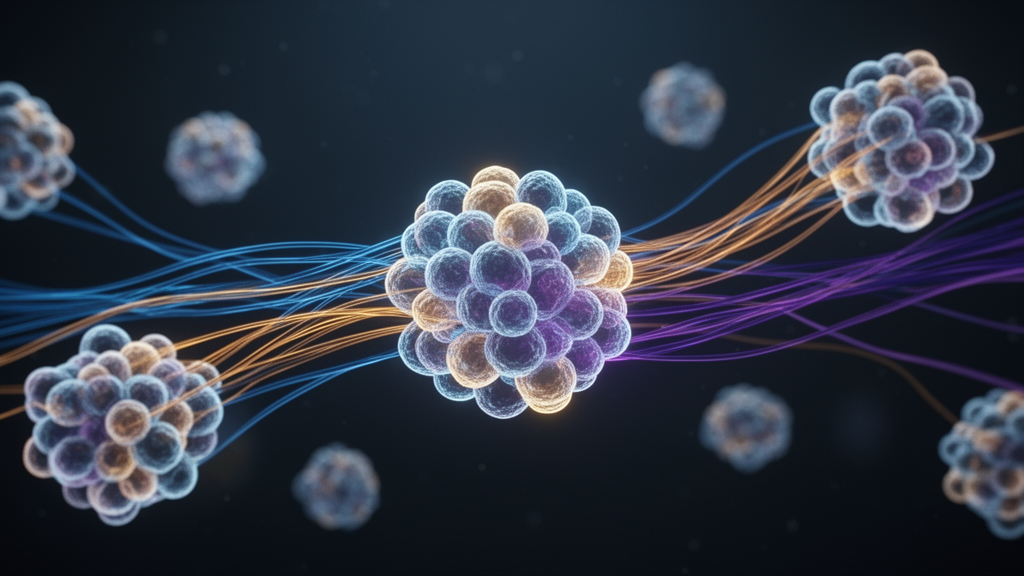
scCIF is an end-to-end framework built around two ideas. The first is contribution-aware fusion, which adaptively constructs a consensus semantic space across the omics layers rather than treating every input equally. The second is hard-aware assignment calibration, which aligns the clustering assignments derived from each individual omics layer with the fused assignment distribution. According to the paper, jointly modeling contribution imbalance and cross-omics semantic drift is what allows the framework to learn discriminative and biologically interpretable cell representations.
The team evaluated scCIF on eight public single-cell multi-omics datasets. Across those benchmarks, the method consistently outperformed competing methods on three standard clustering metrics: adjusted Rand index (ARI), normalized mutual information (NMI), and adjusted mutual information (AMI). Ablation studies, in which individual components of the framework are removed, verified the effectiveness of each key part of the design.
Beyond the headline clustering scores, the authors report a set of supporting analyses. UMAP visualization was used to inspect the learned cell embeddings, and batch effect analysis examined how the method handles technical variation. Trajectory inference and marker gene analysis were also carried out, and the paper states that these analyses further demonstrate that scCIF preserves biologically meaningful cellular structures. In other words, the method is presented not only as producing higher metric scores but as retaining biological signal in the fused representation.
The scCIF paper is currently shared as an accepted manuscript under Springer Nature’s shared-it process, meaning it is citable and carries a permanent DOI, but is subject to further edits before the final version of record replaces it.
As with any benchmark-driven computational study, the reported performance applies to the eight public datasets examined and the competing methods tested, and the paper’s conclusions rest on those experiments. The authors position scCIF as a robust framework for learning cell representations from multi-omics data, with the aim of supporting more accurate characterization of cellular heterogeneity in future studies.
Subject of Research: A computational framework for clustering cells using fused single-cell multi-omics data.
Article Title: scCIF: contribution-informed fusion for single-cell multi-omics clustering
Article References: Liu, H., Guo, Y., Liang, H., Yao, X., & Cong, S. (2026). scCIF: contribution-informed fusion for single-cell multi-omics clustering. BioData Mining. https://doi.org/10.1186/s13040-026-00614-5
Image Credits: AI Generated
DOI: 10.1186/s13040-026-00614-5
Keywords: single-cell multi-omics, scCIF, cell clustering, contribution-aware fusion, bioinformatics, ARI, NMI, AMI, BioData Mining, computational biology, omics integration, cell heterogeneity
Cite Scienmag News
Gregory Coleman. (October 28, 2026). New scCIF framework fuses single-cell multi-omics data for sharper cell clustering. Scienmag. https://scienmag.com/new-sccif-framework-fuses-single-cell-multi-omics-data-for-sharper-cell-clustering/
Gregory Coleman. "New scCIF framework fuses single-cell multi-omics data for sharper cell clustering." Scienmag, 28 October 2026, https://scienmag.com/new-sccif-framework-fuses-single-cell-multi-omics-data-for-sharper-cell-clustering/. Accessed 28 October 2026.
Gregory Coleman. "New scCIF framework fuses single-cell multi-omics data for sharper cell clustering." Scienmag. October 28, 2026. https://scienmag.com/new-sccif-framework-fuses-single-cell-multi-omics-data-for-sharper-cell-clustering/