


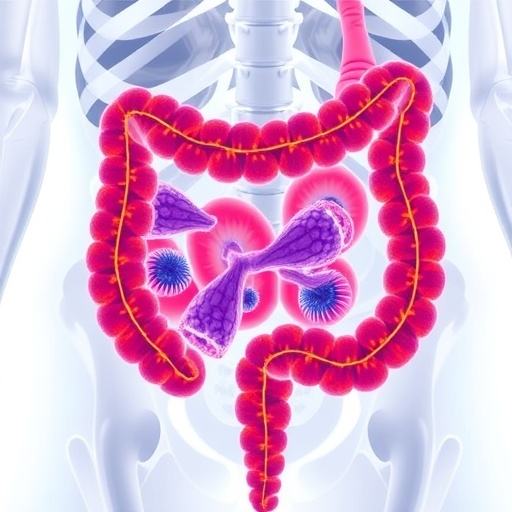
In a groundbreaking development that promises to reshape the therapeutic landscape for colorectal cancer, researchers at the Icahn School of Medicine at Mount Sinai, in collaboration with the Mount Sinai Tisch Cancer Center, have unveiled a novel immunotherapeutic strategy capable of surmounting resistance to current cancer treatments. This approach hinges on orchestrating a sophisticated dialogue between key immune cell populations within the tumor microenvironment — specifically, the interplay between cytotoxic T cells and myeloid cells, including macrophages — to potentiate tumor eradication.
Colorectal cancer remains a formidable clinical challenge, being one of the foremost causes of cancer mortality worldwide. Despite the revolutionary impact of immunotherapy in oncology, a significant subset of patients, especially those with treatment-resistant colorectal malignancies, fail to derive substantial benefit from existing immune checkpoint inhibitors. The Mount Sinai-led study elucidates that efficacious anti-tumor immunity requires more than mere activation of T lymphocytes; it necessitates the restoration of dynamic crosstalk between T cells and myeloid-derived suppressor cells within the tumor microenvironment.
Dr. Nina Bhardwaj, a leading immunotherapist and principal investigator on the study, emphasized the complexity of immune engagement. According to Dr. Bhardwaj, the conventional paradigm that focuses solely on T cell activation is insufficient. Instead, reestablishing communication channels between immune effectors allows for a coordinated and amplified anti-tumor response that can overcome established immunologic barriers posed by resistant colorectal cancers.
Employing state-of-the-art preclinical models and single-cell transcriptomic analysis, the research team dissected the heterogeneity of immunotherapy resistance. They identified a dual mechanism of immune evasion involving functionally exhausted T cells characterized by impaired effector capabilities, alongside the abundance of suppressive macrophages marked by TREM2 expression. These myeloid cells create an immunosuppressive niche that dampens T cell activity, thus enabling tumor persistence and progression.
To address this multifaceted resistance, the investigators devised a combinatorial immunotherapeutic regimen targeting multiple immune checkpoints—namely PD-1, CTLA-4, and LAG3—simultaneously with TREM2, which serves as a biomarker and functional node of immunosuppressive macrophage activity. This multiplexed targeting strategy is designed to concurrently reinvigorate exhausted T cells and reprogram macrophages, thereby restoring immune synergy within the tumor milieu.
Dr. Robert M. Samstein, co-senior author and immunologist, highlighted the necessity of a multi-pronged approach. By simultaneously addressing T cell dysfunction and mitigating macrophage-mediated suppression, this strategy transcends the limitations of single-agent therapies and opens avenues for treating a broader spectrum of colorectal cancer patients, including those with mismatch repair-proficient tumors typically refractory to immunotherapy.
Remarkably, preclinical evaluations demonstrated that this combination therapy achieved complete tumor clearance in experimental models of mismatch repair-deficient colorectal cancer, a subtype traditionally responsive to immunotherapy. Even more striking was the over 70 percent tumor eradication observed in mismatch repair-proficient models, underscoring the potential to overcome inherent resistance mechanisms.
The therapeutic approach achieves this by fundamentally rewiring the tumor microenvironment. Guillaume Mestrallet, the study’s primary author, explained that the dual immunomodulation effectively rejuvenates exhausted T cell populations while simultaneously dismantling the suppressive macrophage networks. This immune coordination culminates in robust and durable anti-tumor activity, representing a paradigm shift in cancer immunotherapy.
Beyond immediate tumor clearance, the study also revealed the induction of immune memory, a critical hallmark for long-term protection against relapse. This finding suggests that the therapy not only eliminates existing tumors but also primes the immune system to recognize and respond rapidly to potential future malignancies, providing hope for lasting remission in colorectal cancer patients.
These insights have profound implications for the future design of cancer immunotherapies. They underscore the importance of rationally engineered combination treatments that engage multiple facets of the immune system to circumvent complex resistance mechanisms. Such strategies could fundamentally change treatment outcomes for colorectal cancer and potentially other solid tumors exhibiting immunotherapy resistance.
The research was conducted in close partnership with colleagues at the University of California, San Francisco, and benefited from institutional funding at Mount Sinai along with grants including a National Institutes of Health training award. This collaborative effort exemplifies the power of interdisciplinary teamwork in translating scientific discoveries into clinical innovations.
As immunotherapy continues to evolve, the Mount Sinai team’s findings provide a compelling blueprint for next-generation therapeutic interventions, emphasizing the necessity of restoring immune cell crosstalk rather than relying on isolated immune activation. This study marks a critical step towards personalized, efficacious treatment paradigms for patients historically underserved by conventional therapies.
The research was detailed in the journal Cell Reports Medicine on May 5, 2026, offering a beacon of hope for advancing clinical strategies against one of the most challenging malignancies in oncology.
News Publication Date: 5-May-2026
Web References: http://dx.doi.org/10.1016/j.xcrm.2026.102786
Cite Scienmag News
Nathaniel Bowman. (May 6, 2026). New Mount Sinai Study Reveals Breakthrough Strategy to Overcome Immunotherapy Resistance in Colorectal Cancer. Scienmag. https://scienmag.com/new-mount-sinai-study-reveals-breakthrough-strategy-to-overcome-immunotherapy-resistance-in-colorectal-cancer/
Nathaniel Bowman. "New Mount Sinai Study Reveals Breakthrough Strategy to Overcome Immunotherapy Resistance in Colorectal Cancer." Scienmag, 6 May 2026, https://scienmag.com/new-mount-sinai-study-reveals-breakthrough-strategy-to-overcome-immunotherapy-resistance-in-colorectal-cancer/. Accessed 6 September 2026.
Nathaniel Bowman. "New Mount Sinai Study Reveals Breakthrough Strategy to Overcome Immunotherapy Resistance in Colorectal Cancer." Scienmag. May 6, 2026. https://scienmag.com/new-mount-sinai-study-reveals-breakthrough-strategy-to-overcome-immunotherapy-resistance-in-colorectal-cancer/


