


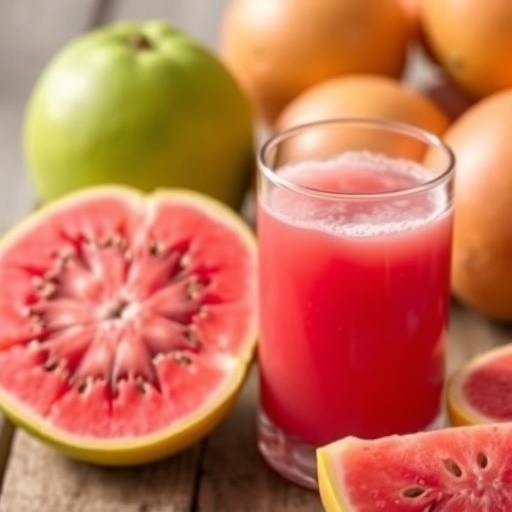
Emerging research from Indonesia underscores the promising role of guava juice as a cost-effective dietary intervention to mitigate iron deficiency anaemia, especially among vulnerable female populations such as adolescent girls and pregnant women. Published recently in the open-access journal BMJ Nutrition Prevention & Health, a comprehensive meta-analysis synthesizes data from multiple clinical and quasi-experimental studies to reveal significant improvements in haemoglobin levels facilitated by the intake of guava juice, particularly when paired with conventional iron supplementation.
Iron deficiency anaemia remains a pervasive public health challenge across low and middle-income countries, disproportionately affecting women due to physiological demands during adolescence and pregnancy. This condition, characterized by reduced haemoglobin concentrations, escalates the risk of morbidity and mortality through diminished oxygen transport capacity, manifesting clinically as fatigue, impaired cognitive function, and jeopardized fetal development. Researchers have long sought affordable, accessible, and culturally acceptable interventions that can augment existing supplementation programmes to optimize outcomes.
Guava fruit (Psidium guajava), widely cultivated and consumed in parts of Asia, presents auspicious nutritional attributes. Notably, it contains exceptionally high levels of vitamin C—up to four times greater per 100 grams than oranges—an essential micronutrient known to enhance non-heme iron absorption from plant-based sources by reducing ferric to ferrous iron and forming soluble iron-ascorbate complexes in the gastrointestinal tract. The fruit also supplies vitamin A, folate, dietary fiber, and modest quantities of iron, collectively contributing to enhanced erythropoiesis and haemoglobin biosynthesis. This nutrient profile positions guava juice as a compelling adjunctive therapy for anemia prevention.
Despite multiple small-scale Indonesian studies reporting haemoglobin increases following guava juice consumption, prior to this analysis, the evidence had not been rigorously synthesized to establish a definitive efficacy profile. The investigative team systematically searched English-language clinical trials and quasi-experimental studies published since 2000, identifying seventeen studies that met inclusion criteria—comprising fifteen quasi-experimental designs and two randomized controlled trials. The populations studied included adolescent females, who are vulnerable due to rapid growth and menstruation-related iron losses, and pregnant women, who experience increased iron demands for fetal development.
The meta-analytic approach pooled data from twelve studies involving 235 participants and revealed an average haemoglobin increase of 1.71 grams per deciliter following guava juice intake. Disaggregated analyses showed that pregnant women experienced an average haemoglobin elevation of 1.84 g/dL, whereas teenage girls exhibited an increase of 1.52 g/dL. Notably, in direct comparisons involving 102 participants per group, the combination of guava juice and iron supplementation resulted in a mean haemoglobin rise 1.29 g/dL greater than iron supplementation alone, highlighting a significant synergistic effect.
These haemoglobin increments, ranging between one to two grams per deciliter, hold clinical significance by potentially shifting individuals from mild or moderate anaemia categories to non-anaemic status. Such physiological improvements can ameliorate symptoms like chronic fatigue and contribute positively to neurocognitive performance and productivity, reinforcing the broader socio-economic impacts of addressing iron deficiency in these populations.
However, the authors prudently acknowledge several limitations to their findings. The geographic scope of the studies was exclusively Indonesia, raising questions about generalizability to other regions with differing dietary patterns, guava cultivars, and environmental factors. Additionally, considerable heterogeneity existed across study designs, intervention durations, juice dosages, and participant demographics, complicating the establishment of standardized therapeutic protocols. The predominance of quasi-experimental designs also constrains causal inferences, and the short duration of follow-up in most studies precludes insights into the long-term sustainability of haemoglobin improvements.
Integrating guava juice into public health strategies could represent a feasible and culturally congruent approach to combat mild and moderate anaemia. The authors suggest implementation avenues such as school-based nutrition programmes, antenatal care packages, and community health initiatives, aligning with global nutrition targets exemplified by the United Nations’ Decade of Action on Nutrition (2016–2025). Such interventions emphasize dietary diversification and utilization of locally sourced, nutrient-dense foods to promote sustainable nutritional health.
Further, guava juice’s affordability and widespread cultural acceptance across Asian populations enhance its potential for scalability and sustainability within existing health infrastructure. Strategic efforts to strengthen local supply chains, standardize juice formulations, and embed evidence-based dietary approaches in national nutrition policies could collectively augment anaemia control efforts.
Expert commentary from Professor Sumantra Ray, chief scientist at the NNEdPro Global Institute for Food, Nutrition and Health, which co-publishes BMJ Nutrition Prevention & Health, underscores the foundational scientific rationale linking vitamin C intake with enhanced iron bioavailability. Yet, he highlights the necessity for caution given the methodological limitations of existing studies and calls for rigorous randomized controlled trials to elucidate optimal dosing strategies and long-term effects before recommending guava juice as a standalone therapeutic alternative.
This meta-analysis contributes to a growing body of literature supporting synergistic nutrient interactions and reinforces the paradigm that improving micronutrient bioavailability through dietary means can be a pivotal adjunct in the fight against iron deficiency anaemia. Continued research investments and translational efforts are warranted to operationalize these findings into effective public health nutrition interventions tailored to diverse populations grappling with this silent yet profound global health burden.
News Publication Date: 26-May-2026
Web References:
10.1136/bmjnph-2025-001466
Cite Scienmag News
Daisy Hatcher. (May 27, 2026). Regular Guava Juice Intake May Reduce Anemia Risk in Women: New Findings. Scienmag. https://scienmag.com/regular-guava-juice-intake-may-reduce-anemia-risk-in-women-new-findings/
Daisy Hatcher. "Regular Guava Juice Intake May Reduce Anemia Risk in Women: New Findings." Scienmag, 27 May 2026, https://scienmag.com/regular-guava-juice-intake-may-reduce-anemia-risk-in-women-new-findings/. Accessed 3 September 2026.
Daisy Hatcher. "Regular Guava Juice Intake May Reduce Anemia Risk in Women: New Findings." Scienmag. May 27, 2026. https://scienmag.com/regular-guava-juice-intake-may-reduce-anemia-risk-in-women-new-findings/


