


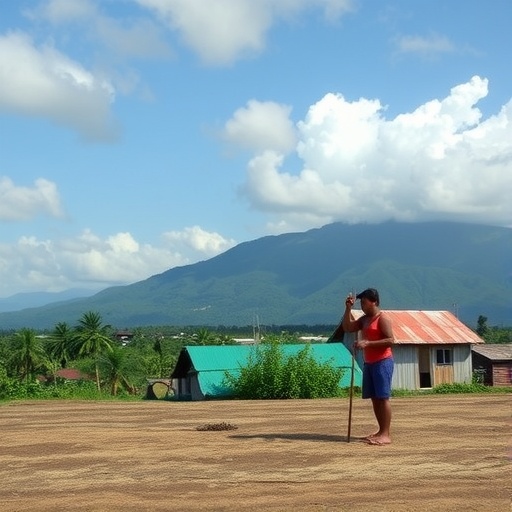
Thailand has taken a significant step toward answering one of the most stubborn questions in global climate policy: how does a country actually know whether its adaptation efforts are working? A new study published in Environmental and Sustainability Indicators presents a multidimensional indicator framework designed to measure climate change adaptation in Thailand’s human settlements and human security sector, offering a practical bridge between international adaptation goals and the everyday realities of households, communities, and government agencies. Developed by Siripong Palakawong-na-ayudhya, the framework emerges at a moment when the gap between climate awareness and measurable adaptation action has become one of the most pressing challenges in climate governance worldwide.
The scientific rationale behind the study begins with a fundamental measurement problem. Climate change adaptation, as defined by the Intergovernmental Panel on Climate Change, is the process of adjustment to actual or expected climate effects in order to moderate harm or exploit beneficial opportunities. Yet adaptation outcomes are inherently context dependent, varying with local priorities, values, and environmental conditions, which makes them notoriously difficult to define, measure, and compare across countries and sectors. No universal set of indicators has emerged to evaluate adaptation consistently. International climate governance has responded by pushing for measurable indicators through the Sustainable Development Goals and the Global Goal on Adaptation under the Paris Agreement, but these global frameworks provide broad directions rather than detailed, sector-specific metrics that can be directly applied within national institutional contexts. The new study tackles precisely this operationalization gap, using Thailand as its testing ground.
Thailand provides a particularly instructive case. The country faces a wide array of climate-related hazards, including flooding, heat stress, drought, and sea-level rise, risks that have been formally recognized in its National Adaptation Plan. The plan identifies impacts on water resources, urban systems, infrastructure, ecosystems, and vulnerable communities as key adaptation challenges requiring coordinated responses across sectors and administrative levels. Many Thai cities, especially those in low-lying river basins and coastal zones, are highly exposed to these hazards, while governance and planning systems have historically struggled to coordinate adaptation across different levels of administration. Vulnerability is also unevenly distributed: metropolitan areas, medium-sized cities, and smaller communities differ substantially in infrastructure capacity, governance arrangements, and socioeconomic conditions, meaning that climate risk does not fall equally across the settlement hierarchy.
Despite these policy commitments, the study identifies a critical weakness in Thailand’s National Adaptation Plan: it provides only broad strategic directions and does not specify systematic, sector-specific indicators for assessing adaptation outcomes at the community and household levels. Previous research has likewise noted that Thailand continues to lack operational indicators capable of translating adaptation policies into measurable outcomes. Existing monitoring frameworks, both in Thailand and internationally, tend to emphasize administrative outputs, such as plans and projects implemented, rather than whether those interventions actually reduce vulnerability and strengthen resilience within communities and households. This is the methodological gap the new framework is engineered to close.
The methodology is as notable as the framework itself. The study adopts a qualitative and conceptual research approach built on four iterative steps that move from global evidence to context-specific indicators. First, a comprehensive literature review drew on the Global Goal on Adaptation indicator framework, UNFCCC guidance, IPCC reports, and peer-reviewed studies on climate adaptation, urban resilience, disaster risk reduction, and adaptive social protection. Two GGA indicators anchored the work: increasing the resilience of infrastructure and human settlements to climate impacts to ensure continuous essential services, and reducing adverse effects of climate change on poverty eradication and livelihoods, particularly through adaptive social protection. The review also incorporated Sustainable Development Goal 11, which targets inclusive, safe, resilient, and sustainable cities, and Thailand’s National Adaptation Plan, which served as the primary national policy reference.
The second and third steps grounded the framework in Thailand’s administrative reality. Candidate indicators were mapped against the national policy context and assessed for institutional applicability and feasibility. To ensure institutional relevance, seven government agencies were purposively selected based on their statutory mandates under the Reorganization of Ministries, Sub Ministries, and Departments Act of 2002, spanning the Ministry of Interior and the Ministry of Social Development and Human Security. These included the Department of Public Works and Town & Country Planning, the Department of Community Development, the Department of Disaster Prevention and Mitigation, the Department of Social Development and Welfare, the National Housing Authority, and the Department of Women’s Affairs and Family Development. Semi-structured stakeholder consultation meetings were conducted with 38 agency representatives, followed by a refinement workshop with 11 representatives, providing cross-agency dialogue on institutional responsibilities, data availability, and implementation challenges. Consultation data were analyzed using a framework analysis approach, and candidate indicators were retained only if they satisfied four criteria: alignment with the GGA and the National Adaptation Plan, fit within statutory agency responsibilities, confirmed data availability or feasible collection, and suitability for routine reporting to the Department of Climate Change and Environment, which compiles Thailand’s adaptation progress reporting to international platforms. A final expert review involving 18 participants, including executives, technical staff, and external experts from sectors ranging from agriculture to public health, refined the framework iteratively.
The resulting framework operationalizes climate adaptation through five interrelated dimensions: urban planning, infrastructure quantity and quality, disaster preparedness and risk reduction mechanisms, social protection and resilience mechanisms, and quality of life and household resilience. The indicators span different stages of the adaptation results chain. Process indicators capture institutional arrangements and policy implementation, such as the number of comprehensive urban plans initiated and evaluated each fiscal year and the number of government buildings inspected under Bangkok’s Building Control Act. Output indicators measure immediate products of adaptation actions, including infrastructure and urban landscape improvement projects funded, urban plans updated with GIS data to support climate risk mapping, the volume of aquatic weeds removed from waterways to maintain flood conveyance capacity, flood prevention and mitigation projects, and the use of hydraulic low-carbon cement for durable, lower-carbon construction. Outcome indicators capture changes in adaptive capacity and living conditions, such as the percentage of flood prevention infrastructure meeting engineering standards, the percentage of the population receiving timely disaster warnings with a target of at least 95 percent, and the percentage of provinces with completed emergency response plans for floods, storms, and landslides.
What distinguishes the framework from conventional monitoring systems is its fifth dimension, which reaches directly into household life. Indicators track the percentage of households with secure housing tenure, durable housing, adequate environmental settings, and sufficient access to clean drinking water, as well as the percentage of households with savings of at least 100,000 baht, access to formal financial services, members possessing life and occupational skills, and preparedness for disaster response. Social protection coverage is measured through the percentage of low-income households receiving State Welfare Card benefits, overall social protection coverage, and the proportions of elderly people and people with disabilities receiving care from family, community, or institutions. A final output indicator counts housing units improved for vulnerable households, including those in informal settlements. Together these metrics reflect a conceptual argument at the heart of the study: adaptation capacity is not generated exclusively through external interventions but emerges through the interaction between institutional support and the resources, capabilities, and security conditions available to households. Public policies and infrastructure investments provide enabling conditions, while household-level capacities determine whether those interventions can effectively reduce vulnerability.
The discussion within the paper situates the framework within broader debates on adaptation measurement. Existing international approaches differ in emphasis: the GGA provides a global structure for tracking progress across countries but does not prescribe how broad objectives should be operationalized in specific sectors, while SDG 11 focuses on sustainable settlements within the wider development agenda, and conventional urban resilience indicator systems tend to prioritize urban capacities and governance preparedness over household-level vulnerability. The proposed framework instead operationalizes international adaptation priorities into sector-specific indicators explicitly aligned with institutional mandates, administrative responsibilities, and national monitoring systems. This governance-sensitive approach matters especially in developing countries, where adaptation monitoring systems are still evolving and responsibilities remain fragmented across sectors and agencies. In such contexts, indicator development is shaped not only by conceptual definitions of resilience but by the practical capacity of institutions to collect, interpret, and use adaptation-related information.
The framework is candid about its limits. Because it relies primarily on existing administrative data, which vary in availability, quality, and consistency across agencies, some dimensions of household resilience, including informal coping strategies, social networks, and community-based adaptive capacities, remain difficult to capture quantitatively. Weighting, aggregation, and empirical validation were beyond the study’s scope, meaning further work is needed before the framework can function as a composite adaptation index. Impact indicators, which would require long-term monitoring and robust evidence linking interventions to changes in climate-related risks and losses, are not yet systematically incorporated and represent an important direction for future refinement. The study also acknowledges that perspectives from ecology, economics, culture, and Indigenous knowledge systems could identify additional dimensions beyond its current scope. Still, as national adaptation priorities and monitoring requirements evolve, the framework provides the structural foundation on which outcome- and impact-based assessment can later be built, and it demonstrates how sector-specific indicator systems can serve as intermediate tools linking international commitments, such as the Global Goal on Adaptation, to measurable actions by national institutions, offering a model that other developing countries facing similar institutional fragmentation may adapt to their own governance contexts.
Cite Scienmag News
Sloane Callahan. (September 9, 2026). New indicator framework links climate adaptation to human security in Thailand. Scienmag. https://scienmag.com/new-indicator-framework-links-climate-adaptation-to-human-security-in-thailand/
Sloane Callahan. "New indicator framework links climate adaptation to human security in Thailand." Scienmag, 9 September 2026, https://scienmag.com/new-indicator-framework-links-climate-adaptation-to-human-security-in-thailand/. Accessed 9 September 2026.
Sloane Callahan. "New indicator framework links climate adaptation to human security in Thailand." Scienmag. September 9, 2026. https://scienmag.com/new-indicator-framework-links-climate-adaptation-to-human-security-in-thailand/


