


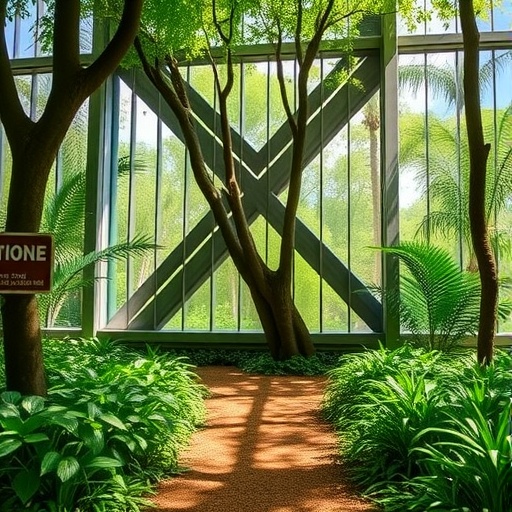
Campus greenery does far more than decorate a university landscape. A new study from Universitas Indonesia suggests that the trees, gardens, and open natural spaces woven into a campus can measurably shape how students feel and how they behave toward the environment. The research, published in the Journal of Environmental Studies and Sciences, offers one of the most detailed statistical portraits yet of how nature on a university campus travels through the human mind, boosting well-being and cultivating environmentally responsible habits among young adults in a country that has become a global leader in green campus design.
The study, led by Audrey Gracia Muljono of the School of Environmental Science at Universitas Indonesia, together with Riri Fitri Sari of the Department of Electrical Engineering, Raldi Hendrotoro Seputro Koestoer, and Tri Edhi Budhi Soesilo, set out to answer a question that has lingered in environmental psychology for years: exactly how do the natural elements of a campus translate into psychological benefits and pro-environmental behavior? While Indonesia has built an international reputation through the UI GreenMetric World University Rankings, which it hosts and which evaluates universities worldwide on their sustainability commitments, the psychological machinery connecting campus greenery to student outcomes has remained surprisingly underexplored. The team designed their investigation to map those internal pathways with formal statistical rigor.
To do so, the researchers recruited a purposive sample of 379 undergraduate students at Universitas Indonesia, a sprawling campus in Depok known for its extensive green cover and lakes. Participants completed survey instruments measuring several distinct psychological constructs: their exposure to and interaction with campus natural elements, their sense of perceived restorativeness, the degree to which they felt psychologically connected to nature, their overall well-being, and their engagement in pro-environmental behavior. The analytical engine of the study was Partial Least Squares Structural Equation Modeling, or PLS-SEM, a technique increasingly favored in social science research for its ability to test complex networks of relationships between latent variables, constructs that cannot be observed directly but are inferred from multiple survey indicators. PLS-SEM is particularly well suited to exploratory models with multiple mediating pathways, allowing the researchers to estimate simultaneously how campus nature influences well-being and behavior both directly and indirectly through psychological intermediaries.
The results paint a coherent picture. Campus natural elements significantly influenced every variable in the model, confirming that the physical green infrastructure of a university is not a neutral backdrop but an active ingredient in student psychology. Two mediators emerged as the critical conduits. Perceived restorativeness, the feeling that a space allows psychological recovery from mental fatigue, positively affected students’ well-being. Nature connectedness, the subjective sense of belonging to and relationship with the natural world, proved even more consequential, enhancing both pro-environmental behavior and perceived restorativeness itself. In other words, students who felt deeply connected to nature were both more likely to act sustainably and more likely to find the campus environment psychologically restorative, and those restorative experiences in turn fed their well-being.
The fine-grained indicators behind these effects are telling. The strongest signals included students’ personal relationships with nature, their green self-images, the frequency and quality of their interactions with campus natural elements, the perceived compatibility of campus spaces with their needs, and external satisfaction with the environment. Natural spaces, the authors report, nurture a deep connection to nature and promote social well-being, thereby shaping pro-environmental behavior. This aligns with a long tradition in environmental psychology. Attention Restoration Theory, developed by Stephen Kaplan and Rachel Kaplan, holds that natural environments replenish depleted directed attention through qualities such as being away, extent, fascination, and compatibility. The Biophilia hypothesis, articulated by E.O. Wilson, proposes an innate human affinity for living systems. The Indonesian findings provide quantitative support for the idea that these mechanisms operate within the everyday landscape of a university, not just in wilderness settings or dedicated parks.
Yet the study also delivered a sobering and scientifically important caveat. Perceived restorativeness and students’ well-being did not significantly affect pro-environmental behavior. Feeling good, in other words, does not automatically translate into acting green. The pathway from campus nature to sustainable behavior runs primarily through nature connectedness, not through the hedonic or restorative benefits that green spaces provide. This nuance matters for theorists who have sometimes assumed that the psychological uplift provided by nature is itself the engine of conservation behavior. The data from Universitas Indonesia suggest a more complex relationship, one that may require additional mediators, such as place attachment, cultural context, environmental knowledge, and personal values, to fully explain how exposure to nature becomes environmental action. The authors explicitly recommend further exploration of these factors to address green campus dynamics across diverse settings.
The findings arrive amid growing international concern about student mental health. University students face elevated rates of anxiety, depression, and stress, a pattern documented across many countries, and Indonesian students are no exception. Previous research has shown that campus greenspace is independently associated with better mental health, that greenery in study environments influences restoration likelihood, and that therapeutic gardens can improve perceived quality of life on campuses in other countries. What the new study adds is an integrated structural model that links these strands together in a single statistical framework, demonstrating that the same physical features that help students recover psychologically also cultivate the identity-level connection to nature that motivates sustainable behavior. This dual function makes campus design a rare policy lever that serves both human health and environmental goals simultaneously.
The practical implications for universities are direct. The authors highlight the importance of campus designers and educators in providing opportunities for students to interact with nature and in embedding sustainability education programs alongside physical greenery. A campus cannot simply plant trees and expect behavioral change; the green spaces must be accessible, compatible with student life, and integrated into the social fabric of the university, allowing for the personal interactions and social well-being that the model identifies as key indicators. Equally, the finding that nature connectedness is the decisive mediator suggests that programs designed to deepen students’ relationships with the natural world, whether through outdoor learning, ecological coursework, or hands-on stewardship activities, may amplify the benefits of the physical landscape. Green campus initiatives that combine sustainable design with environmental education, the study notes, are crucial for improving well-being and promoting pro-environmental behavior together.
The study also carries significance for how universities evaluate their own sustainability efforts. Ranking systems such as UI GreenMetric assess campuses on metrics including green space, energy use, and waste management, but they do not typically measure psychological outcomes. By demonstrating the measurable impact of natural elements on human-nature connections, the researchers expand the literature on green campuses in a way that is critical for evaluating the success of sustainable education and green campus design. If the ultimate aim of a green campus is to graduate students who carry environmental values into society, then indicators such as nature connectedness and perceived restorativeness may deserve a place alongside kilowatt-hours and recycling rates in institutional dashboards. The authors argue that their findings expand the literature by showing these connections can be quantified, giving administrators an evidence base for investments in landscape and programming.
The research is not without limits. The sample was drawn from a single institution, one of the greenest campuses in a country whose universities dominate green ranking lists, and purposive sampling constrains generalization to other institutions and cultures. The cross-sectional design captures associations at one point in time rather than tracking how nature exposure changes students over the course of their degrees. And the unexplained portion of the path from well-being to pro-environmental behavior signals that the model, while rich, is incomplete. The authors call for further exploration of place attachment, cultural contexts, knowledge, and values, pointing toward a research agenda that treats green campuses as dynamic psychological ecosystems rather than static collections of greenery. Still, for a field seeking to understand how built environments shape the minds and morals of the next generation, the study offers a compelling demonstration that nature on campus is not decoration but cultivation, moving students from nature to nurture in the most literal sense.
Cite Scienmag News
Sloane Callahan. (September 9, 2026). Nature’s Role in Student Well-being and Eco-Behavior on Indonesia’s Green Campuses. Scienmag. https://scienmag.com/natures-role-in-student-well-being-and-eco-behavior-on-indonesias-green-campuses/
Sloane Callahan. "Nature’s Role in Student Well-being and Eco-Behavior on Indonesia’s Green Campuses." Scienmag, 9 September 2026, https://scienmag.com/natures-role-in-student-well-being-and-eco-behavior-on-indonesias-green-campuses/. Accessed 9 September 2026.
Sloane Callahan. "Nature’s Role in Student Well-being and Eco-Behavior on Indonesia’s Green Campuses." Scienmag. September 9, 2026. https://scienmag.com/natures-role-in-student-well-being-and-eco-behavior-on-indonesias-green-campuses/


