


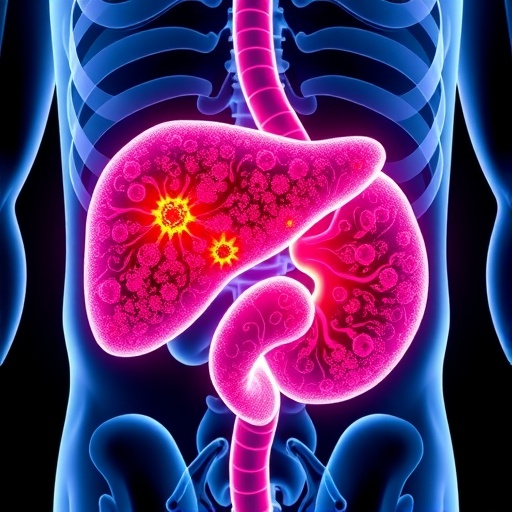
Advanced colon cancer remains a formidable adversary in oncology, ranking as the leading cause of cancer-related mortality among young American men and the second most lethal worldwide. A hallmark of this malignancy’s progression is its frequent dissemination to the liver, a critical turning point that significantly diminishes patient survival outcomes. Despite advancements in surgical and systemic therapies, the recurrence of tumors within hepatic tissue continues to challenge long-term disease control, underscoring the urgent need for innovative approaches.
In an exciting development, a research team from the University of California, San Francisco (UCSF) has unveiled a promising strategy that harnesses a novel combination of immunotherapeutic agents to fundamentally remodel the immune landscape within colorectal cancer liver metastases. This breakthrough, demonstrated in rigorous preclinical murine models, shows that the combined therapy can frequently eradicate metastatic liver tumors, offering a beacon of hope for patients grappling with microsatellite stable (MSS) colorectal cancer—a subtype historically resistant to immunomodulatory treatments.
The study, published in the esteemed journal Science Advances on October 8, 2025, was spearheaded by Dr. Ajay V. Maker, Maurice Galante Distinguished Professor of Surgery at UCSF and surgeon-in-chief at the UCSF Helen Diller Family Comprehensive Cancer Center. Dr. Maker and colleagues aimed to confront the recalcitrant nature of liver metastases, which notoriously evade immune detection and suppression by conventional immune checkpoint blockade therapies, thereby facilitating tumor persistence and progression.
Historically, immune checkpoint inhibitors—agents that unleash T cell responses by blocking proteins such as PD-1 and CTLA-4—have revolutionized treatment paradigms in various cancers. However, MSS colorectal tumors, which account for over 95% of colorectal cancer cases, respond poorly to these interventions. The immunologically “cold” tumor microenvironment characteristic of MSS tumors, particularly in the liver, seems impervious to immune activation through checkpoint blockade alone, prompting researchers to explore synergistic approaches.
The UCSF team’s innovative solution centers on the overexpression of LIGHT (TNFSF14), a cytokine belonging to the tumor necrosis factor superfamily known for its potent immunostimulatory properties. LIGHT functions as a signaling molecule that enhances T cell infiltration and activation within tumors, thereby potentially overcoming the immunosuppressive milieu. Prior investigations indicated that elevated LIGHT levels correlate with heightened tumor lymphocyte presence and improved survival in advanced colorectal cancer, setting the stage for its therapeutic application.
In their newly developed murine model that closely simulates human colorectal cancer liver metastases, the researchers observed that treatment with LIGHT alone effectively activated T cells but also paradoxically induced recruitment of immunosuppressive cells, which could dampen antitumor immunity. Recognizing the complexity of immune regulation within the tumor microenvironment, the team hypothesized that combining LIGHT therapy with checkpoint blockade could yield a more robust and sustained antitumor response.
Focusing on the CTLA-4 immune checkpoint receptor, which was found to be highly expressed in colorectal liver metastases in their model, the researchers administered a combinatorial treatment comprising LIGHT overexpression and anti-CTLA-4 antibodies. This dual approach markedly reprogrammed the tumor microenvironment, enhancing effector T cell function while mitigating immunosuppressive signals. Remarkably, this strategy achieved complete tumor control, a result seldom observed with monotherapies, illustrating the synergistic potential of targeting both stimulatory and inhibitory immune pathways.
Dr. Maker highlighted the significance of their findings, emphasizing the ability of this combination therapy to ‘train’ the immune system to recognize and persistently attack tumors while resisting cellular exhaustion—a common barrier in chronic cancer immunity. Their work elucidates critical mechanisms underlying immune evasion in colorectal liver metastases and opens avenues for therapeutic modalities that can recalibrate immune dynamics in favor of tumor eradication.
In addition to demonstrating efficacy in preclinical models, the research team is actively exploring delivery methods that involve direct intratumoral injection of the immunotherapies into the liver metastases, aiming to localize treatment effects and minimize systemic toxicities. Given that anti-CTLA-4 antibodies are currently administered systemically in clinical settings, this approach holds substantial translational relevance and feasibility for imminent clinical trials.
The implications of this research extend beyond colorectal cancer to potentially inform immunotherapeutic strategies for other malignancies exhibiting liver tropism and resistance to current checkpoint inhibitors. By dissecting the intricacies of tumor-immune interactions and innovatively manipulating them, the UCSF group’s work underscores a paradigm shift towards precision immunotherapy, tailored to overcome specific barriers posed by the metastatic tumor microenvironment.
Looking ahead, the collaborative team is poised to translate these preclinical successes into human studies, aiming to validate safety and efficacy in patients. The hope is that this novel immunotherapy combination will ultimately improve survival outcomes for those afflicted with advanced colorectal cancer liver metastases and transform the landscape of metastatic cancer treatment.
This breakthrough reflects a broader trend in oncology that integrates cytokine signaling modulation with checkpoint blockade, harnessing synergistic mechanisms to invigorate antitumor immunity. It underscores the critical importance of comprehensively understanding tumor immunobiology to develop therapies that can outmaneuver cancer’s adaptive resistance strategies, thus fulfilling the promise of durable and effective cancer immunotherapy.
News Publication Date: 8-Oct-2025
Web References:
Cite Scienmag News
Nathaniel Bowman. (October 8, 2025). New Immunotherapy Combo Eradicates Colorectal Liver Metastases. Scienmag. https://scienmag.com/new-immunotherapy-combo-eradicates-colorectal-liver-metastases/
Nathaniel Bowman. "New Immunotherapy Combo Eradicates Colorectal Liver Metastases." Scienmag, 8 October 2025, https://scienmag.com/new-immunotherapy-combo-eradicates-colorectal-liver-metastases/. Accessed 5 September 2026.
Nathaniel Bowman. "New Immunotherapy Combo Eradicates Colorectal Liver Metastases." Scienmag. October 8, 2025. https://scienmag.com/new-immunotherapy-combo-eradicates-colorectal-liver-metastases/


