


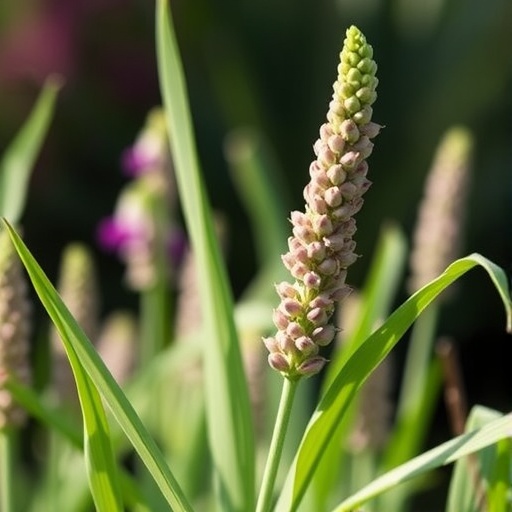
In a remarkable leap forward for agricultural genomics, researchers have unveiled a comprehensive chromosome-scale assembly of the European flax, scientifically known as Linum usitatissimum L. This groundbreaking study, spearheaded by Demenou, Ndar, and Pineau, along with a team of dedicated scientists, explores the untapped potential of flax and opens new avenues for enhancing breeding techniques. The implications of this research extend far beyond the laboratory, promising significant advancements in crop improvement and sustainability.
Flax, revered for its fiber and oil, holds a unique position in agricultural history, revered by ancient civilizations as a vital crop. However, despite its long-standing cultivation, genomic insights into its genetic diversity and traits have remained limited. The researchers tackled this challenge head-on by employing state-of-the-art sequencing technologies to generate a robust genomic framework. The study’s findings not only chart a detailed landscape of flax’s genetic architecture but also highlight the species’ adaptability and resilience in various environments.
Central to this research is the concept of pangenomics, which examines the complete genomic repertoire of multiple genotypes. By successfully constructing a pangenome for European flax, the researchers enable a comprehensive analysis of genetic variations across different flax cultivars. This innovative approach lays the foundation for identifying desirable traits that can be harnessed in breeding programs. As agriculture faces unprecedented challenges, such as climate change and population growth, such genomic tools become essential assets for developing resilient crop varieties.
The chromosome-scale assembly accomplished in this study provides unparalleled granularity in understanding genetic structures. This detailed genomic map not only elucidates the gene density and distribution within flax but also reveals regions pertinent to traits such as disease resistance and yield. Traditional breeding methods alone may fall short in addressing the rapid changes in agricultural demands, making genomic insights critical for future breeding programs.
Moreover, the study emphasizes the importance of genetic diversity in flax cultivars. By utilizing high-throughput sequencing techniques, the team was able to capture a wealth of data that reflects the genetic breadth of the species. The identification of key genetic loci associated with important agronomic traits demonstrates a clear path for breeders to develop flax varieties that are not only high-yielding but also possess enhanced resilience to biotic and abiotic stresses.
The findings extend implications not just for flax but for crop genomics as a whole. As scientists dive deeper into the pangenomes of various species, the potential for synergies between crops increases, allowing for the transfer of beneficial traits across species. This may be especially pertinent given the global push towards sustainable agriculture, as crops equipped with multiple advantageous traits can better withstand the rigors of changing climates and pest pressures.
As with all pioneering research, challenges remain. The complexity of crop genomes can often lead to difficulties in functional annotation, where identifying the precise role of each gene can be convoluted. However, innovators in the field are leveraging advanced computational tools and artificial intelligence to mitigate these challenges, thus enhancing the speed and accuracy with which genomic information can be translated into practical applications.
Beyond the technical aspects, this research underscores the transformative power of collaborative science. The teamwork involved in assembling chromosome-scale structures required expertise from various disciplines, demonstrating that integrated approaches yield the richest scientific insights. Such collaboration among geneticists, agronomists, and bioinformaticians is an exemplar model for future genomic studies that aim to address food security and agricultural efficiency.
The genomic tools developed through this research also hold promise for agroecology. As the agricultural landscape shifts, farmers can utilize the enriched genetic information to make informed decisions on crop selection and management practices. By aligning plant varieties with specific environmental conditions, producers can enhance not only yields but also crop quality, thereby improving the overall sustainability of agricultural practices.
In addition, the broader implications of this study resonate deeply with the increasing demand for natural and sustainable products. Flaxseed oil, fiber, and other derivatives are gaining traction in the health and wellness sectors. Improved flax varieties, through optimized breeding programs driven by this genomic research, could fulfill consumer demands for higher quality products while reducing the environmental footprint associated with flax cultivation.
Furthermore, the research aligns with global aims for biodiversity conservation. With crops being one of our most essential natural resources, understanding the genetic underpinnings helps in safeguarding genetic diversity against the threats posed by climate change and industrial agriculture practices. This foresight positions researchers as stewards of sustainable agricultural practices, ensuring that both farmers and consumers benefit equitably from advancements made in genetic research.
In conclusion, the chromosome-scale assembly of European flax presents an extraordinary opportunity to revolutionize breeding practices and agricultural methodologies. As researchers continue to decode the complexities of flax’s genome, the agricultural community stands on the cusp of transformative change, reinforcing the critical role of genomics in crop improvement. The collaboration and innovative techniques employed in this study could very well form the template for future agricultural breakthroughs, marking just the beginning of a new era in crop genetics.
Demenou, B.B., Ndar, A., Pineau, C.P. et al. Chromosome-scale assembly of European flax (Linum usitatissimum L.) genotypes and pangenomic analysis provide genomic tools to improve breeding. BMC Genomics 26, 1008 (2025). https://doi.org/10.1186/s12864-025-12248-8
Cite Scienmag News
Juliet Wilcox. (November 10, 2025). New Genomic Tools Boost European Flax Breeding. Scienmag. https://scienmag.com/new-genomic-tools-boost-european-flax-breeding/
Juliet Wilcox. "New Genomic Tools Boost European Flax Breeding." Scienmag, 10 November 2025, https://scienmag.com/new-genomic-tools-boost-european-flax-breeding/. Accessed 3 September 2026.
Juliet Wilcox. "New Genomic Tools Boost European Flax Breeding." Scienmag. November 10, 2025. https://scienmag.com/new-genomic-tools-boost-european-flax-breeding/


