


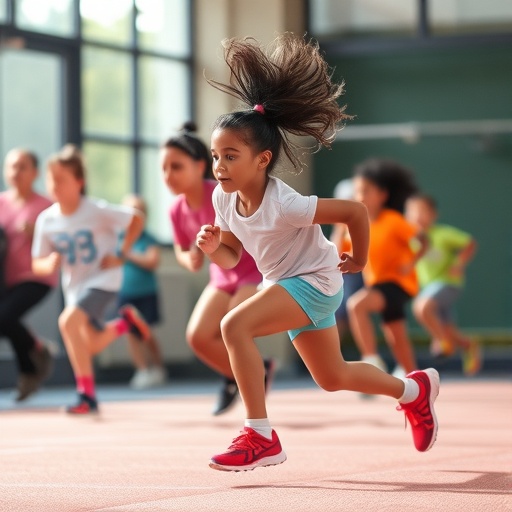
A study of 461 French primary-school children has found that physical fitness and “physical literacy”—the motivation, confidence, knowledge and physical competence needed to remain active throughout life—are closely connected, but they are not interchangeable. Children who performed better on tests of strength, speed and endurance generally reported higher levels of physical literacy. Yet the relationship weakened or disappeared when researchers examined the psychological, social and cognitive parts of physical literacy separately. The findings suggest that building stronger, faster and more enduring bodies may help children feel physically capable, but fitness training alone is unlikely to give them the confidence, social support and understanding required for a lasting active lifestyle.
The distinction matters because the two concepts are often grouped together in schools, sports programmes and public-health campaigns. Physical fitness is usually treated as a measurable set of bodily capacities: how far a child can jump, how quickly they can run, how long they can sustain exercise and how well they coordinate movement. Physical literacy is broader and more experiential. It includes whether children enjoy movement, believe they can participate, understand how physical activity fits into their lives and feel able to navigate social and environmental situations that encourage activity. Fitness is therefore largely an outcome-oriented, biophysical concept, whereas physical literacy is a process-oriented framework concerned with engagement and lifelong participation.
The researchers, led by Thibaut Derigny and François Potdevin, recruited pupils from five urban primary schools in France between September and November 2024. Of 633 children invited, 551 received the necessary consent and completed at least part of the assessment process. After 90 children were excluded because of incomplete fitness data, the final analysis included 461 participants—229 girls and 232 boys—with an average age of 7.92 years. The children completed the fitness tests and the physical-literacy questionnaire during the same two-hour physical-education session, under the supervision of teachers, a fitness-test coordinator and a member of the research team.
Fitness was measured using the Diagnoform-Kid protocol, a battery designed for children and widely used in French research. Muscular power was assessed with a standing long jump, speed by measuring how far each child could run in five seconds, endurance with a six-minute 20-metre shuttle test that alternated running and walking, and coordination with a hopscotch task. Each capacity was converted to a score on a 20-point scale. These tests do not measure every aspect of physical capability, but together they capture several core components of performance: force production, rapid movement, sustained cardiorespiratory effort and the ability to control movement.
Physical literacy was assessed with the French-adapted Physical Literacy in Children Questionnaire, or PLC-Quest. The instrument uses 30 pictures, each accompanied by a four-point scale ranging from “not at all like me” to “very much like me.” Twelve items measure the perceived physical dimension, seven the psychological dimension, four the social dimension and seven the cognitive dimension. The physical dimension reflects how children view their movement abilities, while the other dimensions address confidence and motivation, interaction with others and understanding of physical activity. The questionnaire has shown strong test–retest reliability in its French version, although it remains a self-report measure and therefore captures how children perceive themselves rather than providing an entirely objective assessment.
To examine the relationship between the two constructs, the team used structural equation modelling, a statistical approach that can estimate several relationships simultaneously while accounting for measurement error. In the first model, the four fitness tests were combined into an underlying, or latent, overall fitness score, and the four physical-literacy dimensions were combined into an overall literacy score. The association between those two latent variables was substantial: the standardized coefficient was 0.52, with a 95 percent confidence interval from 0.34 to 0.71 and a probability value below 0.001. The model fit the data well, with a Comparative Fit Index of 0.948, a Tucker–Lewis Index of 0.924, a root mean square error of approximation of 0.07 and a standardized root mean square residual of 0.072.
The overall association appeared in both sexes. Among girls, the coefficient linking fitness and physical literacy was 0.30; among boys, it was 0.49. Although the relationship looked stronger in boys, a formal comparison found no statistically significant difference between the groups. The researchers then moved beyond the global scores and modelled each fitness capacity against each physical-literacy dimension. Endurance, strength and speed were each positively associated with the physical dimension of literacy. The strongest of these links was with strength, with a coefficient of 0.22; endurance showed a coefficient of 0.14, and speed 0.11. Coordination, however, was not significantly related to the physical dimension after the other fitness capacities were taken into account.
Strength was the only fitness capacity associated with the psychological dimension of physical literacy, with a coefficient of 0.17. None of the fitness measures showed a significant relationship with the social or cognitive dimensions. That pattern is important because it argues against treating physical literacy as simply another name for motor performance. A child may be able to run farther or jump higher without necessarily gaining the social confidence to join a game, the cognitive understanding to identify opportunities for activity or the motivation to remain active when exercise becomes difficult. The apparent psychological benefit of strength may reflect greater confidence in one’s body, although the cross-sectional design cannot establish that becoming stronger causes higher self-esteem or motivation.
The findings also expose a measurement problem at the centre of the debate. The physical-literacy questionnaire asks children to evaluate abilities related to strength, speed and endurance, while the fitness tests measure those same capacities objectively. The correlation may therefore partly reflect agreement between what children can do and what they believe they can do, rather than a completely independent connection between physical fitness and a wider literacy construct. The researchers caution that the direction of the relationship remains unknown. Fitness may increase confidence and encourage participation, but children who are already motivated, confident and knowledgeable may also practise more often and consequently develop better fitness. The two processes could reinforce one another over time.
Coordination provides another warning against reducing physical literacy to standardized tests. The hopscotch assessment may capture a narrow form of coordination in a controlled setting, while movement coordination in real life depends on changing environments, other people and the demands of play or sport. A child’s ability to adapt movement to a moving ball, a crowded playground or a team activity may not be reflected by a decontextualized task. From an ecological perspective, motor skill emerges through the interaction between an individual and the opportunities offered by their surroundings. The absence of a statistical association in this study therefore does not mean that coordination is irrelevant to physical literacy; it may instead show that the chosen test did not capture the context-sensitive abilities that the broader concept intends to describe.
The authors place the results against a global backdrop of low physical activity among young people. The World Health Organization recommends at least 60 minutes of moderate-to-vigorous physical activity each day for children and adolescents, yet more than 80 percent of adolescents worldwide are reported not to meet that benchmark. Childhood is a critical period for establishing habits that can influence later physical and mental health, but simply prescribing more exercise may not be enough. Programmes that focus narrowly on performance can also produce negative experiences, particularly when children feel judged by timed runs, rankings or comparisons with peers. Earlier work cited by the researchers has linked some forms of fitness testing with reduced self-esteem or unpleasant feelings, suggesting that the way activity is taught may influence whether children continue participating.
For schools and public-health planners, the practical message is not to abandon fitness training but to place it inside a broader educational framework. Activities that develop endurance, strength and speed could be combined with opportunities for choice, cooperation, problem-solving and reflection. Children might learn how to adapt games to different spaces, support classmates with different abilities, understand the health effects of movement and identify forms of activity they find enjoyable. Such an approach would treat fitness as one resource that helps children participate, rather than as the complete definition of successful participation. It could also reduce the risk that physical education becomes a contest in which only the most capable children feel competent.
The study has several important limitations. It was conducted in five urban schools in one country and involved children between six and ten years old, so the results may not apply to rural populations, older children or adolescents. Its cross-sectional design provides a snapshot rather than evidence of cause and effect. Sixteen percent of the initially participating children were excluded because they lacked complete assessment data, potentially introducing selection bias. The fitness tests may not have elicited maximum effort from every young participant, and the PLC-Quest depended on children’s ability and willingness to describe themselves accurately. The researchers also note that the more detailed structural model was saturated, meaning it had no remaining degrees of freedom; its perfect fit indices therefore cannot be interpreted as proof that the model captures the true structure of the data.
Even with those caveats, the results offer empirical support for viewing physical fitness and physical literacy as complementary but distinct. Fitness appears most closely tied to the physical side of children’s self-perceived capability, with strength additionally linked to psychological confidence. The social and cognitive dimensions appear to depend more heavily on family support, peer and teacher relationships, learning opportunities and the environments in which children move. Future longitudinal studies will need to follow children over time to determine whether improvements in fitness lead to greater physical literacy, whether physical literacy drives later fitness, or whether the relationship is genuinely reciprocal. For now, the evidence suggests that the most promising route to lifelong activity is not simply producing fitter children, but helping them become confident, informed and socially supported participants in movement.
Cite Scienmag News
Ophelia Keating. (August 27, 2026). New Evidence Links Physical Fitness, Physical Literacy, and Health. Scienmag. https://scienmag.com/new-evidence-links-physical-fitness-physical-literacy-and-health/
Ophelia Keating. "New Evidence Links Physical Fitness, Physical Literacy, and Health." Scienmag, 27 August 2026, https://scienmag.com/new-evidence-links-physical-fitness-physical-literacy-and-health/. Accessed 3 September 2026.
Ophelia Keating. "New Evidence Links Physical Fitness, Physical Literacy, and Health." Scienmag. August 27, 2026. https://scienmag.com/new-evidence-links-physical-fitness-physical-literacy-and-health/


