


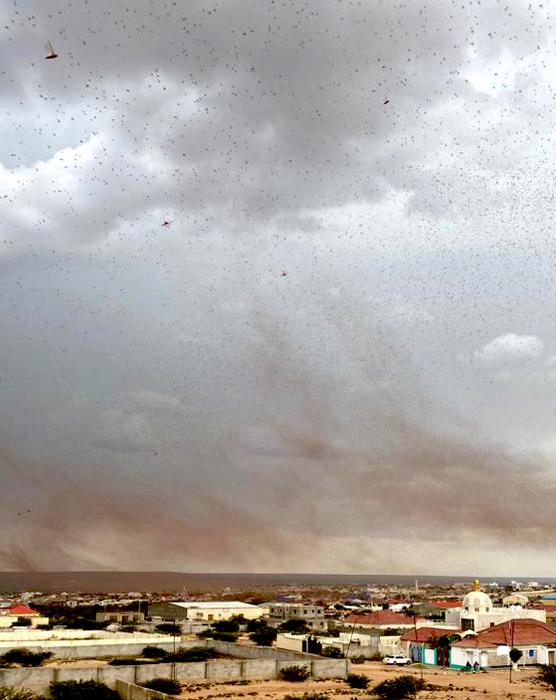
Desert locusts (Schistocerca gregaria) are known for their rapid population surges and devastating swarming behavior, which can wreak havoc on agricultural systems and local economies. Researchers from the University of Cambridge have developed a groundbreaking predictive model that leverages cutting-edge computational techniques and weather forecasting data to anticipate locust swarms. This innovative tool aims to address the growing global challenge posed by desert locusts, particularly as climate change is expected to drive more frequent and severe swarming events.
Traditionally, locust control efforts have suffered from poor prediction capabilities, resulting in an urgent need for a more sophisticated understanding of locust population dynamics. In light of unprecedented locust outbreaks from 2019 to 2021, which affected vast regions from Kenya to India, researchers recognized the importance of creating a comprehensive framework that could inform decision-makers and facilitate timely responses. These outbreaks not only led to substantial crop losses but also posed risks to food security, particularly for vulnerable populations reliant on agriculture.
At the core of this new predictive model is a robust analysis of locust behavior, lifecycle, and swarming patterns. Researchers utilized real-time weather forecast data from institutions like the UK Met Office alongside complex algorithmic models to compute potential locust movements. By integrating various variables such as humidity levels, temperature fluctuations, and vegetation availability, the model can accurately predict where swarms are likely to form and how they will disperse over time, providing critical information for preemptive control measures.
Locusts typically live solitary lives but undergo a dramatic transformation when certain environmental conditions arise, such as intense rainfall. These conditions lead to an increase in vegetation, offering sustenance that triggers swarming behavior. As swarms can cover vast areas, the implications of ineffective control can lead to localized food shortages, skyrocketing prices, and even civil unrest. Thus, predicting their movements allows agricultural authorities to implement targeted pesticide applications in at-risk areas.
The significance of this new model extends beyond mere prediction; it provides a framework to operationalize effective surveillance and intervention strategies. By gauging short-term swarm forecasts, national agencies can deploy resources quickly and efficiently, thereby minimising potential damage. Furthermore, the model includes features that allow for long-term forecasting, enabling authorities to strategize on a larger scale, and assess potential threats before they escalate into crises.
Historical efforts to control locust outbreaks have often been ad-hoc and subject to the availability of on-the-ground resources. The researchers stress that with this model, responses can be structured and proactive rather than reactive. As desert locusts are capable of migrating over thousands of kilometers, having a dependable forecast can significantly enhance international collaboration between affected nations, improving overall response efficacy and unity in managing the pest’s threats.
Moreover, the implications of climate change on locust behavior cannot be understated. As the climate continues to shift, areas traditionally considered safe from agricultural threat may become susceptible to locust invasions. Cyclonic activity and intense rainfall, both intensified by climate change, are key triggers for locust swarming. This evolving landscape demands new strategies and technologies to preemptively manage potential outbreaks, making the introduction of this predictive model an urgent necessity.
The rigorous validation of this model against historical locust data further enhances its credibility. By examining existing patterns and real-world surveillance reports, researchers have tuned their algorithms to ensure precision in predicting locust movements. This careful calibration is crucial for developing an efficient early warning system and streamlined efforts on the ground, paving the way for more accurate and timely interventions.
The research highlights that countries with less frequent locust outbreaks may find themselves ill-prepared to react effectively during a major upsurge. By taking a comprehensive and predictive approach to locust management, the University of Cambridge team aims to equip national and international bodies with the tools they need to tailor their preparedness and response measures. As scientists and policymakers gather to combat this pressing agricultural threat, this model demonstrates significant potential for safeguarding food security.
The overarching goal of this collaborative research is to mitigate the adverse impacts of locust swarming, thus protecting vulnerable communities dependent on stable food supplies. Encouraging early action, national governments can utilize the predictive insights from this model to engage in preventive measures, minimizing crop loss and its subsequent socioeconomic implications.
The publication of this research in PLOS Computational Biology reflects a growing recognition of the need for integrated scientific approaches to managing pests that cross borders and impact global food systems. It serves as a clarion call to researchers, governments, and agricultural stakeholders to innovate in the face of emerging threats, emphasizing the role of technology in ensuring agricultural sustainability and food security.
Ultimately, the model offers a beacon of hope at a time when climate change and human actions are placing ever-greater strains on agricultural systems. By harnessing the power of technology and data, researchers are moving towards a future where locust infestations can be predicted, managed, and ultimately mitigated, thus safeguarding the livelihoods of millions worldwide.
Cite Scienmag News
Alan Morgan. (December 23, 2024). New Early Warning System Aims to Mitigate Devastating Locust Swarms. Scienmag. https://scienmag.com/new-early-warning-system-aims-to-mitigate-devastating-locust-swarms/
Alan Morgan. "New Early Warning System Aims to Mitigate Devastating Locust Swarms." Scienmag, 23 December 2024, https://scienmag.com/new-early-warning-system-aims-to-mitigate-devastating-locust-swarms/. Accessed 4 September 2026.
Alan Morgan. "New Early Warning System Aims to Mitigate Devastating Locust Swarms." Scienmag. December 23, 2024. https://scienmag.com/new-early-warning-system-aims-to-mitigate-devastating-locust-swarms/


