


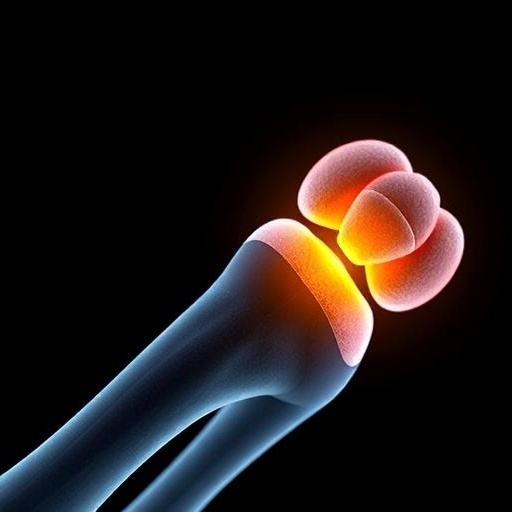
A groundbreaking clinical trial has upended longstanding assumptions in the treatment of osteogenesis imperfecta (OI), revealing that increasing bone density does not necessarily translate into reduced fracture risk for patients suffering from this debilitating genetic disorder. Despite the conventional focus on building bone mass, new evidence from an extensive multi-center trial suggests that the quality of bone structure, rather than its density, may hold the key to preventing fractures in OI sufferers.
Osteogenesis imperfecta, colloquially known as brittle bone disease, is characterized by mutations that interfere with collagen synthesis—a fundamental structural protein crucial to maintaining bone integrity. This collagen defect leads to bones that, even under minor mechanical stresses, can fracture easily. Affecting approximately one in every 15,000 individuals globally, OI presents a significant clinical challenge, with current standard care primarily centered around pharmacological agents aimed at bolstering bone mineral density.
For decades, therapeutic interventions have largely revolved around the administration of drugs such as bisphosphonates and anabolic agents designed to mitigate bone loss and enhance density. However, these treatments have been met with skepticism due to a lack of conclusive evidence indicating that improved bone density correlates with a measurable reduction in fracture incidence. This discrepancy prompted researchers at the University of Edinburgh to undertake an ambitious randomized controlled clinical trial, known as the TOPaZ trial, to subject these assumptions to rigorous scientific scrutiny.
Involving 350 adult participants with clinically diagnosed osteogenesis imperfecta, the TOPaZ trial enrolled patients across 27 specialist hospitals in the UK and Europe, with a follow-up period extending over eight years from May 2017 to March 2025. The study stratified subjects into two cohorts: one receiving a combination treatment of teriparatide, an anabolic agent that stimulates new bone formation, followed by zoledronic acid, a bisphosphonate that inhibits bone resorption; the other receiving standard care without the targeted density-enhancing therapies.
Throughout the trial duration, bone mineral density was meticulously measured using dual-energy X-ray absorptiometry (DEXA) scans. While findings confirmed a statistically significant increase in bone density in the treatment group, the anticipated clinical benefit—namely, a reduction in the prevalence of new fractures—was conspicuously absent. Specifically, 37 percent of patients receiving the density-enhancing therapy experienced fractures, compared with 36 percent within the standard care group, a non-significant difference that calls into question the efficacy of such treatments at preventing structural failure in OI.
Furthermore, the analysis extended to fracture localization, including vertebral fractures, which often represent a critical measure of bone fragility. Here too, no meaningful differences emerged, suggesting that higher bone density does not intrinsically confer enhanced resistance to fractures in the spinal column of OI patients. These outcomes compellingly underscore that bone density alone is an insufficient biomarker for fracture risk in this population.
This paradigm-shifting evidence has broad implications for future research and clinical management of osteogenesis imperfecta. The trial’s lead investigator, Professor Stuart Ralston of the University of Edinburgh’s Institute of Genetics and Cancer, stressed the necessity of redirecting scientific efforts toward therapies that target the fundamental collagen defects underlying OI. Enhancing bone quality, encompassing factors such as collagen cross-linking, bone matrix composition, and microarchitecture, may ultimately prove more pivotal in fortifying skeletal strength and minimizing fracture occurrence than merely increasing mineral content.
The implications transcend pharmacological development alone; they call for an integrative approach encompassing molecular biology, biomechanics, and genetics to unravel the complex interplay between bone composition and mechanical competence. Innovative modalities such as gene editing, collagen-stabilizing agents, and tissue engineering could emerge as the next frontier in combating this genetic bone disorder.
Patient advocacy groups, including the Brittle Bone Society, have enthusiastically supported the TOPaZ trial, recognizing its value in providing robust evidence to guide clinical decision-making. Patricia Osborne, CEO of the society, articulated the significance of this research for the OI community, highlighting how it challenges entrenched treatment dogmas and sets a new standard for future clinical trials, emphasizing the vital role that charity-funded research plays in advancing understanding of rare diseases.
Acknowledging the potential impact on clinical practice, these findings are poised to influence guidelines, reshaping therapeutic strategies away from bone density augmentation toward targeting bone matrix integrity and functionality. The study reinforces the need for comprehensive patient assessment that incorporates novel biomarkers reflective of bone quality rather than relying solely on densitometric measures.
Published in the prestigious journal JAMA on May 14, 2026, this large-scale randomized clinical trial stands as a milestone study in OI research. Its funding and support from the Medical Research Council and the National Institute for Health and Care Research underline the importance of collaborative efforts in addressing complex genetic disorders through rigorous clinical investigation.
As the scientific community digests these revelations, the call to action is clear: transformative therapies are urgently needed to address the biochemical and structural deficiencies inherent to osteogenesis imperfecta. The insights gained from the TOPaZ trial pave the way for innovative research trajectories focused on improving patient outcomes by enhancing the intrinsic mechanical properties of bone tissue.
In sum, the TOPaZ trial has not only provided compelling evidence that challenges decades of clinical assumptions regarding osteogenesis imperfecta treatment but has also reignited scientific inquiry into bone biology. The future of OI management lies beyond densitometric targets, moving toward restoring bone quality at its molecular core to better protect patients from life-altering fractures.
News Publication Date: 14-May-2026
Web References: 10.1001/jama.2026.6889
Cite Scienmag News
Ophelia Keating. (May 14, 2026). New Drug Trial Suggests Change in Treatment Approach for Brittle Bone Disease. Scienmag. https://scienmag.com/new-drug-trial-suggests-change-in-treatment-approach-for-brittle-bone-disease/
Ophelia Keating. "New Drug Trial Suggests Change in Treatment Approach for Brittle Bone Disease." Scienmag, 14 May 2026, https://scienmag.com/new-drug-trial-suggests-change-in-treatment-approach-for-brittle-bone-disease/. Accessed 3 September 2026.
Ophelia Keating. "New Drug Trial Suggests Change in Treatment Approach for Brittle Bone Disease." Scienmag. May 14, 2026. https://scienmag.com/new-drug-trial-suggests-change-in-treatment-approach-for-brittle-bone-disease/


