Thursday, October 29, 2026
Science
No Result
View All Result
  • Login
  • HOME
  • SCIENCE NEWS
  • CONTACT US
  • HOME
  • SCIENCE NEWS
  • CONTACT US
No Result
View All Result
Scienmag
No Result
View All Result
Home Science News Biotechnology

New deep learning dropout method sharpens enzyme prediction across fish species

October 27, 2026
in Biology, Biotechnology, Technology and Engineering
Blake Davidson
By Blake Davidson Scienmag Editorial Profile - Data Science
Reading Time: 3 mins read
0
New deep learning dropout method sharpens enzyme prediction across fish species

New deep learning dropout method sharpens enzyme prediction across fish species

65
SHARES
587
VIEWS
Share on FacebookShare on Twitter
ADVERTISEMENT

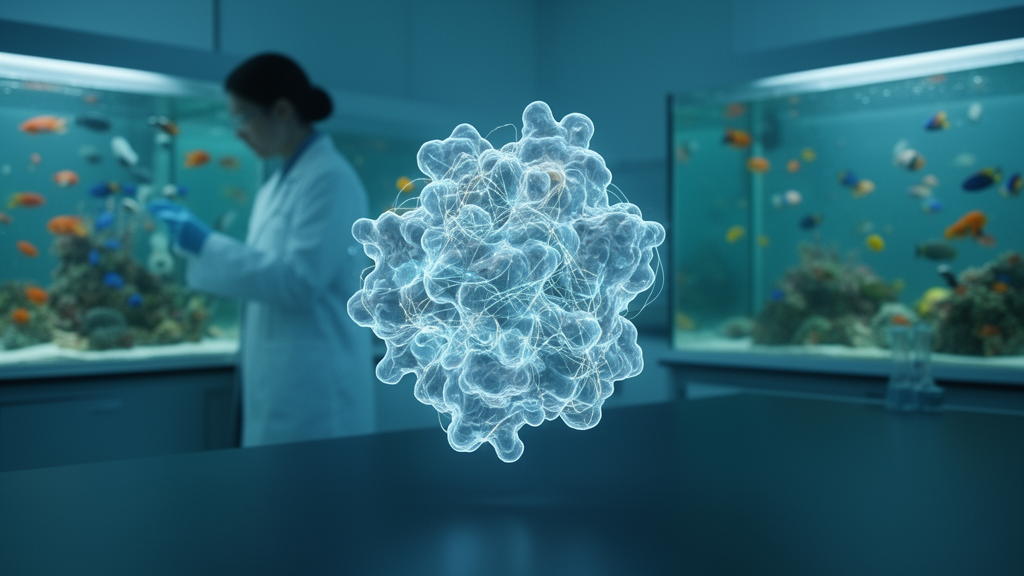
Researchers have unveiled VARDON, a family of five novel dropout mechanisms designed to improve how deep learning models classify enzyme functions in fish proteomes. The framework, described in BMC Genomic Data, tackles a persistent obstacle in computational biology: predicting what enzymes do in non-model fish species, where experimental annotations are scarce and existing methods often fail when applied across species boundaries.

The work was carried out by Anjum Shahzad, Sheeraz Akram and Tahir Mehmood, and published as an open access research article on 27 October 2026. Their approach centers on dropout, a widely used technique in neural networks in which units are randomly disabled during training to prevent overfitting. The authors argue that conventional dropout schemes lack adaptability to protein embedding spaces, the numerical representations of protein sequences that modern models consume.

VARDON, short for Variational Adaptive Real Dropout, distinguishes itself through learnable per-neuron dropout rates and a Bayesian approximation. In practical terms, rather than applying a fixed probability of switching neurons off, the network can adjust those probabilities as it trains, tailoring the regularization to the structure of the embedding data it is learning from.

To test the framework, the team used pre-computed UniProt embeddings of 1024 dimensions, derived from 4,568 manually curated proteins spanning 12 fish species. They evaluated VARDON configurations against five baselines using three evaluation schemes: 10-fold cross-validation, independent test sets, and leave-one-species-out cross-validation, the last of which is the sternest test of whether a model generalizes to species it has never seen during training.

On standard benchmarks, VARDON variants proved competitive. The best reported Matthews correlation coefficient was 0.8606, just 0.0008 behind the strongest baseline. The more striking result came from the cross-species setting: VARDON_AdaptiveVD achieved the highest mean leave-one-species-out MCC of 0.8823, essentially tied with the top-performing baseline Residual_MLP at 0.8824, and outperforming Gaussian_Dropout_NN, which scored 0.8556, by 3.1 percent.

The authors also report that VARDON variants showed exceptional feature stability, up to 4.5 times higher than Gaussian Dropout. Statistical analysis using Friedman’s ANOVA revealed highly significant differences between the methods tested, with a p-value below 0.001. Across the configurations examined, VARDON variants won 66.7 percent of the time and took 100 percent of the AUC comparisons.

According to the study, the learnable dropout rates adapted to protein embedding spaces improved performance while reducing overfitting. That combination matters for researchers working on non-model organisms, where a model trained on well-annotated species must still make reliable predictions for relatives that lack laboratory characterization. Poor cross-species generalization has been a known weakness of existing approaches, and the leave-one-species-out results suggest the new regularization strategy addresses it.

The team has made both the curated dataset of 4,568 reviewed proteins across 12 fish species and the source code publicly available, a step intended to support reproducible research. The article is currently shared as an accepted peer-reviewed manuscript carrying a permanent DOI, with a final version of record to follow. For computational biologists tracking enzyme function prediction, the framework offers a competitive option on standard benchmarks with a particular edge when the challenge is carrying knowledge from one fish species to another.

Subject of Research: Deep learning methods for enzyme function classification in fish proteomes

Article Title: VARDON: a deep learning framework with variational adaptive real dropout for enzyme classification in fish proteomes

Article References: Shahzad, A., Akram, S., & Mehmood, T. (2026). VARDON: a deep learning framework with variational adaptive real dropout for enzyme classification in fish proteomes. BMC Genomic Data. https://doi.org/10.1186/s12863-026-01493-9

Image Credits: AI Generated

DOI: 10.1186/s12863-026-01493-9

Keywords: deep learning, enzyme classification, fish proteomes, dropout, protein embeddings, cross-species generalization, VARDON, Bayesian approximation, BMC Genomic Data, bioinformatics, deep, learning

Cite Scienmag News

Blake Davidson. (October 27, 2026). New deep learning dropout method sharpens enzyme prediction across fish species. Scienmag. https://scienmag.com/new-deep-learning-dropout-method-sharpens-enzyme-prediction-across-fish-species/

Blake Davidson. "New deep learning dropout method sharpens enzyme prediction across fish species." Scienmag, 27 October 2026, https://scienmag.com/new-deep-learning-dropout-method-sharpens-enzyme-prediction-across-fish-species/. Accessed 29 October 2026.

Blake Davidson. "New deep learning dropout method sharpens enzyme prediction across fish species." Scienmag. October 27, 2026. https://scienmag.com/new-deep-learning-dropout-method-sharpens-enzyme-prediction-across-fish-species/

Tags: adaptive neuron dropout ratesBayesian approximationBayesian approximation in dropoutbioinformaticsBMC Genomic Datacomputational biology enzyme predictioncross-species enzyme function predictioncross-species generalizationDeepdeep learningDeep learning dropout methods for enzyme classificationdropoutenzyme classificationfish proteome enzyme annotationfish proteomeshandling scarce experimental annotationslearningmodern protein sequence modelingneural network overfitting preventionopen access genomics researchprotein embedding space adaptationprotein embeddingsVARDONVARDON neural network regularization
Share26Tweet16
Previous Post

Cheese shoppers value origin labels most, but ethics reshape what they will pay

Next Post

Loss of CDH1 rewires mammary cell identity toward a luminal progenitor state

Related Posts

Midday Sunlight Yields Smaller Copper Nanoparticles With Stronger Antibacterial Activity
Biotechnology

Midday Sunlight Yields Smaller Copper Nanoparticles With Stronger Antibacterial Activity

October 29, 2026
LncRNA SBF2-AS1 Worsens Heart Injury After Attack via miR-149-5p/PHLPP2 Axis
Biology

LncRNA SBF2-AS1 Worsens Heart Injury After Attack via miR-149-5p/PHLPP2 Axis

October 29, 2026
Few-Shot AI Tool Reads Cancer Genome Rearrangements from Single-Cell Hi-C Data
Biotechnology

Few-Shot AI Tool Reads Cancer Genome Rearrangements from Single-Cell Hi-C Data

October 29, 2026
New Numerical Schemes Keep Dispersive Wave Simulations Energy-Conserving
Technology and Engineering

New Numerical Schemes Keep Dispersive Wave Simulations Energy-Conserving

October 29, 2026
One Health Meets Mental Health: Rethinking Crisis Recovery in Ethiopia
Medicine

One Health Meets Mental Health: Rethinking Crisis Recovery in Ethiopia

October 29, 2026
Tensor-Compressed Federated Learning Keeps Patient Data Private While Cutting Edge Latency
Technology and Engineering

Tensor-Compressed Federated Learning Keeps Patient Data Private While Cutting Edge Latency

October 29, 2026
Next Post
Loss of CDH1 rewires mammary cell identity toward a luminal progenitor state

Loss of CDH1 rewires mammary cell identity toward a luminal progenitor state

  • Mothers who receive childcare support from maternal grandparents show more optimized

    Mothers who receive childcare support from maternal grandparents show more parental warmth, finds NTU Singapore study

    27656 shares
    Share 11059 Tweet 6912
  • University of Seville Breaks 120-Year-Old Mystery, Revises a Key Einstein Concept

    1061 shares
    Share 424 Tweet 265
  • Bee body mass, pathogens and local climate influence heat tolerance

    682 shares
    Share 273 Tweet 171
  • Researchers record first-ever images and data of a shark experiencing a boat strike

    546 shares
    Share 218 Tweet 137
  • Groundbreaking Clinical Trial Reveals Lubiprostone Enhances Kidney Function

    531 shares
    Share 212 Tweet 133
Science

Embark on a thrilling journey of discovery with Scienmag.com—your ultimate source for cutting-edge breakthroughs. Immerse yourself in a world where curiosity knows no limits and tomorrow’s possibilities become today’s reality!

RECENT NEWS

  • Global Financing Facility falls short on adolescent health funding in three country case studies
  • Prostate Cancer Detection Rose After MRI Arrived, But a Single-Centre Study Says the Reason Stays Unclear
  • Midday Sunlight Yields Smaller Copper Nanoparticles With Stronger Antibacterial Activity
  • Never-Smoker COPD Shows Stronger Lung Function Gains from Salbutamol and Glycopyrronium

Categories

  • Agriculture
  • Anthropology
  • Archaeology
  • Athmospheric
  • Biology
  • Biotechnology
  • Blog
  • Bussines
  • Cancer
  • Chemistry
  • Climate
  • Earth Science
  • Editorial Policy
  • Marine
  • Mathematics
  • Medicine
  • Pediatry
  • Policy
  • Psychology & Psychiatry
  • Science Education
  • Science News
  • Social Science
  • Space
  • Technology and Engineering

Subscribe to Blog via Email

Enter your email address to subscribe to this blog and receive notifications of new posts by email.

Join 5,151 other subscribers

© 2025 Scienmag - Science Magazine

Welcome Back!

Login to your account below

Forgotten Password?

Retrieve your password

Please enter your username or email address to reset your password.

Log In
No Result
View All Result
  • HOME
  • SCIENCE NEWS
  • CONTACT US

© 2025 Scienmag - Science Magazine

Discover more from Science

Subscribe now to keep reading and get access to the full archive.

Continue reading