


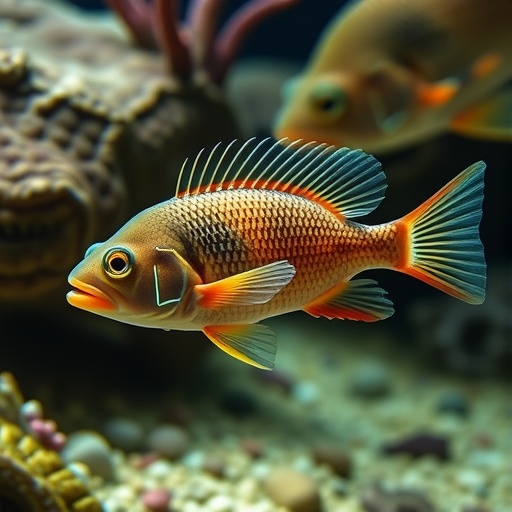
In a groundbreaking study poised to deepen our understanding of aquatic parasitology, researchers have unveiled a novel species within the enigmatic world of myxozoans—microscopic parasites notorious for their complexity and impact on fish hosts. The discovery, centered on Auerbachia megacapsula n. sp., represents a remarkable addition to the family Coccomyxidae and sheds light on intricate host-parasite relationships, illustrating the ever-evolving tapestry of marine ecosystems.
Myxozoans, belonging to a diverse group of microscopic cnidarian parasites, have historically posed challenges for taxonomists due to their minute size and complex life cycles. These organisms are well-known for infecting various aquatic species, often influencing fisheries and aquaculture industries. The newly characterized Auerbachia megacapsula was isolated from Larimichthys crocea Richardson, 1846—commonly known as the large yellow croaker, a fish species of considerable economic importance in East Asian marine fisheries.
The research team employed an integrative approach combining morphological scrutiny, molecular genetics, and phylogenetic analyses to thoroughly characterize Auerbachia megacapsula. Morphological examination revealed unique structural features distinguishing this species from previously described myxozoans. Particular attention was given to the size and shape of spores and capsules, critical taxonomic markers in myxozoan systematics. These classic morphological parameters are essential for differentiating species within the often cryptic Myxozoa class.
On the molecular front, the study leveraged advanced DNA sequencing techniques to unravel the genetic blueprint of the parasite. Specifically, ribosomal DNA sequences were obtained and analyzed, providing high-resolution data that enabled precise phylogenetic placement. Genetic markers, such as the small subunit ribosomal RNA (SSU rRNA), remain gold standards for molecular systematics in parasites. The genetic distinctiveness observed conclusively supported the classification of Auerbachia megacapsula as a novel species.
Phylogenetic analyses conducted through rigorous computational methods generated compelling evidence about this organism’s evolutionary relationships within Coccomyxidae. By comparing genetic sequences against a comprehensive database of related species, the researchers constructed phylogenetic trees demonstrating how Auerbachia megacapsula occupies a unique branch divergent from its closest relatives. This insight is pivotal, as it enriches the understanding of evolutionary dynamics and host specificity in Myxozoa, reflecting both adaptive strategies and co-evolutionary patterns over geological timescales.
The identification of Auerbachia megacapsula in Larimichthys crocea also has profound implications for fisheries health management. Parasitic infections in economically valuable fish populations can lead to significant declines in stock productivity, impacting livelihoods and food security. Elucidating the biology, life cycle, and host range of this parasite is therefore essential for developing targeted disease control measures, potentially informing sustainable aquaculture practices and ecosystem-based management.
Furthermore, the discovery adds to the growing body of evidence that myxozoan biodiversity is vastly underestimated in marine environments. Advanced analytical techniques continue to unveil cryptic species diversity, suggesting that many parasitic taxa remain undescribed. This challenges researchers to refine detection methods and expand surveillance efforts in both wild and cultured fish stocks to better understand the ecological roles and pathogenic potential of such parasites.
Importantly, the work underscores the utility of combining morphological and molecular tools in parasitological taxonomy. While morphological traits have long been foundational, genetic data provide unprecedented resolution and objectivity, especially when dealing with microscopic taxa exhibiting convergent features. The synergy of these methodologies exemplifies the future of systematic parasitology, enabling more precise biodiversity assessments and facilitating cross-disciplinary integration.
From a broader biological perspective, studies like this inform not only taxonomy and systematics but also evolutionary biology and host-parasite co-adaptation. Myxozoans exhibit complex life cycles often involving multiple hosts, including annelids and fish, highlighting sophisticated biological interactions and evolutionary pressures shaping these relationships. Understanding novel species contributes to a holistic view of ecosystem connectivity and resilience.
The pilot identification of Auerbachia megacapsula also opens avenues for exploring the molecular mechanisms underpinning host invasion, immune evasion, and parasite development. Unraveling these processes at a cellular and genetic level could reveal targets for therapeutic intervention and novel biomarkers for infection diagnosis in aquaculture settings.
Beyond its applied relevance, the discovery reignites questions about biodiversity patterns in marine microbial ecology. Parasites like myxozoans represent an integral, albeit often overlooked, component of oceanic biodiversity. Their interactions with hosts influence community structure, population dynamics, and energy flow, reinforcing the idea that parasites are indispensable players in ecological networks.
In essence, the unveiling of Auerbachia megacapsula n. sp. is a testament to the sophistication achievable through modern parasitological research, blending classical taxonomy with cutting-edge genomics. Studies such as this not only catalog life’s diversity but help frame conservation and management strategies in the face of environmental change, particularly oceanic stressors affecting host-parasite dynamics.
As molecular technologies advance and databases expand, the discovery of species like Auerbachia megacapsula will likely accelerate, filling critical gaps in evolutionary history and informing biodiversity conservation. The current work exemplifies how comprehensive characterization deepens scientific understanding and provides actionable insights for sustainable resource use.
This remarkable research highlights the delicate balance between hidden microscopic organisms and their hosts, shining a spotlight on the minute creatures that wield significant influence within marine ecosystems. By decoding the morphological and genetic identities of myxozoans, scientists pave the way for informed stewardship of oceanic resources and the intricate web of life they support.
Cite Scienmag News
Drew Townsend. (August 11, 2025). New Auerbachia Species Discovered in Crocea Fish. Scienmag. https://scienmag.com/new-auerbachia-species-discovered-in-crocea-fish/
Drew Townsend. "New Auerbachia Species Discovered in Crocea Fish." Scienmag, 11 August 2025, https://scienmag.com/new-auerbachia-species-discovered-in-crocea-fish/. Accessed 7 September 2026.
Drew Townsend. "New Auerbachia Species Discovered in Crocea Fish." Scienmag. August 11, 2025. https://scienmag.com/new-auerbachia-species-discovered-in-crocea-fish/


