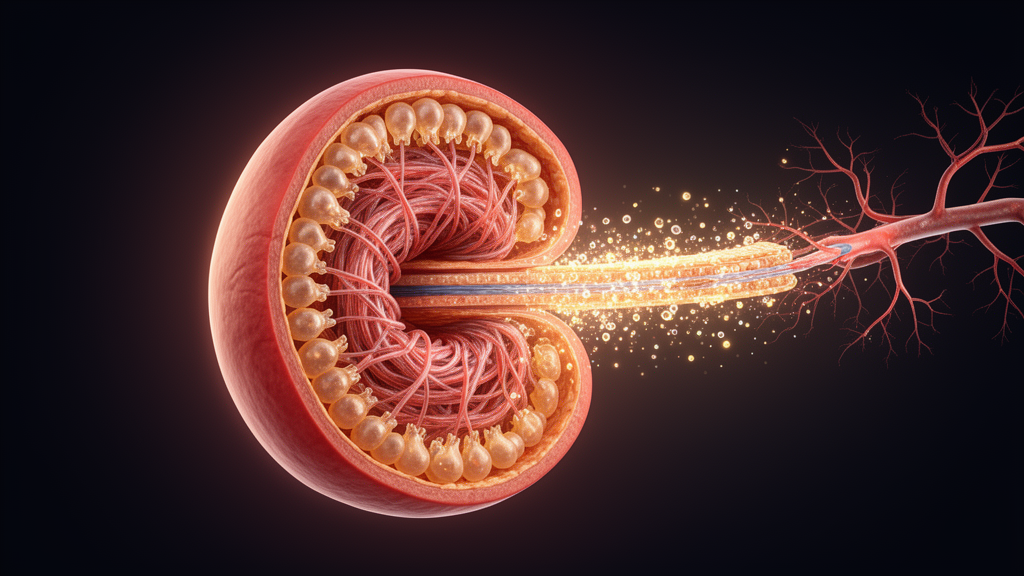
When sepsis strikes, the body’s own immune response becomes its most dangerous enemy. Among the organs that fail most often during this systemic inflammatory storm are the kidneys, and one of the earliest warning signs of trouble is the appearance of albumin in the urine, a signal that the kidney’s delicate filtration machinery has begun to break down. Now, a team of researchers working at Nagasaki University in Japan and Shenzhen Second People’s Hospital in China has uncovered a surprising line of defense: a receptor better known for its role in nerve signaling and inflammation control also acts directly on the tiny cells that form the kidney’s blood-filtration barrier, keeping them intact when inflammation threatens to tear them apart.
The study, published in BMC Biology, focuses on sepsis-associated acute kidney injury, or S-AKI, a condition that affects a large proportion of critically ill patients and carries a high risk of progression to chronic kidney disease. The researchers set out to test whether the cholinergic anti-inflammatory pathway, a neuroimmune circuit that dampens inflammation through the alpha-7 nicotinic acetylcholine receptor, could protect the glomerulus, the microscopic ball of capillaries where blood is filtered. What makes the finding remarkable is that this pathway had previously been studied almost exclusively in immune cells and kidney tubules, not in podocytes, the specialized epithelial cells whose interlocking foot processes form the final, finest sieve of the filtration barrier.
Podocytes are among the most architecturally sophisticated cells in the body. Their foot processes wrap around the glomerular capillaries and are bridged by a slit diaphragm, a zipper-like protein junction that contains molecules such as nephrin, podocin, ZO-1, and the actin-bundling protein synaptopodin. When these structures are damaged, as happens during systemic inflammation, the barrier becomes leaky and albumin escapes into the urine, a condition called albuminuria that is both a marker and a driver of further kidney damage. Preserving podocyte architecture during sepsis has therefore been a long-standing goal in nephrology research.
To test their hypothesis, the researchers used a mouse model of sepsis induced by lipopolysaccharide, or LPS, a component of bacterial cell walls that triggers a powerful inflammatory response. When mice were pretreated with GTS-21, a well-characterized agonist of the alpha-7 nicotinic acetylcholine receptor, the results were striking. Kidney function improved, albuminuria was significantly reduced, and transmission electron microscopy revealed that the podocytes’ foot processes retained their normal slender architecture instead of the flattened, fused effacement characteristic of injury. Levels of nephrin, podocin, synaptopodin, and podocalyxin, the molecular pillars of the filtration barrier, were all better maintained in the treated animals, and the organization of ZO-1, a tight-junction scaffolding protein, was partially restored in both glomerular and tubular compartments of the kidney.
A crucial question remained: was the drug acting indirectly, by calming immune cells elsewhere in the body, or was it protecting podocytes themselves? To answer this, the team first mapped where the Chrna7 gene, which encodes the alpha-7 receptor subunit, is expressed within the glomerulus. Using multiplex fluorescent in situ hybridization, they found that Chrna7 signals were broadly distributed across glomerular cells, with partial overlap with podocin, a definitive podocyte marker. They also confirmed that alpha-7 receptor expression could be detected in cultured podocytes, establishing that these cells are equipped to respond to cholinergic signaling directly.
The decisive experiment came with genetics. The researchers generated mice in which Chrna7 was deleted specifically in podocytes, leaving the receptor intact everywhere else. In these knockout animals, the protective effect of GTS-21 was substantially weakened. The drug’s ability to reduce albuminuria was blunted, the preservation of podocyte marker proteins was diminished, and the maintenance of glomerular ZO-1 organization was compromised. This loss-of-function evidence demonstrates that the receptor within podocytes themselves makes a substantial contribution to the glomerular protection conferred by alpha-7 activation, and it establishes podocytes as a direct cellular target of the cholinergic anti-inflammatory pathway.
The team then moved to cultured podocytes to dissect the cellular mechanism. When podocytes were challenged with LPS in vitro, pretreatment with GTS-21 preserved synaptopodin, the actin-associated protein essential for foot process structure, and improved the continuity of ZO-1 staining along cell junctions. Because podocyte injury during inflammation is driven largely by pro-inflammatory signaling cascades inside the cell, the researchers turned to transcriptomic analysis, sequencing the RNA of podocytes under different conditions. The data revealed that alpha-7 activation blunted a key inflammatory program: the NF-kappa-B pathway, a master regulator of the inflammatory response that, when activated, moves its p65 subunit into the nucleus to switch on dozens of inflammatory genes.
Time-course experiments made the suppression of NF-kappa-B signaling visible in real time. In control podocytes exposed to LPS, the p65 subunit rapidly translocated into the nucleus, became phosphorylated, and drove the expression of its target genes. In podocytes pretreated with the alpha-7 agonist, including experiments using a second agonist, PNU-282987, this nuclear translocation was reduced, phosphorylation was diminished, and the expression of downstream target genes fell. Independent quantitative PCR replication confirmed the RNA-sequencing results, strengthening the conclusion that the receptor acts as a brake on one of the central inflammatory circuits that damages podocytes during sepsis.
The implications of the work extend beyond sepsis. The cholinergic anti-inflammatory pathway has attracted intense interest as a therapeutic target for years, with vagus nerve stimulation and alpha-7 receptor agonists being explored for a range of inflammatory diseases. By showing that podocytes carry functional alpha-7 receptors and that activating them preserves the structural integrity of the glomerular filtration barrier, the study reframes the pathway as a multi-compartment strategy: it calms immune cells, protects tubules, and now demonstrably shields the glomerulus itself. For patients with sepsis-associated kidney injury, in whom albuminuria predicts worse outcomes and progression to chronic kidney disease, such a strategy could address both the inflammatory storm and the structural collapse of the kidney’s filter at the same time.
The authors, led by Aobing Yang, Chia-Hsien Wu, and Tsuyoshi Inoue, caution that the findings come from preclinical mouse and cell-culture models, and translating them into clinical practice will require further work, including studies in human tissue and trials of alpha-7 agonists in patients with sepsis. GTS-21, also known as DMXBA, has already been tested in human studies for cognitive disorders, which may ease the path toward repurposing. Still, the study offers a compelling proof of concept that the nervous system’s anti-inflammatory reflex reaches all the way down to the smallest structures of the kidney, and that a single receptor, engaged at the right moment, can hold together the biological sieve on which every one of us depends. As sepsis continues to claim hundreds of thousands of lives each year worldwide, protecting the kidney’s filtration barrier through the body’s own cholinergic circuitry may prove to be one of the most elegant tools yet discovered for that fight.
Subject of Research: Alpha-7 nicotinic acetylcholine receptor activation protects podocytes and glomerular barrier integrity in sepsis-associated acute kidney injury
Article Title: Alpha-7 nicotinic acetylcholine receptor activation preserves podocyte integrity during sepsis-associated kidney injury
Article References: Yang, A., Wu, C.-H., Shimoyama, K., Yamamoto, R., Umene, R., Nakamura, Y., Zhang, Y., & Inoue, T. (2026). Alpha-7 nicotinic acetylcholine receptor activation preserves podocyte integrity during sepsis-associated kidney injury. BMC Biology. https://doi.org/10.1186/s12915-026-02758-6
Image Credits: AI Generated
DOI: 10.1186/s12915-026-02758-6
Keywords: sepsis-associated acute kidney injury, podocytes, alpha-7 nicotinic acetylcholine receptor, GTS-21, cholinergic anti-inflammatory pathway, albuminuria, NF-kappa-B signaling, glomerulus, nephrin, ZO-1, synaptopodin, kidney injury
Cite Scienmag News
Drew Townsend. (October 8, 2026). Nerve-Linked Receptor Shields Kidney Filters in Sepsis, Study Finds. Scienmag. https://scienmag.com/nerve-linked-receptor-shields-kidney-filters-in-sepsis-study-finds/
Drew Townsend. "Nerve-Linked Receptor Shields Kidney Filters in Sepsis, Study Finds." Scienmag, 8 October 2026, https://scienmag.com/nerve-linked-receptor-shields-kidney-filters-in-sepsis-study-finds/. Accessed 8 October 2026.
Drew Townsend. "Nerve-Linked Receptor Shields Kidney Filters in Sepsis, Study Finds." Scienmag. October 8, 2026. https://scienmag.com/nerve-linked-receptor-shields-kidney-filters-in-sepsis-study-finds/