


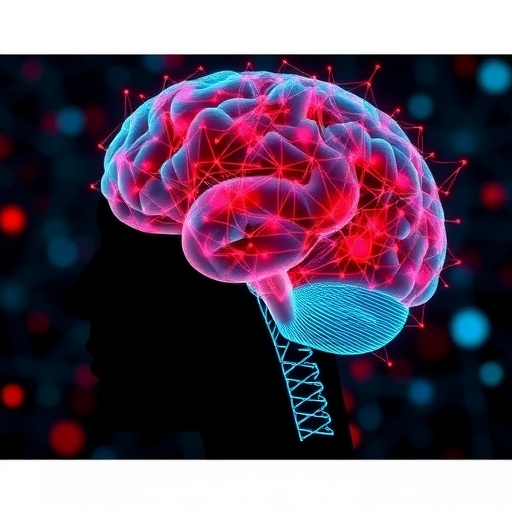
In recent years, the enigmatic nature of psychotic disorders has drawn intense scientific scrutiny, especially around the negative symptoms that profoundly impair social functioning and quality of life. A groundbreaking study published in the upcoming 2026 volume of Schizophrenia sheds compelling light on the neural underpinnings of these negative symptoms by exploring the resting-state functional connectivity within social brain networks in individuals experiencing early psychosis. This research not only deepens our understanding of psychosis but also opens novel avenues for potential interventions and therapeutic strategies aimed at alleviating some of the most debilitating effects of the disorder.
The negative symptoms of psychosis—characterized by diminished emotional expression, social withdrawal, anhedonia, and avolition—have remained notoriously resistant to treatment. Unlike positive symptoms such as hallucinations and delusions that tend to fluctuate and respond to pharmacological interventions, negative symptoms persist and significantly contribute to long-term disability. The mechanisms driving these symptoms have largely eluded researchers, partly because these symptoms are intertwined with complex neural networks responsible for social cognition and affective processing.
In this innovative study, Knippenberg, Sweet, Luther, and colleagues approached the problem by focusing on the brain’s social networks at rest. Resting-state functional magnetic resonance imaging (rs-fMRI) allows scientists to examine brain activity patterns when individuals are not performing any task, revealing intrinsic connectivity properties that underpin fundamental cognitive and emotional functions. By analyzing the resting-state connectivity within known social brain networks, the study aimed to identify deviations that correlate specifically with the intensity of negative symptoms in early-stage psychosis patients.
The methodology utilized resting-state functional connectivity analysis—a sophisticated neuroimaging technique that measures temporal correlations between spatially distinct brain regions. The “social brain” referenced in the study includes interconnected areas such as the medial prefrontal cortex, superior temporal sulcus, amygdala, and temporoparietal junction, which collectively play critical roles in understanding others’ mental states, empathy, and emotional regulation. Disruptions in these networks could explain the social disinterest and detachment observed in early psychosis.
A cohort of individuals diagnosed with early psychosis was carefully recruited, ensuring a narrow window post-onset to minimize chronicity effects and medication confounds. By comparing their functional connectivity metrics within social brain networks to those of matched healthy controls, the researchers were able to pinpoint specific network disruptions tightly linked to negative symptom severity. Importantly, the study controlled for positive symptoms and cognitive deficits, isolating the negative symptom constellation as the focus.
Their findings revealed a striking attenuation in connectivity between key nodes of the social brain in patients with pronounced negative symptoms. The medial prefrontal cortex, a region implicated in self-referential thought and social cognition, showed reduced communication with the amygdala, a region central to emotional salience and threat detection. This hypoconnectivity could underlie the blunted affect and impaired social cue processing common in negative symptomatology.
Furthermore, reduced synchronization between the superior temporal sulcus and other social brain areas was noted, potentially accounting for impaired theory of mind abilities—an individual’s capacity to infer others’ beliefs, intentions, and emotions. This disruption could explain why individuals with early psychosis struggle to engage in social situations or perceive social nuances, driving social isolation that exacerbates disease progression.
Interestingly, the study also observed compensatory increases in connectivity in adjacent networks, suggesting the brain’s attempt to adapt to primary social brain dysfunction. However, these compensatory mechanisms appeared insufficient to overcome the broad deficits experienced, highlighting the urgent need for targeted interventions that could restore or enhance social network connectivity.
From a clinical perspective, these findings carry significant implications. Understanding the precise neural circuits involved in negative symptoms paves the way for novel neurobiological markers that could be used to identify at-risk individuals early and monitor disease trajectory more accurately. Moreover, the connectivity patterns identified could serve as biomarkers to evaluate therapeutic efficacy, especially in emerging treatments such as neuromodulation or personalized cognitive rehabilitation tailored to social cognitive deficits.
The authors propose that interventions aiming to modulate resting-state connectivity within these critical social brain networks—whether through repetitive transcranial magnetic stimulation (rTMS), pharmacological agents that target synaptic plasticity, or advanced behavioral interventions—may hold promise for mitigating negative symptoms. This integrated approach could redefine therapeutic strategies, moving beyond the symptom management model toward remediation of underlying neural circuit dysfunction.
Technological advances in neuroimaging and analytical techniques, such as machine learning classifiers applied to resting-state data, can amplify the translational potential of these findings. Future research building on this work might develop predictive algorithms capable of distinguishing distinct negative symptom subtypes or longitudinal changes in social network connectivity, thereby enabling precision psychiatry for psychosis.
Moreover, the study highlights the importance of early intervention. Negative symptoms often precede the full clinical manifestation of psychosis or emerge during the prodromal phase, suggesting that early-stage neural alterations within social brain networks may set the stage for more severe disability if left unaddressed. This underlines a critical window for therapeutic engagement and monitoring.
The ethical dimensions of these findings are also notable. As neuroscience progresses toward elucidating the neural correlates of social behavior and dysfunction, it will be vital to ensure that neurobiological insights foster supportive, stigma-free care environments and empower patients through neuroeducation. Understanding the biological basis of negative symptoms may help demystify these experiences and reduce the societal marginalization faced by individuals with psychosis.
In sum, this study by Knippenberg and colleagues represents a pivotal step forward in decoding the neural circuitry of negative symptoms in early psychosis. By unveiling the intricate patterns of resting-state functional connectivity disruptions within social brain networks, the research provides a neurobiological foundation for phenomena that have long been clinically observed but poorly understood. This enhanced understanding sparks hope for the development of interventions that can restore social functioning and improve outcomes for countless individuals grappling with psychotic illnesses worldwide.
The neuropsychiatric field stands at an inflection point where such advanced imaging studies are transforming theoretical models into tangible clinical tools. As research increasingly combines multimodal imaging, genomics, and longitudinal measures, a more comprehensive picture of psychosis and its negative symptoms will emerge. This will not only enrich scientific knowledge but also translate into practical benefits—optimizing personalized treatment strategies and, ultimately, enhancing the lives of those affected.
As societal awareness grows around mental health and neurological underpinnings of psychiatric conditions, studies like this reinforce the need for sustained investment in research that bridges brain science and clinical psychiatry. The discovery of resting-state functional connectivity signatures linked to negative symptoms exemplifies the promise of thinking beyond symptoms alone to the dynamic neural networks that shape human experience, behavior, and social connection.
Cite Scienmag News
Cassandra Pierce. (April 17, 2026). Negative Symptoms Linked to Social Brain Connectivity Changes. Scienmag. https://scienmag.com/negative-symptoms-linked-to-social-brain-connectivity-changes/
Cassandra Pierce. "Negative Symptoms Linked to Social Brain Connectivity Changes." Scienmag, 17 April 2026, https://scienmag.com/negative-symptoms-linked-to-social-brain-connectivity-changes/. Accessed 5 September 2026.
Cassandra Pierce. "Negative Symptoms Linked to Social Brain Connectivity Changes." Scienmag. April 17, 2026. https://scienmag.com/negative-symptoms-linked-to-social-brain-connectivity-changes/


