

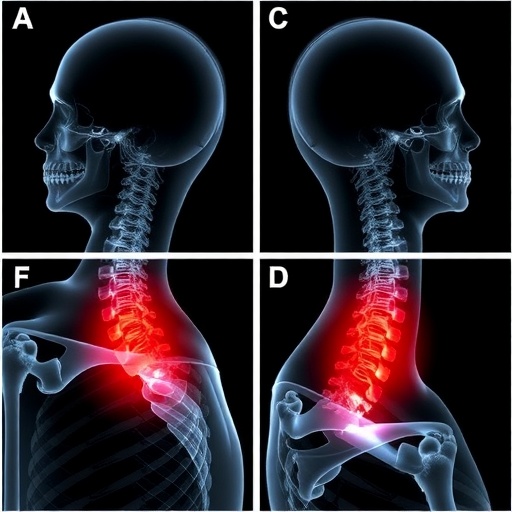
In the evolving landscape of automobile safety, recent research has shed light on a crucial area often overlooked: the neck motion and injuries sustained by small females and midsize males during frontal impact collisions. A study conducted by Espelien, Donlon, Shin, and their colleagues delves deep into the biomechanical reactions of these demographic groups under varying crash severities. By employing advanced impact simulation technologies, the researchers were able to quantify the differences in neck kinematics and injury risk, providing invaluable insights that could influence future safety designs in vehicles.
The unique anatomical and physiological characteristics of small females and midsize males position them differently in terms of vulnerability in car crashes. These groups often experience different types of injuries due to their size, strength, and body mechanics. Understanding the extent of neck motion during a collision can reveal how forces are transmitted through the body and ultimately lead to injury. The delicate nature of the cervical spine in smaller body frames is particularly susceptible to stress and injury, necessitating specific attention in research and vehicular safety design.
A pivotal aspect of the study was the examination of two different collision severities. By simulating both moderate and severe frontal impacts, the researchers were able to map out the variations in neck motion and subsequent injury patterns. The examination of neck kinematics revealed critical information about how these bodies respond under different conditions. The researchers noted that in moderate impacts, the neck exhibited a distinct range of motion, but as impact severity increased, the risks for serious injuries, particularly whiplash and cervical spine fractures, increased markedly.
Collating data from a diverse range of test subjects, the research team employed sophisticated motion capture technologies and data analysis techniques. This meticulous approach not only provided a granular understanding of the biomechanical responses but also facilitated the identification of potential preventive strategies to enhance safety. For instance, by understanding neck motion patterns, automakers can redesign seats and restraints to offer better support to both small females and midsize males, thereby reducing the likelihood of injury in a real-world scenario.
While the focus of the study was on frontal impacts, the implications of the findings extend beyond this specific orientation. The dynamics of neck motion and injury patterns in collisions can inform broader automotive safety protocols, outlining how vehicle design should consider variations in body types. It underscores the need to move away from generic safety measures that often favor only average-sized male models in crash testing.
The study offers a critical perspective that could prompt regulatory bodies to reconsider existing testing standards that currently do not adequately represent the vast array of body types on the road. The lack of attention to smaller females and midsize males reflects a broader issue in crash dynamics research, where there’s been a predominant focus on larger males. Adjusting this focus could ultimately lead to improved safety outcomes not only for these groups but for all occupants in vehicles.
In practical terms, the researchers advocate for the integration of their findings into the design process of vehicles. They suggest that automakers employ evidence-based biomechanical data to create setting parameters for airbags and seatbelt configurations that cater to a wider range of body types. This could include developing adjustable restraints that minimize neck movement during a crash or padding designs that better absorb impact forces for those with smaller profiles.
Additionally, the study emphasizes the importance of public education around the risks associated with being in a vehicle as a smaller occupant. By informing consumers about the potential for increased injury rates, there can be a more informed dialogue around vehicle choice, seating arrangements, and even the importance of utilizing specialized seat cushions or booster seats designed to enhance safety.
In conclusion, research such as the one conducted by Espelien and colleagues represents a critical step toward a more inclusive approach to automotive safety. It highlights the importance of recognizing and addressing the unique vulnerabilities of smaller body types within the context of vehicular design and regulatory frameworks. By leveraging this research, stakeholders can work collaboratively toward minimizing injury risks, ultimately contributing to the goal of making roads safer for all.
This momentum in research and advocacy opens the door for further investigations into how crash dynamics can be altered to favor diverse body types, ensuring that advances in automotive safety are equitable, effective, and comprehensive. The call to action is clear: the time has come to prioritize tailored safety measures that account for the full spectrum of humanity represented on our roadways today.
Subject of Research: Neck Motion and Injuries of Small Females and Midsize Males in Frontal Impacts
Article Title: Neck Motion and Injuries of Small Females and Midsize Males in Frontal Impacts at Two Severities
Article References:
Espelien, C., Donlon, JP., Shin, J. et al. Neck Motion and Injuries of Small Females and Midsize Males in Frontal Impacts at Two Severities.
Ann Biomed Eng (2026). https://doi.org/10.1007/s10439-026-03981-6
Image Credits: AI Generated
DOI: https://doi.org/10.1007/s10439-026-03981-6
Keywords: Neck injuries, frontal impacts, automotive safety, biomechanics, crash dynamics, neck motion, car safety design.


