


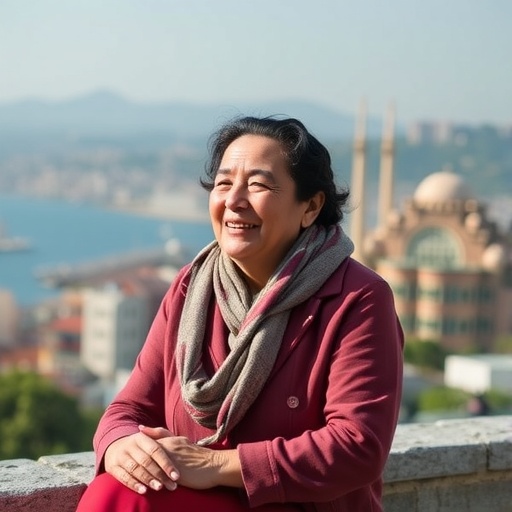
In recent years, the scientific community has turned an increasingly sharp focus toward understanding the dynamics of life satisfaction in advanced age, a critical area that intersects with public health, social policy, and gerontology. A groundbreaking study from Turkey offers fresh and compelling insights into how health status, social support networks, and the often overlooked phenomenon of social exclusion converge to shape the subjective well-being of older adults. This research, published in the prestigious journal BMC Geriatrics, unravels complex socio-health interactions and provides a detailed empirical foundation for crafting interventions that could significantly improve the quality of life for the aging population.
The authors of the study, Çebi Karaaslan, Bayar, and Öztürk, delve into an issue of escalating global importance: as populations age worldwide, understanding what contributes to a fulfilling old age becomes not only a matter of academic curiosity but also of urgent societal necessity. Their work zeroes in on Türkiye, a nation exemplifying rapid demographic shifts, where the number of elderly citizens is rising sharply. This demographic transition poses myriad challenges, and examining life satisfaction through the lenses of health, social dynamics, and exclusion adds a novel dimension to the discourse.
One of the pivotal themes in the study is health—a well-established determinant of life satisfaction but one whose multifaceted influence is often insufficiently unpacked. The authors meticulously explore how physical health conditions, both chronic and acute, tangibly restrict not only physical capabilities but also psychological resilience and social engagement among elders. Through advanced statistical modeling and comprehensive survey data, the research illustrates a clear causal pathway where deteriorating health seeds a decline in overall life satisfaction, reinforcing the crucial need for accessible healthcare and preventive services tailored to this vulnerable segment.
Complementing the health perspective, social support emerges as a lifeline in the lives of many elderly individuals. The study highlights the critical role that family members, close friends, community groups, and formal social networks play in buffering the negative impacts of aging-related stressors. Intriguingly, the Turkish cultural context, characterized by strong familial bonds and community interconnectedness, provides a fertile ground to investigate how these social supports operate, fluctuate, and potentially falter under pressures such as urbanization and modernization. The authors document that robust social support unequivocally correlates with higher degrees of psychological well-being and satisfaction, emphasizing the protective social capital that nurtures resilience.
However, the study also foregrounds an often underexplored antagonist to wellbeing in late life: social exclusion. Different from social support, social exclusion refers to the processes through which individuals become marginalized or alienated from the social fabric. This condition may arise due to economic factors, mobility limitations, discrimination, or loss of social roles post-retirement. The researchers utilize sophisticated sociological frameworks to measure levels of social exclusion and integrate these findings with mental health outcomes to reveal a distressing pattern—social exclusion not only diminishes life satisfaction directly but also exacerbates health declines and reduces the efficacy of available social supports.
Critically, the interaction effects between these three pillars—health, social support, and social exclusion—are elaborated with impressive nuance. The study’s advanced multivariate analyses uncover that the presence of social support can mitigate some negative impacts of poor health, yet this buffering effect is significantly weakened in individuals experiencing high levels of social exclusion. This insight challenges simplistic intervention models by underscoring the necessity for integrated multifactorial strategies that address physical health, social connectivity, and structural inequalities simultaneously.
Methodologically, the study distinguishes itself with its rigorous approach, sampling a representative cohort of the elderly population across various regions in Türkiye. The dataset includes comprehensive health assessments, validated psychometric scales for life satisfaction and social exclusion, and robust demographic controls, ensuring the reliability and generalizability of the results. The inclusion of longitudinal elements further enhances the capacity to discern temporal trends and causations, a methodological strength that elevates the study among its peers.
From a theoretical viewpoint, this research contributes substantively to the interdisciplinary dialogue on aging by challenging monolithic notions of wellbeing that fail to incorporate socio-environmental complexity. The conceptual model proposed by the authors integrates biomedical, psychological, and sociological perspectives in a holistic framework conducive to both academic critique and practical application. This integrative approach invites policymakers, healthcare providers, and social services stakeholders to reconceptualize aging beyond mere biological decline towards a multidimensional human experience.
The implications of these findings ripple outwards, holding profound relevance for public health and social policy frameworks in Türkiye and beyond. With global populations aging at unprecedented rates, the validation of such models in diverse cultural contexts is invaluable. Interventions aimed solely at improving health or enhancing social support without simultaneously combating social exclusion might fall short. Thus, this study illuminates a pathway for more nuanced and effective policy designs that incorporate financial inclusion, community engagement, and anti-discrimination measures as core components.
Significantly, the study also sheds light on gender disparities and socio-economic gradients in life satisfaction among older adults, although these are not the central focus. Preliminary observations suggest that women and economically disadvantaged elders are disproportionately vulnerable to the deleterious effects of social exclusion and poor health, adding layers of complexity to the fabric of aging satisfaction. These nuances stress the need for targeted interventions sensitive to intersectional vulnerabilities within the elderly population.
Moreover, the research holds technological implications, pointing toward the potential of digital social networks and telehealth solutions in enhancing social support and health monitoring among elderly individuals. While the study itself remains grounded in traditional survey methodologies, it gesturally sets the stage for future explorations into how emerging technologies might intervene in the nexus of health, social connection, and exclusion—especially pertinent given the increasing digitization of society.
Importantly, the authors acknowledge certain limitations inherent in their work, including the challenges in capturing subjective feelings of exclusion and satisfaction using standardized instruments and the potential cultural specificity of the Turkish context. Nevertheless, they position their findings as a springboard for cross-national comparative research and for refining measurement tools that better capture the lived experiences of older adults globally.
Ultimately, this landmark study by Çebi Karaaslan, Bayar, and Öztürk pushes the frontier of aging research by weaving together threads from health sciences and social theory into a compelling narrative about what constitutes well-being in later life. Their meticulous work not only advances academic understanding but also acts as a clarion call for integrated, culturally informed, and inclusive approaches to supporting aging populations worldwide. As ageing becomes a defining feature of the 21st century, such research will be instrumental in shaping societies where longevity translates into quality life—not merely longevity for its own sake.
The intricate relationships identified between health, social support, and social exclusion underscore a paradigm shift: aging should be viewed through a multiplicity of lenses that recognize the psychosocial ecosystem as vital. In effect, this research propels public discourse beyond simplistic binaries towards a richer, more empathetic valuation of the elderly, inspiring hope for innovative models of care and social inclusion that honor their dignity and contributions.
This seminal study thus stands as a testament to the power of cross-disciplinary research in tackling some of society’s most urgent challenges. It invites future investigations to build upon its foundation, exploring not only the Turkish context but extrapolating globally, to capture the diverse realities of aging peoples and cultivate solutions that resonate across cultures and communities. The message is clear: to improve life satisfaction in the twilight years, we must build health systems, social architectures, and inclusive societies that recognize the profound interconnectedness of mind, body, and community.
Cite Scienmag News
Ophelia Keating. (April 9, 2026). Health, Social Factors Shape Life Satisfaction in Türkiye. Scienmag. https://scienmag.com/health-social-factors-shape-life-satisfaction-in-turkiye/
Ophelia Keating. "Health, Social Factors Shape Life Satisfaction in Türkiye." Scienmag, 9 April 2026, https://scienmag.com/health-social-factors-shape-life-satisfaction-in-turkiye/. Accessed 4 September 2026.
Ophelia Keating. "Health, Social Factors Shape Life Satisfaction in Türkiye." Scienmag. April 9, 2026. https://scienmag.com/health-social-factors-shape-life-satisfaction-in-turkiye/


