


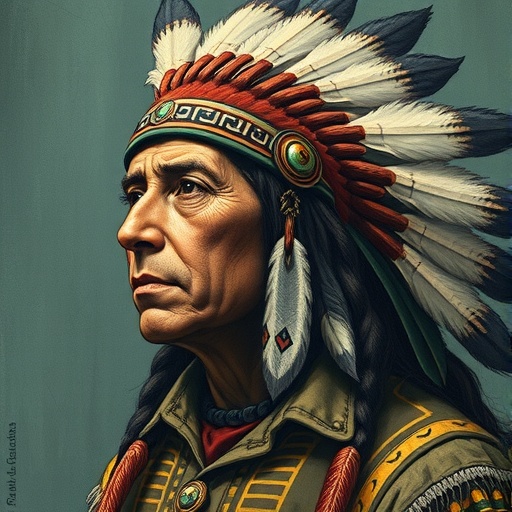
In a groundbreaking exploration into the perceptual landscapes of Native American youth, a recent study led by Cornell University has illuminated the complex interplay of stereotypes held by early adolescents of the Eastern Band of Cherokee Indians. This federally recognized tribe, nestled in rural North Carolina, provided a unique cohort of over 200 middle school students whose voices have been historically marginalized in sociological research. Unlike prior studies predominantly reflecting external viewpoints—usually white adults or other ethnic groups—this investigation centers the lived experiences and self-reported understandings of Native American adolescents themselves, offering unprecedented insight into the internalization and awareness of stereotypes during early adolescence.
The research meticulously captures how these young Cherokee students articulate the stereotypes they encounter, both positive and negative, and reveals how these perceptions evolve through the critical developmental window of sixth to eighth grade. Notably, the study contrasts students attending more diverse public schools, where Cherokees constitute a minority, with their counterparts at a tribal school primarily serving their community. It was in these more heterogeneous environments that students reported a richer and more varied awareness of stereotypes, underscoring the profound effect of social context on identity formation and stereotype recognition.
Central to the findings is the nuanced understanding of stereotype function and impact. Adam Hoffman, assistant professor at Cornell’s Department of Psychology and College of Human Ecology, emphasizes that even seemingly positive stereotypes may exert deleterious effects on adolescents’ academic motivation, mental health, and overall well-being. By cataloging the stereotypes voiced by these youths, the study offers a crucial foundation to dismantle harmful narratives and foster educational and familial support structures that validate rather than diminish Native identity.
The methodology deployed in this study marks a significant departure from prior quantitative paradigms imposed by external frameworks. Instead, it hinged on open-ended qualitative inquiry, asking participants to spontaneously list stereotypes they had heard about Cherokee or Native American peoples. This approach not only empowers indigenous youth with agency over their narratives but also yields a rich repository of data capturing stereotype categories as perceived authentically by those within the culture.
Among the over 300 stereotype references catalogued, a multifaceted spectrum emerged. The most frequently cited cluster involved cultural traditions—prideful affirmations of heritage expressed through dancing, basket-making, and traditional attire. These positive associations point to the resilience of cultural identity amidst pervasive external stereotype pressures. However, the prevalence of negative stereotypes was stark and persistent, including references to substance abuse, and historically entrenched mischaracterizations portraying Native people as savage, unintelligent, or violent. Such depictions often trace back to distorted media portrayals, perpetuating damaging myths across generations.
A particularly novel and revealing category that surfaced was the so-called “per cap” stereotype. This term alludes to the per capita payments derived from casino revenues distributed within the Eastern Band of Cherokee community. Adolescents framed “per cap” as emblematic of financial privilege or entitlement, with commentaries such as “we are rich because we get per cap” and “Cherokees get paid to do nothing.” These perceptions, unique to this specific tribal context, highlight the critical importance of localized socio-economic realities in shaping youth stereotype awareness and challenge the homogenization of Native American identities in broader discourse.
The analysis also illuminated developmental trends. Sixth graders typically exhibited a nascent or minimal recognition of stereotypes, while seventh and eighth graders showed a pronounced increase in the number and complexity of stereotypes reported. This trajectory suggests that early adolescence is a pivotal period for stereotype awareness and identity negotiation, representing an opportune window for targeted interventions aimed at mitigating stereotype internalization before such beliefs solidify.
Interestingly, the study found no significant difference between male and female students in the frequency or type of stereotypes reported, indicating that stereotype development and awareness in this demographic transcends gender boundaries, focusing attention instead on age and social context as critical variables.
This research not only enriches our understanding of Native American adolescent psychology but also challenges longstanding gaps in academic literature, which have systematically excluded indigenous perspectives from conversations about race, identity, and social psychology. According to Hoffman, the historical erasure of Native voices from scholarly inquiry has left a void now addressed by this study’s inclusive methodology, ensuring Native adolescents are not just subjects but active narrators of their social realities.
Moreover, the study’s implications extend broadly to educational practice and policy. Understanding the stereotypes circulating among youth enables teachers, parents, and policymakers to develop culturally sensitive support systems, curriculum adaptations, and intervention programs designed to dismantle harmful stereotypes and promote positive self-concept. Such efforts are essential to counteract the well-documented adverse consequences of stereotype threat, which has been linked to diminished academic performance and psychological distress in minority youth populations.
The research was funded by the National Science Foundation, underscoring the critical need for continued investment in social science inquiries that elevate marginalized voices and produce actionable knowledge. Its publication in the peer-reviewed journal Youth & Society ensures the findings will stimulate further scholarly dialogue and practical application in the fields of psychology, education, and indigenous studies.
In sum, this pioneering study highlights the complex reality of stereotype awareness among Native American adolescents, revealing an intricate mosaic of cultural pride, historical misrepresentation, socio-economic context, and developmental processes. It opens new pathways for academic and community engagement, emphasizing early adolescence as a crucial moment for shaping empowered indigenous identities free from the constraints of monolithic stereotypes.
Cite Scienmag News
Courtney Benton. (October 17, 2025). Native American Stereotypes Through Indigenous Perspectives: Insights for Science Magazine. Scienmag. https://scienmag.com/native-american-stereotypes-through-indigenous-perspectives-insights-for-science-magazine/
Courtney Benton. "Native American Stereotypes Through Indigenous Perspectives: Insights for Science Magazine." Scienmag, 17 October 2025, https://scienmag.com/native-american-stereotypes-through-indigenous-perspectives-insights-for-science-magazine/. Accessed 3 September 2026.
Courtney Benton. "Native American Stereotypes Through Indigenous Perspectives: Insights for Science Magazine." Scienmag. October 17, 2025. https://scienmag.com/native-american-stereotypes-through-indigenous-perspectives-insights-for-science-magazine/


