


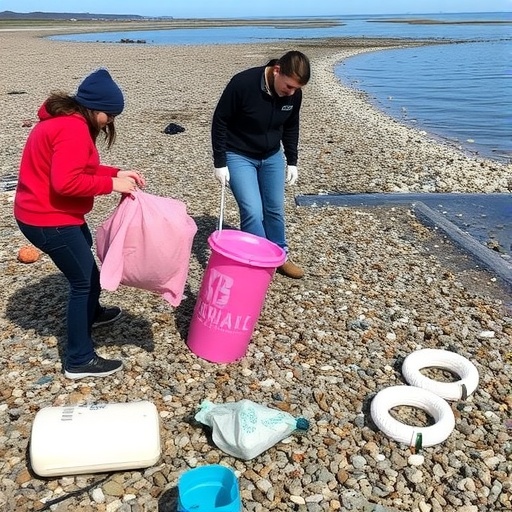
Amidst the vast coastal waters of the United States lies an insidious threat, a silent killer lurking beneath the waves. Derelict fishing gear, particularly abandoned crab pots and lobster traps, continue to ensnare marine life long after their intended use. These so-called “ghost traps” not only imperil aquatic species but also jeopardize the economic viability of coastal fisheries, contributing to habitat degradation and significant commercial losses.
This environmental menace is receiving heightened attention as the Virginia Institute of Marine Science (VIMS) and William & Mary’s Batten School of Coastal & Marine Sciences, through the National Fishing Trap Removal, Assessment, and Prevention (TRAP) Program, spearhead coordinated efforts to remediate the issue. The program recently announced an allocation of $1.8 million across 13 projects nationwide, aiming to target the removal of thousands of derelict fishing traps and to develop data-driven solutions that can inform sustainable fisheries management.
Ghost traps primarily originate from commercial trap fisheries, which annually generate more than $1 billion in landings across the U.S. These traps are lost due to interactions between fishing vessels and gear, tumultuous storms, or structural degradation over time. Despite being abandoned and inaccessible to fishermen, these traps retain their function, continuing to ensnare both target and non-target species inadvertently. Such unchecked fishing leads to unregulated mortality, disrupts marine ecosystems, and undercuts future fishery yields — a costly externality that has often been overlooked.
The economic ramifications are staggering. Findings from a 2016 study posited that the removal of merely 10% of derelict crab pots and lobster traps could translate to an additional $831 million in global seafood landings each year. This statistic underscores both the severity of ghost fishing and the lucrative potential of targeted removal programs. Yet effective mitigation requires more than localized cleanups; it demands a comprehensive framework melding scientific research, community engagement, and policy innovation.
Responding to this challenge, the National TRAP Program received a significant $8 million, four-year grant from NOAA’s Marine Debris Program in 2023 to administer national efforts. This funding facilitates standardized data collection, regional cleanup initiatives, and the development of predictive models that quantify environmental and economic outcomes. By building a centralized database, the program enables cross-regional analysis of trap accumulation drivers, bycatch rates, and habitat impacts, providing a robust evidence base to guide regulatory reforms and industry practices.
During its inaugural year, the TRAP Program distributed $1.4 million among 11 projects, enabling the removal of over 7,000 derelict traps—amounting to more than 300,000 pounds of submerged debris. This success reflects a strong collaboration between scientists, local fishers, and conservation groups. These early interventions not only improve marine ecosystem health but also create employment opportunities, predominantly benefiting commercial fishers displaced by the side effects of ghost fishing.
Looking ahead, the 2026 funding round will allocate $1.8 million to thirteen new projects in states ranging from Maine to California. The collective goal is to remove in excess of 8,000 ghost traps. Beyond gear retrieval, the program emphasizes adaptive reuse and recycling of recovered materials to foster circular economy principles within fishing communities. By embedding local knowledge and stakeholder participation, the TRAP Program invigorates a grassroots approach to a global marine conservation issue.
The data gathered through these projects is slated for detailed statistical evaluation by the Policy Innovation Lab, a collaboration between VIMS and the University of Georgia’s Carl Vinson Institute of Government. Their analyses will dissect ecological and economic variables pertaining to derelict traps, unraveling the socio-environmental drivers behind gear loss and offering policy prescriptions for enhanced prevention, such as gear modifications, improved reporting, and storm resilience standards.
Several projects highlight innovative methodologies. For example, side-scan sonar technology allows precise identification of trap locations in turbid waters, facilitating targeted removals with minimal habitat disturbance. Meanwhile, SCUBA surveys enable direct diver recovery of traps in sensitive habitats inaccessible to surface vessels. These complementary approaches maximize both efficiency and conservation outcomes.
Engagement of commercial fishers as active participants in removal operations leverages their local expertise and fosters economic resilience, particularly during off-season periods. Several initiatives incorporate employment provisions that support displaced fishers while simultaneously addressing marine debris. This dual benefit model is critical for sustainable fisheries management, blending ecological restoration with social equity.
Additional outreach includes rigorous pre- and post-removal environmental monitoring, quantifying the efficacy of ghost trap removal efforts on resource recovery. Data outputs contribute to nationwide databases, enabling scalable replication of successful strategies and informing marine spatial planning initiatives aimed at minimizing ghost fishing impacts.
By harmonizing science, stakeholder collaboration, and policy innovation, this concerted effort offers a beacon of hope against the pervasive problem of ghost fishing. This multi-million dollar investment not only safeguards the marine environment and fishery economics but also galvanizes a national movement toward responsible ocean stewardship and the revival of coastal communities dependent upon these invaluable marine resources.
News Publication Date: 2024
Web References:
- National TRAP Program website: https://trapprogram.org/
- Virginia Institute of Marine Science news: https://www.vims.edu/newsandevents/topstories/2024/trap-subawards-announcement.php
- NOAA Marine Debris Program: https://marinedebris.noaa.gov/
Cite Scienmag News
Reese Ellison. (October 29, 2025). National TRAP Program Tackles Marine Debris with Second Wave of Coastal Cleanup Funding. Scienmag. https://scienmag.com/national-trap-program-tackles-marine-debris-with-second-wave-of-coastal-cleanup-funding/
Reese Ellison. "National TRAP Program Tackles Marine Debris with Second Wave of Coastal Cleanup Funding." Scienmag, 29 October 2025, https://scienmag.com/national-trap-program-tackles-marine-debris-with-second-wave-of-coastal-cleanup-funding/. Accessed 3 September 2026.
Reese Ellison. "National TRAP Program Tackles Marine Debris with Second Wave of Coastal Cleanup Funding." Scienmag. October 29, 2025. https://scienmag.com/national-trap-program-tackles-marine-debris-with-second-wave-of-coastal-cleanup-funding/


