


People with elevated narcissistic traits show less consistent patterns of brain activation than others when watching someone experience a social threat, according to a new functional MRI study from Aalto University. The finding, published in the journal Cerebral Cortex, may help explain why individuals with high levels of grandiose narcissism often struggle to build genuine, supportive connections and frequently encounter misunderstandings in everyday interaction. Narcissistic traits exist on a spectrum.
Many people show them to some degree—confidence in their own superiority, a sense of entitlement, or a desire to be the centre of attention—but some present with notably higher levels. Although grandiose narcissism has been linked to interpersonal difficulties, its neural basis has rarely been examined in socially complex situations. Most previous empathy research has relied on simple, controlled stimuli such as emotional facial expressions, rather than the layered, ambiguous scenarios people navigate in real life.
To close that gap, the research team, working within the Faces of Narcissism project alongside colleagues from the Universities of Helsinki, Turku, Tampere and Oulu, began with an online survey of narcissistic personality traits completed by nearly a thousand respondents. From this pool, individuals reporting many narcissistic traits were invited into the laboratory for fMRI scanning, while a control group was drawn from those with few such traits. The final dataset comprised 58 participants.
During scanning, participants watched videos in which a professional actor told personal stories drawn from youth and adulthood—situations in which the narrator had been either excluded or admired. After each narrative, the narrator received face-threatening feedback from another person: comments questioning whether the admiration was deserved, or suggesting that the exclusion had been the narrator's own fault. Crucially, participants were not instructed to empathize with the narrator, allowing the researchers to observe how people spontaneously tracked and processed a complex social situation as it unfolded.
The scenario was grounded in sociologist Erving Goffman's mid-twentieth-century account of social interaction. Goffman argued that people present a particular image of themselves in social encounters, and that protecting this image—commonly called saving face—is a shared project. Because others can accept or reject that self-presentation, face threats provoke anxiety or embarrassment not only in the person targeted but also in observers, who typically join in facework to protect everyone's public image.
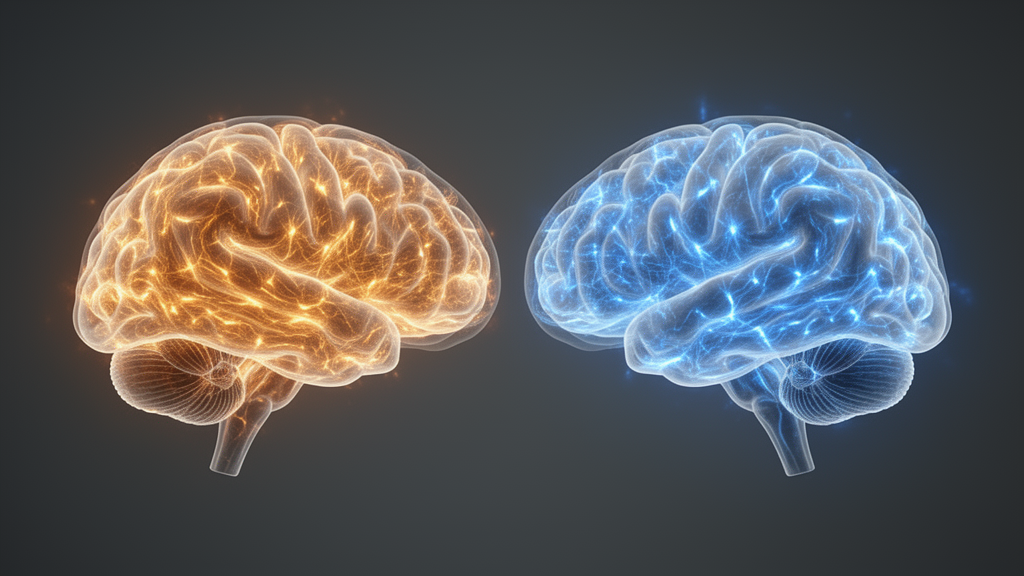
The central result concerned inter-subject synchrony: how similar brain activation patterns were across participants. In brain areas associated with empathy, the activation of less narcissistic subjects was relatively consistent, implying a more shared experience at the neural level. Participants with more narcissistic traits, by contrast, showed less synchronized activation during these moments of vicarious embarrassment, particularly in regions linked to interpreting social situations and to cognitive empathy—the capacity to infer what another person is thinking or feeling.
People with many narcissistic traits respond to another person's vulnerable experience differently than others, he explains: they may attune to the interaction in a different way, attend to different aspects of it, or make different interpretations of what is happening. In other words, the reduced synchrony does not necessarily indicate an absence of neural response, but a less shared one—each brain apparently processing the face threat on its own terms. The study suggests that facework itself may differ between individuals with many and few narcissistic traits.
If the coordinated, largely automatic effort to protect a speaker's public image is weaker or differently organized in narcissistic brains, the social friction often reported around high-narcissism individuals—difficulties and misunderstandings in interaction, and a failure to build supportive or genuine connections—may have a measurable neural counterpart. The researchers emphasize the value of their ecologically richer paradigm. The work offers a model for studying empathy as it operates spontaneously in socially demanding contexts rather than under explicit instruction.
The study, 'Reduced Social Brain Coupling to Others' Face Threats in Narcissism,' will be published in Cerebral Cortex on 27 October 2026. As with all fMRI research using modest sample sizes and selected participant groups, the findings describe group-level associations between trait narcissism and neural synchrony in a laboratory setting, and further work will be needed to establish how these differences shape real-world relationships over time.
Subject of Research: Neural synchrony and empathy in grandiose narcissism during face-threatening social scenarios
Article Title: Inside the narcissistic brain: fMRI research sheds light on the narcissist’s struggle with empathy
Article References: Inside the narcissistic brain: fMRI research sheds light on the narcissist’s struggle with empathy. Original publication (Bibliographic details unavailable.)
Image Credits: AI Generated
DOI: Not provided
Keywords: narcissism, fMRI, empathy, cognitive empathy, inter-subject synchrony, facework, Erving Goffman, social neuroscience, Cerebral Cortex, Aalto University, grandiose narcissism, vicarious embarrassment
Cite Scienmag News
Colin Clarke. (October 26, 2026). Narcissistic brains fall out of sync when watching others lose face, fMRI study finds. Scienmag. https://scienmag.com/narcissistic-brains-fall-out-of-sync-when-watching-others-lose-face-fmri-study-finds/
Colin Clarke. "Narcissistic brains fall out of sync when watching others lose face, fMRI study finds." Scienmag, 26 October 2026, https://scienmag.com/narcissistic-brains-fall-out-of-sync-when-watching-others-lose-face-fmri-study-finds/. Accessed 26 October 2026.
Colin Clarke. "Narcissistic brains fall out of sync when watching others lose face, fMRI study finds." Scienmag. October 26, 2026. https://scienmag.com/narcissistic-brains-fall-out-of-sync-when-watching-others-lose-face-fmri-study-finds/


