


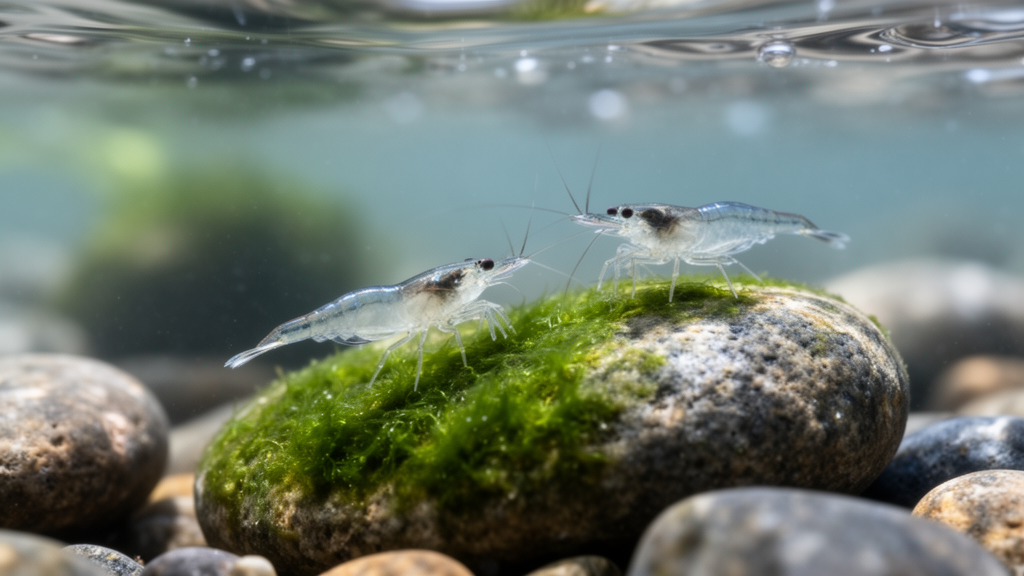
In a semi-natural breeding experiment with one of Europe's worst invasive species, the killer shrimp Dikerogammarus villosus, offspring raised under identical conditions developed food preferences that mirrored those of their mothers' populations rather than their fathers'. Its success as a coloniser rests on considerable voracity, high predation levels, high fecundity, fast growth and early maturation. The species is not tied to any single feeding mode: it eats animal prey, plants, detritus and even faeces, preying on invertebrate larvae, juvenile crustaceans, leeches, fish fry and eggs, and early-stage frogs.
Yet despite this opportunism, individual populations differ in diet and trophic position depending on local conditions, and previous work suggested that population origin itself matters for shaping the species' invasive potential. Genetic analyses have shown that D. villosus colonised European waters from two geographically separated and genetically differentiated source populations: the Danube Delta, giving rise to a Western genetic group, and the Dnieper Delta, giving rise to an Eastern group. Both groups have kept their distinctiveness throughout the invasion.
The Western Group spread westwards along the Danube and back eastwards via the Mittelland Canal, reaching the River Oder, while the Eastern Group spread through the Dnieper into Central and Eastern Europe, reaching the Vistula in Poland. Earlier studies found the Western Group morphologically adapted towards predation and experimentally more selective for insect larvae, whereas the Eastern Group showed a more balanced, omnivorous diet. The two groups are now approaching each other in Poland, separated only by the short Bydgoski Canal connecting the Oder and Vistula, and researchers expect them to interbreed once they meet.
To test how such interbreeding would shape feeding behaviour, the team collected live amphipods in April 2022 from two sites on each river: Brzeg and Zdzieszowice on the Oder, and Wyszogród and Ciechocinek on the Vistula. At each site they gathered 800 medium-sized specimens of 10 to 15 millimetres, free of visible injuries or parasites, using kick-sampling and sweep sampling with a hand net. Water temperature, pH, conductivity and dissolved oxygen were recorded, and a biosecurity protocol of visual inspection, rinsing and air-drying of equipment was followed to avoid contamination.
Instead of a conventional laboratory, the animals were raised in a mesocosm system, a semi-natural platform that allows external factors to be controlled while providing more realistic conditions than laboratory tanks. After sexing under a stereomicroscope, the amphipods spent four weeks in quarantine in aerated pond water, a step that removed weak or infected individuals and gave gravid females time to release eggs so that crossbreeding could take place. Quarantine survival was roughly 80 percent.
The survivors were then randomly assigned to four breeding treatments: pure Western Group, pure Eastern Group, and two reciprocal hybrid crosses, one with Western males and Eastern females and the other with Eastern males and Western females. Each treatment was held in mesh-lined cages submerged in mesocosm tanks, fed weekly with chironomid larvae and decomposing leaves, and supplied with fresh pond water. When the first filial generation, the F1 offspring, reached adult size, they were collected and taken to the laboratory for testing.
The laboratory experiments followed a two-part design. In the first experiment, individual amphipods were offered a single food type for 24 hours: decomposing willow leaves to test shredding and grazing, carp muscle tissue to test scavenging, or live chironomid larvae to test predation. Food was weighed before and after, with control pots without amphipods used to correct for weight changes unrelated to consumption.
In the second experiment, each amphipod received all three foods simultaneously, and preference was quantified with Ivlev's Selectivity Index, which accounts for the differing amounts of each food offered. Before testing, all animals were acclimatised and starved for 24 hours each at 19 degrees Celsius under a 10:14 hour day-night photoperiod, with the longer dark period chosen to enhance activity. In total, 192 individuals were tested in the consumption experiment and 64 in the preference experiment, with dead or moulting specimens excluded from analysis.
The results, analysed with generalised linear mixed models, revealed a clear maternal signature. Offspring whose mothers came from the Western Group showed significantly higher selectivity towards live chironomid larvae than offspring of Eastern mothers, while the reverse held for fish tissue, which was significantly less preferred by Western-maternal-line amphipods. Since chironomid larvae represent live prey, this pattern means that offspring of Western Group females were effectively more predatory, whereas Eastern-maternal offspring were less specialised, consuming plant material and dead fish alongside live prey.
Notably, these differences emerged in animals bred entirely under uniform mesocosm conditions, which the authors interpret as evidence that the preferences are heritable and follow the maternal line. The hybrids themselves showed a distinctive profile. They did not consume more food overall than pure-line offspring, so the hypothesis of boosted consumption rates was not supported.
However, larger hybrids displayed decreasing consumption of leaves and fish tissue and increasing selectivity towards chironomid larvae, suggesting they compensate for higher energy demands by targeting more energy-rich animal food rather than eating more of low-value items. The authors suggest this could indicate an elevated metabolic rate in hybrids, as has been observed in some bivalve hybrids, and note that higher predatory pressure in hybrid offspring could make the future contact zone a source of animals posing a greater threat to macroinvertebrate communities than the pure populations. Why do offspring follow their mothers' diets?
The study outlines several candidate mechanisms that remain to be tested. One is mitochondrial DNA, which is inherited almost exclusively through the maternal line and plays a central role in cellular metabolism; the Western and Eastern groups are already known to differ in temperature preference and metabolic rate, so environmentally driven changes in mtDNA could plausibly underlie the dietary differences. Another possibility is epigenetic inheritance: in mice, maternal diet alters heritable gene expression, and in butterflies caterpillars inherit food-odour preferences from parental diet experience.
Gut microbiome composition, which is linked to food preference in mangrove crabs and varies with environmental factors in amphipods, offers a third route, although the identical conditions of the mesocosm culture could weaken this explanation. Finally, amphipod mothers brood their young in a marsupium, and rare cases of mothers provisioning offspring with food have been documented, raising the possibility that juveniles learn dietary patterns during brooding. The exact mechanism remains unknown.
The authors are careful about the limits of their findings. The hybrid scenario has not yet been realised in nature, and the heterosis, or hybrid vigour, seen in first-generation hybrids often fades as traits segregate in later generations, so the elevated specialisation of F1 hybrids may diminish over time. They propose follow-up work on mate choice and male competition during precopula pairing, long-term mesocosm breeding to track whether hybrid vigour persists, and tests of other invasion-relevant traits such as reproduction, dispersal and predator avoidance.
Still, the core message stands: in this invasive amphipod, food preference follows the maternal line even when the environment is held constant, and because feeding habits are among the most important traits shaping invasiveness, understanding this inheritance pattern is crucial for predicting how the looming meeting of the two genetic groups in Polish rivers could reshape their impact on native freshwater communities.
Subject of Research: Maternal inheritance of food preferences and hybrid predation in the invasive amphipod Dikerogammarus villosus
Article Title: I eat what my mother eats. Maternal effects on food preferences in invasive amphipods
Article References: Podwysocki, K., Kobak, J., Szczerkowska-Majchrzak, E., Jermacz, Ł., Desiderato, A., Bącela-Spychalska, K., & Rewicz, T. (2025). I eat what my mother eats. Maternal effects on food preferences in invasive amphipods. NeoBiota, 104, 225-250. https://doi.org/10.3897/neobiota.104.164850
Image Credits: AI Generated
DOI: 10.3897/neobiota.104.164850
Keywords: Dikerogammarus villosus, invasive species, maternal effects, hybridisation, food preference, amphipods, mesocosm, predation, mitochondrial DNA, epigenetics, freshwater invasion, genetic groups
Cite Scienmag News
Patricia Pace. (October 26, 2026). Killer Shrimp Babies Inherit Their Mother’s Taste in Food. Scienmag. https://scienmag.com/killer-shrimp-babies-inherit-their-mothers-taste-in-food/
Patricia Pace. "Killer Shrimp Babies Inherit Their Mother’s Taste in Food." Scienmag, 26 October 2026, https://scienmag.com/killer-shrimp-babies-inherit-their-mothers-taste-in-food/. Accessed 26 October 2026.
Patricia Pace. "Killer Shrimp Babies Inherit Their Mother’s Taste in Food." Scienmag. October 26, 2026. https://scienmag.com/killer-shrimp-babies-inherit-their-mothers-taste-in-food/


