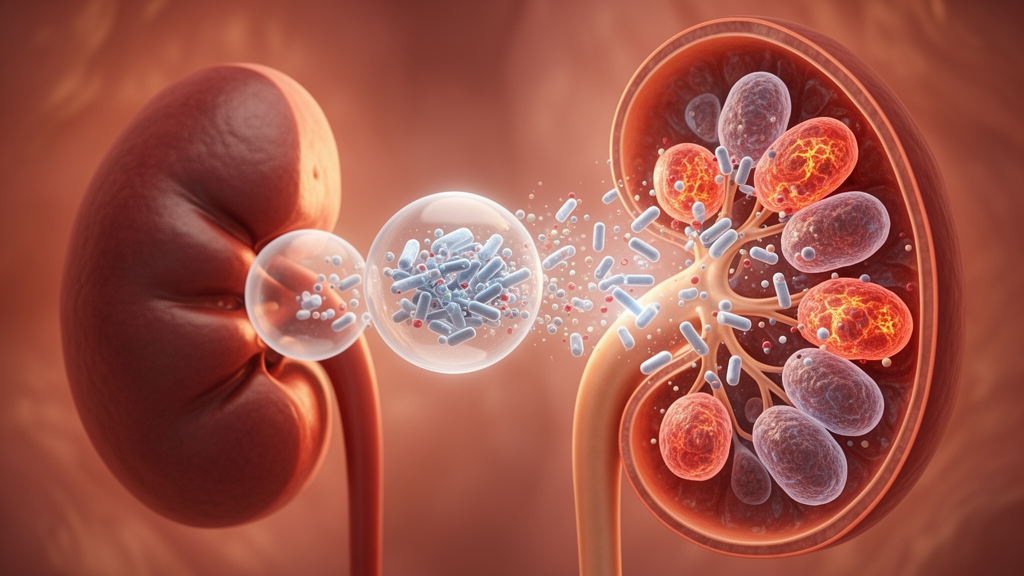
A review of nanomedicine research identifies mitochondrial oxidative stress as an important therapeutic target for acute kidney injury, a highly heterogeneous clinical syndrome characterized by complex pathogenesis, poor outcomes and the absence of a specific pharmacotherapy. The review examines how inorganic, organic and bio-derived nanosystems could deliver antioxidant treatments to injured renal sites, tubular cells and mitochondria, where they may remove excessive reactive oxygen species and restore mitochondrial function.
Conventional antioxidant approaches have several limitations, according to the review, including modest antioxidant capacity, poor stability in vivo, low bioavailability and inefficient mitochondrial targeting. Nanotechnology is presented as a way to address these constraints by designing systems that accumulate at injured kidney sites, selectively recognize tubular cells and localize to mitochondria. The organ-to-subcellular targeting strategy is intended to concentrate treatment in the locations where mitochondrial oxidative stress is relevant to acute kidney injury, rather than relying only on the intrinsic antioxidant activity of a compound.
The review categorizes mitochondria-targeted antioxidant nanomedicines by their material type, design principles, mechanisms of action and therapeutic performance. Across these categories, the proposed functions include efficient removal of excessive reactive oxygen species and restoration of mitochondrial function. These systems are described as tools for improving delivery from the whole organ to tubular cells and then to the subcellular level, with the aim of developing safe and effective targeted nanotherapies for acute kidney injury.
The authors also identify major barriers to clinical translation and discuss the conditions required for moving from experimental nanosystems toward clinical use. The article is a review rather than a report of a new treatment trial: it summarizes a research framework and evaluates emerging mitochondria-directed antioxidant nanomedicines, rather than demonstrating clinical benefit in people with acute kidney injury. Its central conclusion is that nanomedicine design may help overcome the delivery and stability limitations of conventional antioxidants, while safety, effectiveness and practical translation remain central requirements for future development.
Subject of Research: Mitochondria-targeted antioxidant nanomedicines for acute kidney injury
Article Title: Nanomedicines targeting mitochondrial oxidative stress for the treatment of acute kidney injury
Article References: Li, T., Xie, T., Chen, J., Sui, X., Xu, Y., Zhang, A., & Chen, J. (2026). Nanomedicines targeting mitochondrial oxidative stress for the treatment of acute kidney injury. Journal of Translational Medicine. https://doi.org/10.1186/s12967-026-09010-3
Image Credits: AI Generated
DOI: 10.1186/s12967-026-09010-3
Keywords: acute kidney injury, nanomedicine, mitochondrial oxidative stress, reactive oxygen species, targeted drug delivery, mitochondria, kidney injury, antioxidant nanoparticles, clinical translation, Nanomedicines, targeting, mitochondrial
Cite Scienmag News
Ophelia Keating. (October 20, 2026). Nanomedicines targeting mitochondrial oxidative stress for the treatment of acute kidney injury. Scienmag. https://scienmag.com/nanomedicines-targeting-mitochondrial-oxidative-stress-for-the-treatment-of-acute-kidney-injury/
Ophelia Keating. "Nanomedicines targeting mitochondrial oxidative stress for the treatment of acute kidney injury." Scienmag, 20 October 2026, https://scienmag.com/nanomedicines-targeting-mitochondrial-oxidative-stress-for-the-treatment-of-acute-kidney-injury/. Accessed 20 October 2026.
Ophelia Keating. "Nanomedicines targeting mitochondrial oxidative stress for the treatment of acute kidney injury." Scienmag. October 20, 2026. https://scienmag.com/nanomedicines-targeting-mitochondrial-oxidative-stress-for-the-treatment-of-acute-kidney-injury/