

Wednesday, July 29, 2026
Science
No Result
View All Result
  • Login
  • HOME
  • SCIENCE NEWS
  • CONTACT US
  • HOME
  • SCIENCE NEWS
  • CONTACT US
No Result
View All Result
Scienmag
No Result
View All Result
Home Science News Biology

Nanjing University Team Proposes PIEM Concept to Transform Microbiome Research

July 29, 2026
in Biology
Reading Time: 2 mins read
0
Nanjing University Team Proposes PIEM Concept to Transform Microbiome Research

Nanjing University Team Proposes PIEM Concept to Transform Microbiome Research

65
SHARES
587
VIEWS
Share on FacebookShare on Twitter
ADVERTISEMENT

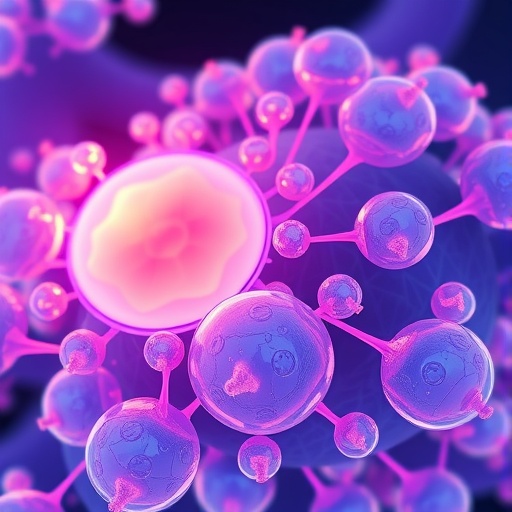
A July 20, 2026 review in Immunity & Inflammation reframes microbiome science by proposing a hidden population: persistent intracellular extraintestinal microbes, or PIEMs. Led by Prof. Chen-Yu Zhang at Nanjing University, the paper argues that lasting host–microbe effects may originate not only from barrier surfaces like gut and skin, but also from internal tissues and circulating cells.

PIEMs are defined as microorganisms that persist in extraintestinal environments in a latent or low-replication state. Their defining features include tropism for specific host cell types, persistence-driven latency/reactivation dynamics, and the ability to modulate host physiology over long timescales rather than through rapid, acute infections.

Unlike conventional microbiota studies that emphasize abundance and community composition, this framework prioritizes persistence, cellular localization, and regulatory potency. Over years or decades, PIEMs are proposed to function as “systemic tuning devices,” subtly shifting immune set points, vascular homeostasis, metabolic baselines, and tissue repair capacity.

The review uses human cytomegalovirus (HCMV) as a mechanistic model. HCMV’s high prevalence, lifelong latency, broad cell tropism, and strong immune-modulating capacity make it well suited to map how a persistent intracellular infection can continuously “negotiate” with the host.

Mechanistically, the paper highlights pathways by which persistent HCMV may remodel antigen presentation, reshape T-cell memory, influence angiogenesis, and reprogram cellular metabolism. The authors suggest that such chronic interactions could contribute to complex diseases including autoimmunity, atherosclerosis, and cancer—not as single-cause agents, but as long-term risk modifiers.

A major challenge in PIEM research is detection: low microbial loads make direct observation difficult. To address this, the review proposes a liquid-biopsy approach using circulating viral microRNAs as reporters of ongoing viral activity. The authors emphasize that microRNA signals may track real-time latency dynamics rather than only historical exposure.

Building on prior validation by Zhang’s team, the review notes that viral miRNA biomarkers have shown promise in multiple clinical contexts, including prediction of hepatitis B treatment response and auxiliary diagnosis of oral lichen planus. This positions PIEM monitoring as a potential route toward more dynamic, precision-style interventions.

Overall, the PIEM concept expands microbiome research into an internal, cell-centered “latent infection” paradigm. It also points toward virome-driven precision medicine, where multi-omics and artificial intelligence could support individualized risk assessment, monitoring, and targeted intervention.

Subject of Research: Not applicable
Article Title: Beyond the gut microbiome: human cytomegalovirus as a model for persistent intracellular extraintestinal microbes in human homeostasis and disease
News Publication Date: 20-Jul-2026
Web References: http://dx.doi.org/10.1007/s44466-026-00048-y
References: 10.1007/s44466-026-00048-y
Image Credits: Credit: Professor Chen-Yu Zhang from Nanjing University, China

Keywords: persistent intracellular extraintestinal microbes (PIEMs); cytomegalovirus; latency/reactivation; microRNA biomarker; liquid biopsy; immune calibration; host homeostasis

Tags: extraintestinal microbeshost-microbe interactionshuman cytomegalovirus as a modelimmune modulation by persistent microbesintracellular infection mechanismsmicrobial latency and reactivationmicrobiome and tissue homeostasismicrobiome influence on host physiologymicrobiome researchpersistent intracellular microbesPIEM concept in microbiome sciencesystemic effects of microbiota
Share26Tweet16
Previous Post

Reichman University Scientists Create Biological Shield to Protect Metals from Seawater

Next Post

Acute Pancreatitis Increasing in South Australia as Risk Shifts

Related Posts

Gut Microbiota Limits Intestinal Fat Uptake by Altering Bile Phosphatidylcholine in Mice
Biology

Gut Microbiota Limits Intestinal Fat Uptake by Altering Bile Phosphatidylcholine in Mice

July 29, 2026
Study Finds Small Genetic Mutation Causes Major Effects in Rare Heart Diseases
Biology

Study Finds Small Genetic Mutation Causes Major Effects in Rare Heart Diseases

July 29, 2026
Phage Hijacks Bacterial DNA Phosphorothioate Machinery to Evade Ssp Defenses
Biology

Phage Hijacks Bacterial DNA Phosphorothioate Machinery to Evade Ssp Defenses

July 29, 2026
New Strategy Enables Oxidation-Free, Efficient Oligonucleotide Synthesis
Biology

New Strategy Enables Oxidation-Free, Efficient Oligonucleotide Synthesis

July 29, 2026
How Organisms Balance Memory, Thought, and Sensing Costs
Biology

How Organisms Balance Memory, Thought, and Sensing Costs

July 29, 2026
Biology

Merging Metasurfaces with Image Sensors Enables Ultra-Compact Optoelectronics

July 28, 2026
Next Post
Acute Pancreatitis Increasing in South Australia as Risk Shifts

Acute Pancreatitis Increasing in South Australia as Risk Shifts

  • Mothers who receive childcare support from maternal grandparents show more

    Mothers who receive childcare support from maternal grandparents show more parental warmth, finds NTU Singapore study

    27656 shares
    Share 11059 Tweet 6912
  • University of Seville Breaks 120-Year-Old Mystery, Revises a Key Einstein Concept

    1061 shares
    Share 424 Tweet 265
  • Bee body mass, pathogens and local climate influence heat tolerance

    682 shares
    Share 273 Tweet 171
  • Researchers record first-ever images and data of a shark experiencing a boat strike

    546 shares
    Share 218 Tweet 137
  • Groundbreaking Clinical Trial Reveals Lubiprostone Enhances Kidney Function

    531 shares
    Share 212 Tweet 133
Science

Embark on a thrilling journey of discovery with Scienmag.com—your ultimate source for cutting-edge breakthroughs. Immerse yourself in a world where curiosity knows no limits and tomorrow’s possibilities become today’s reality!

RECENT NEWS

  • New antimicrobials may help combat deadly drug-resistant infections
  • AI Tool Acts Like a Molecular Shrink Ray, Redesigns Proteins Reliably
  • Sheep Teeth Reveal Life in Medieval Kazakhstan Through Dental Evidence
  • Warm Agulhas Current Powers Western Cape’s Deadliest Flood-Producing Storms

Categories

  • Agriculture
  • Anthropology
  • Archaeology
  • Athmospheric
  • Biology
  • Biotechnology
  • Blog
  • Bussines
  • Cancer
  • Chemistry
  • Climate
  • Earth Science
  • Editorial Policy
  • Marine
  • Mathematics
  • Medicine
  • Pediatry
  • Policy
  • Psychology & Psychiatry
  • Science Education
  • Social Science
  • Space
  • Technology and Engineering

Subscribe to Blog via Email

Enter your email address to subscribe to this blog and receive notifications of new posts by email.

Join 5,147 other subscribers

© 2025 Scienmag - Science Magazine

Welcome Back!

Login to your account below

Forgotten Password?

Retrieve your password

Please enter your username or email address to reset your password.

Log In
No Result
View All Result
  • HOME
  • SCIENCE NEWS
  • CONTACT US

© 2025 Scienmag - Science Magazine

Discover more from Science

Subscribe now to keep reading and get access to the full archive.

Continue reading
