


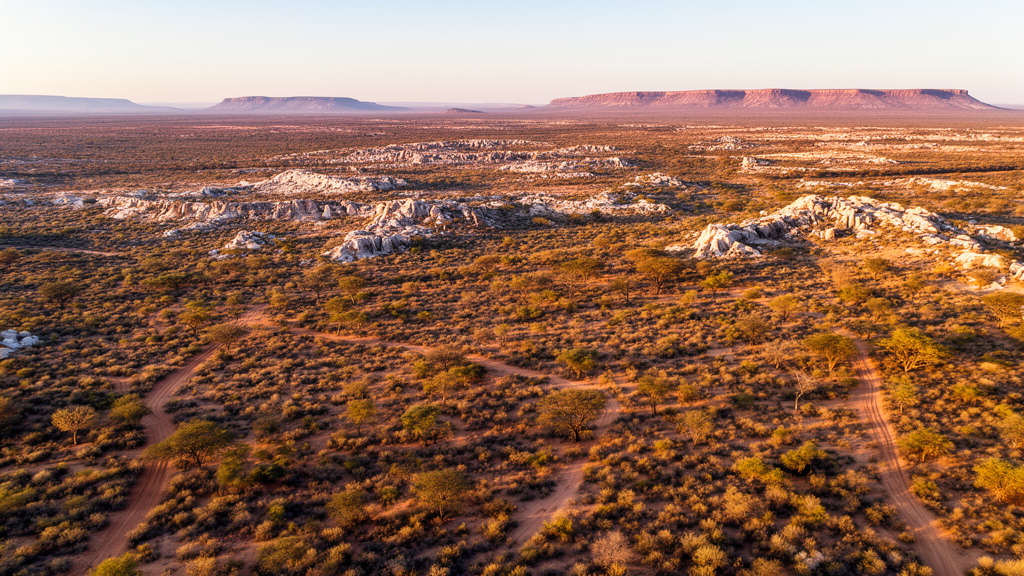
The Karstveld region in northern central Namibia has long been acknowledged by ecologists as a zone of exceptional botanical interest, yet the specific composition of its plant communities remained largely undocumented until recently. This area, formed around the Otavi Mountain Range, presents a complex ecological puzzle due to its unique geological substrate and climatic conditions. While recognized as a hotspot for plant diversity, the region has simultaneously suffered from various forms of environmental degradation, most notably bush encroachment. The lack of baseline data on vegetation composition and diversity has hindered effective conservation efforts and land management strategies. A new study published in the journal Vegetation Classification and Survey addresses this critical data deficiency by providing the first syntaxonomic description of the vegetation in this specific landscape.
The study, conducted by researchers Ben J. Strohbach and Marianne M. Strohbach, focuses on the Karstveld, which is defined by its strongly karstified carbonate bedrock. This geological feature creates a distinct topography that rises up to 2000 meters above sea level. The region extends from the Ovambo Basin plains, characterized by shallow calcrete soils north of the mountain range, up to the Omuramba Ovambo. The orographic effects of the Otavi Mountain Range play a crucial role in the local climate, channeling moisture and resulting in some of the highest rainfall figures in Namibia, with annual precipitation reaching up to 600 millimeters. This relatively high rainfall, in an otherwise arid to semi-arid country, creates a unique ecological niche that supports a rich array of plant species.
To achieve a rigorous classification of the vegetation, the researchers utilized a substantial dataset from the Global Vegetation Database, specifically the GVID ID AF-NA-001. They selected 889 relevés, which are detailed vegetation plots, containing a total of 868 species. This extensive dataset allowed for a robust statistical analysis of the plant communities. The classification process employed a modified version of the TWINSPAN algorithm, a standard tool in vegetation science for analyzing large datasets. By focusing on trees, shrubs, dwarf shrubs, and grasses, the researchers aimed to capture the structural and compositional essence of the vegetation types without being overwhelmed by the variability of the herb layer.
The initial classification yielded four main groups, which served as the foundation for further subdivision. These primary groups represented distinct ecological zones: wetlands and grasslands, a transition zone between Thornbush savanna and the Karstveld, Kalahari vegetation, and the Karstveld proper. However, the researchers noted that several vegetation types observed during their field surveys were not adequately reflected in the initial statistical results. To address this discrepancy, they refined the classification using a method known as Cocktail, incorporating known characteristic species to ensure that the final groups accurately represented the reality on the ground. This hybrid approach of statistical analysis and expert field knowledge is essential for producing a syntaxonomy that is both scientifically rigorous and ecologically meaningful.
The final syntaxonomic description identifies sixteen distinct associations according to the International Code of Phytosociological Nomenclature. The wetlands and grasslands group comprises six associations, reflecting the varied moisture regimes and soil conditions in these areas. The Thornbush savanna to Karstveld transition zone includes four associations, highlighting the gradual ecological shift between these two major vegetation types. The Kalahari vegetation group also contains four associations, representing the influence of the broader Kalahari Basin on the southern fringes of the study area. Most significantly, the Karstveld proper is described with eight associations, grouped together under the order Terminalietea prunioides. This order is further divided into two orders and three alliances, demonstrating the high degree of structural complexity within the core Karstveld ecosystem.
The Terminalietea prunioides order is particularly noteworthy for its species richness and endemism. The karstified limestone substrate of the Karstveld creates microhabitats that are distinct from the surrounding plains and mountains. These microhabitats support specialized plant communities that are adapted to the specific soil chemistry and drainage conditions of the carbonate bedrock. The identification of three alliances within this order suggests that there are distinct sub-communities within the Karstveld, each with its own set of characteristic species. This level of detail is crucial for understanding the functional diversity of the region and for identifying areas that may require specific conservation attention.
Despite the clear definition of these sixteen associations, the study highlights a high degree of diversity within each group. This intra-association diversity is a common feature in species-rich environments but poses challenges for conservation planning. It means that protecting a single association may not be sufficient to preserve the full range of plant diversity in the area. The Karstveld is described as extraordinary species rich within the context of the arid to semi-arid Namibian environment. This richness is likely a result of the complex interplay between the high rainfall, the varied topography, and the unique soil conditions created by the karstification process. The presence of 868 species in the dataset underscores the importance of this region for national and regional biodiversity.
The study also addresses the issue of bush encroachment, a significant threat to the vegetation of the Karstveld. Bush encroachment refers to the proliferation of woody plants in grassland or shrubland areas, leading to a reduction in grass cover and a change in the overall vegetation structure. This process can reduce habitat quality for many species and alter ecosystem functions such as water infiltration and nutrient cycling. By providing a baseline description of the vegetation, the study offers a reference point against which future changes can be measured. This baseline is essential for monitoring the extent of bush encroachment and for evaluating the effectiveness of management interventions aimed at controlling it.
The taxonomic framework used in the study follows the work of Klaassen and Kwembeya for vascular plants, with the exception of the genus Acacia, for which the classification by Kyalangalilwa et al. was used. This careful attention to taxonomic consistency ensures that the species names used in the study are up-to-date and reflect current scientific understanding. The use of standard phytosociological nomenclature allows the results to be integrated with other vegetation studies in the region and beyond. This facilitates comparative analysis and contributes to a broader understanding of vegetation patterns in southern Africa.
In conclusion, this study represents a significant contribution to the understanding of the vegetation of the Karstveld in Namibia. By providing the first syntaxonomic description of this area, it fills a critical gap in the ecological knowledge of the region. The detailed classification of sixteen associations, along with the identification of key ecological zones, provides a solid foundation for future research and conservation efforts. The high species richness and the unique geological and climatic conditions of the Karstveld make it a priority area for biodiversity conservation. The findings of this study will be invaluable for land managers, conservationists, and researchers working to protect and restore the vegetation of this important region in Namibia.
Subject of Research: Syntaxonomic description of vegetation in the Karstveld, Namibia
Article Title: A first syntaxonomic description of the vegetation of the Karstveld in Namibia
Article References: Strohbach, B. J., & Strohbach, M. M. (2023). A first syntaxonomic description of the vegetation of the Karstveld in Namibia. Vegetation Classification and Survey, 4, 1241-284. https://doi.org/10.3897/vcs.99045
Image Credits: AI Generated
DOI: 10.3897/vcs.99045
Keywords: Namibia, Vegetation Classification, Karstveld, Botany, Ecology, Conservation, Plant Diversity, Syntaxonomy, Arid Ecosystems, Bush Encroachment, first, syntaxonomic
Cite Scienmag News
Gavin Prescott. (October 18, 2026). Namibian Karstveld Vegetation Mapped in First Comprehensive Study. Scienmag. https://scienmag.com/namibian-karstveld-vegetation-mapped-in-first-comprehensive-study/
Gavin Prescott. "Namibian Karstveld Vegetation Mapped in First Comprehensive Study." Scienmag, 18 October 2026, https://scienmag.com/namibian-karstveld-vegetation-mapped-in-first-comprehensive-study/. Accessed 18 October 2026.
Gavin Prescott. "Namibian Karstveld Vegetation Mapped in First Comprehensive Study." Scienmag. October 18, 2026. https://scienmag.com/namibian-karstveld-vegetation-mapped-in-first-comprehensive-study/


