

Tuesday, October 20, 2026
Science
No Result
View All Result
  • Login
  • HOME
  • SCIENCE NEWS
  • CONTACT US
  • HOME
  • SCIENCE NEWS
  • CONTACT US
No Result
View All Result
Scienmag
No Result
View All Result
Home Science News

Namibia climate-vegetation model predicts significant contraction for half of major vegetation units by 2080

October 20, 2026
in Science News
Margaret Porter
By Margaret Porter Scienmag Editorial Profile - Biodiversity Science
Reading Time: 2 mins read
0
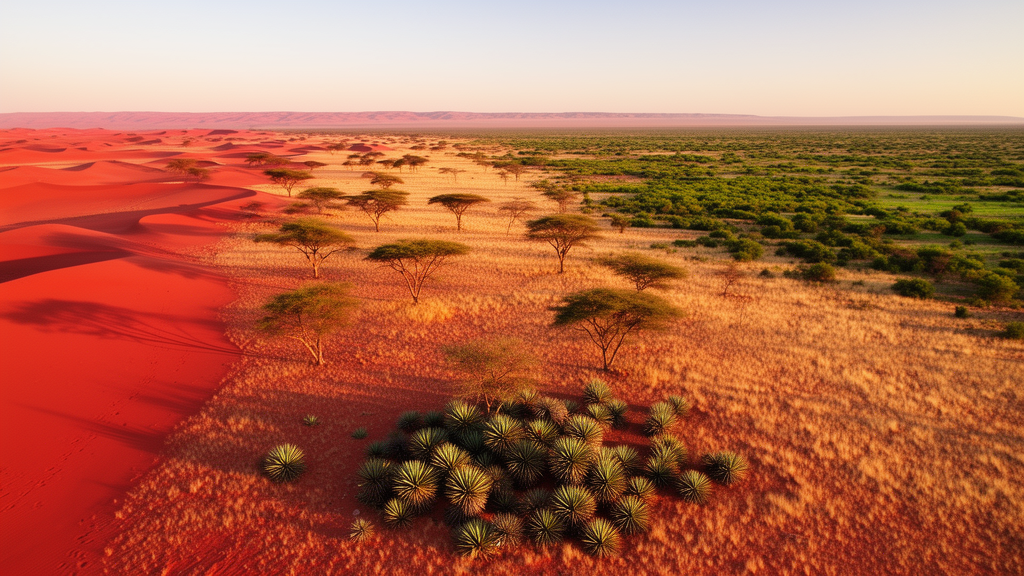
Namibia’s Savannas on the Move: Climate Change Redraws the Map of Desert Plant Life

Namibia's Savannas on the Move: Climate Change Redraws the Map of Desert Plant Life

65
SHARES
587
VIEWS
Share on FacebookShare on Twitter
ADVERTISEMENT

A modelling study in Namibia predicts that half of the country’s major vegetation units could undergo significant contraction by 2080, while three savanna or thornbush types have high potential for southward expansion. The results are projections based on present-day vegetation records and climate-model scenarios, rather than observations of vegetation change already underway.

The study examined major vegetation units along Namibia’s north-to-south aridity gradient, where vegetation ranges from open woodland in the northeast to low open shrubland in the south and mean annual precipitation varies from 100 to 600 mm. Namibia is projected to experience a 2°C increase in annual mean temperature by the end of the 21st century, and the study assessed how shifting climatic conditions could influence vegetation-unit distributions.

Researchers classified 1,986 vegetation relevés using cluster analysis, a Multi-Response Permutation Procedure and indicator species analysis. They then used Random Forest to model the current distribution of the vegetation classes. Potential distributions in 2080 were simulated using two Representative Concentration Pathways, RCP4.5 and RCP8.5, and climate projections from the IPSL-CM5A–LR and HAdGEM2–ES Global Climate Models.

Under both scenarios, the model predicted high expansion potential toward southern Namibia for Eragrostis rigidior–Peltophorum africanum mesic thornbush savannas, Combretum africanum–Terminalia sericea broad-leafed savannas, and Senegalia mellifera–Dichrostachys cinerea degraded thornbush savannas. Under RCP8.5, the model favoured proliferation of Combretum collinum–Terminalia sericea broad-leafed savannas and Senegalia mellifera–Dichrostachys cinerea degraded thornbush savannas, potentially displacing other vegetation types.

The supplied evidence is limited to the study abstract, which does not quantify projected areas of expansion or contraction or describe uncertainty in the model estimates. It also supports a modelling prediction for Namibia’s major vegetation units, not a measured or observed long-term change.

Subject of Research: Climate-change modelling of major vegetation-unit distributions along Namibia’s aridity gradient

Article Title: Potential distribution of major plant units under climate change scenarios along an aridity gradient in Namibia

Article References: Naftal, L., De Cauwer, V., & Strohbach, B. J. (2024). Potential distribution of major plant units under climate change scenarios along an aridity gradient in Namibia. Vegetation Classification and Survey, 5, 127-151. https://doi.org/10.3897/vcs.99050

Image Credits: AI Generated

DOI: 10.3897/vcs.99050

Keywords: Namibia, climate change, vegetation modelling, Random Forest, RCP4.5, RCP8.5, savannas, thornbush, aridity gradient, species distribution, Potential, distribution

Cite Scienmag News

Margaret Porter. (October 20, 2026). Namibia climate-vegetation model predicts significant contraction for half of major vegetation units by 2080. Scienmag. https://scienmag.com/namibia-climate-vegetation-model-predicts-significant-contraction-for-half-of-major-vegetation-units-by-2080/


Margaret Porter. "Namibia climate-vegetation model predicts significant contraction for half of major vegetation units by 2080." Scienmag, 20 October 2026, https://scienmag.com/namibia-climate-vegetation-model-predicts-significant-contraction-for-half-of-major-vegetation-units-by-2080/. Accessed 20 October 2026.

Margaret Porter. "Namibia climate-vegetation model predicts significant contraction for half of major vegetation units by 2080." Scienmag. October 20, 2026. https://scienmag.com/namibia-climate-vegetation-model-predicts-significant-contraction-for-half-of-major-vegetation-units-by-2080/

Tags: aridity gradientaridity gradient vegetation dynamicsclimate changeclimate change and biodiversity in Namibiaclimate change impact on Namibian ecosystemsclimate models and vegetation responseclimate-driven vegetation contractionclimate-driven vegetation expansion in Namibiadistributionfuture vegetation distribution NamibiaNamibiaNamibia vegetation change projectionpotentialRandom ForestRCP4.5RCP8.5savanna and thornbush expansion potentialsavannasspecies distributionthornbushvegetation classification and predictive modelingvegetation modeling under RCP scenariosvegetation modellingvegetation units contraction by 2080
Share26Tweet16
Previous Post

Software framework targets partially fault-tolerant quantum simulation

Next Post

Field survey rediscovers São Nicolau endemic grasshopper and recommends Vulnerable Red List status

Related Posts

Rediscovery of the Monte Gordo Grasshopper Eyprepocprifas insularis: An ancient brachypterous species endemic to São Nicolau, Cape Verde (Orthoptera, Eyprepocnemidinae)
Science News

Field survey rediscovers São Nicolau endemic grasshopper and recommends Vulnerable Red List status

October 20, 2026
Software framework targets partially fault-tolerant quantum simulation
Technology and Engineering

Software framework targets partially fault-tolerant quantum simulation

October 20, 2026
New dwarf crocodylomorph from the Upper Jurassic of Portugal and the first neuroanatomical data for Atoposauridae
Science News

Partial Upper Jurassic crocodylomorph skull yields first neuroanatomy for Atoposauridae

October 20, 2026
Eocene Baltic amber yields harvestman with unknown pedipalp joint
Science News

Eocene Baltic amber harvestman shows a seven-element pedipalp with a possible subdivided tarsus

October 20, 2026
Ice-Age Moss Relics Survive on Italy’s Pollino Peaks
Biology

Pollino National Park field survey records 41 bryophyte taxa new to Basilicata

October 20, 2026
Two New Succulent Species Discovered Hiding Around Kunming, China
Science News

Morphology and DNA phylogeny identify two new Sinocrassula species in Yunnan, China

October 20, 2026
Next Post
Rediscovery of the Monte Gordo Grasshopper Eyprepocprifas insularis: An ancient brachypterous species endemic to São Nicolau, Cape Verde (Orthoptera, Eyprepocnemidinae)

Field survey rediscovers São Nicolau endemic grasshopper and recommends Vulnerable Red List status

  • Mothers who receive childcare support from maternal grandparents show more optimized

    Mothers who receive childcare support from maternal grandparents show more parental warmth, finds NTU Singapore study

    27656 shares
    Share 11059 Tweet 6912
  • University of Seville Breaks 120-Year-Old Mystery, Revises a Key Einstein Concept

    1061 shares
    Share 424 Tweet 265
  • Bee body mass, pathogens and local climate influence heat tolerance

    682 shares
    Share 273 Tweet 171
  • Researchers record first-ever images and data of a shark experiencing a boat strike

    546 shares
    Share 218 Tweet 137
  • Groundbreaking Clinical Trial Reveals Lubiprostone Enhances Kidney Function

    531 shares
    Share 212 Tweet 133
Science

Embark on a thrilling journey of discovery with Scienmag.com—your ultimate source for cutting-edge breakthroughs. Immerse yourself in a world where curiosity knows no limits and tomorrow’s possibilities become today’s reality!

RECENT NEWS

  • Field survey rediscovers São Nicolau endemic grasshopper and recommends Vulnerable Red List status
  • Namibia climate-vegetation model predicts significant contraction for half of major vegetation units by 2080
  • Software framework targets partially fault-tolerant quantum simulation
  • Partial Upper Jurassic crocodylomorph skull yields first neuroanatomy for Atoposauridae

Categories

  • Agriculture
  • Anthropology
  • Archaeology
  • Athmospheric
  • Biology
  • Biotechnology
  • Blog
  • Bussines
  • Cancer
  • Chemistry
  • Climate
  • Earth Science
  • Editorial Policy
  • Marine
  • Mathematics
  • Medicine
  • Pediatry
  • Policy
  • Psychology & Psychiatry
  • Science Education
  • Science News
  • Social Science
  • Space
  • Technology and Engineering

Subscribe to Blog via Email

Enter your email address to subscribe to this blog and receive notifications of new posts by email.

Join 5,150 other subscribers

© 2025 Scienmag - Science Magazine

Welcome Back!

Login to your account below

Forgotten Password?

Retrieve your password

Please enter your username or email address to reset your password.

Log In
No Result
View All Result
  • HOME
  • SCIENCE NEWS
  • CONTACT US

© 2025 Scienmag - Science Magazine

Discover more from Science

Subscribe now to keep reading and get access to the full archive.

Continue reading